• BLOG
  • ABOUT
    • Privacy Policy

Organize Your Family History

Stay focused and happy while exploring your roots

Search Results for: 30 x 30 challenge

Making the best use of time at a genealogy conference

May 9, 2019 By Janine Adams 2 Comments

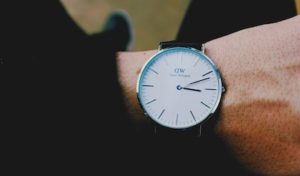
time management at genealogy conferencesI’m attending the NGS conference this week and I’m thoroughly enjoying myself. One great thing about going to a conference is having the opportunity to block out the other distactions and focus on the topic at hand. This year, the conference is in St. Charles, a half hour from my home in St. Louis. That sounds incredibly convenient, but in fact in means that I miss the full genealogy immersion that I get when I travel to a conference. I have to head home in rush hour traffic, walk my dog, and deal with day-to-day life. Today, in fact, is my husband’s birthday, so as soon as I get home from the conference I’ll be turning off the research side of my brain!

Within the conference itself, there are some time-management challenges. For example:

  • How early do I need to get there to register on the first day? (Turns out not as early as I thought.)
  • The exhibition hall is open throughout the day and, of course, it is more crowded during the breaks between sessions. Today I decided to skip a class session in favor of touring the exhibition hall when I could get the chance to really talk to exhibitors. That turned out to be a good choice (though I’m sure I missed a good session), because I had two really great conversations. (Keep an eye out on the blog for the fruits of those conversations!)
  • Fitting in time to blog can be hard during a conference. Skipping this morning’s class gave me the time to write this blog post!
  • Of course, deciding which class to attend is always challenging because there are so many good options. Yesterday I made great choices. Here are the sessions I attended, all of them excellent.
    • Judy Russell’s keynote address, “Journey of Discovery”
    • Elizabeth Shown Mills class, “Dissection & Analysis of Research Problems: Ten Steps to a Solution”
    • “Anatomy of a Case Study: Steps Used to Write for Yourself or for Publication,” presented by Melinda Daffin Henningfield. It actually reinforced some of things Elizabeth said, which was great.
    • Jen Baldwin’s, “PERSI: Spanning the Generations”
  • One way I use to determine which class to attend is to pay attention to which are available as live stream and/or audio recordings. If I can view/listen later (for a fee) I may choose a competing class that is only available live.
  • Figuring out the best use of time during breaks is another challenge. Some sessions are in small rooms that fill up, so taking an advance look at class locations can help you get into the class you want. On the other hand, my friend wasn’t able to get into her first-choice class and ended up joining me Elizabeth Shown Mills’ class in a larger room and was so happy she did.  (And, of course, sussing out the less-crowded bathrooms is helpful during breaks as well!)

Sometimes I find myself getting wrapped up in making sure I use my time in the best possible way at a conference. But I try to remind myself to leave myself open to serendipitous connections. If I over plan, I might miss out on spontaneity. You never know where your next great learning opportunity or next great connection with a genealogist will come at a conference like this.

In an environment like the NGS conference, no matter how I spend my time, I pretty much can’t lose.

Photo by Devon Janse van Rensburg on Unsplash.
Filed Under: Challenges, Genealogy tips, Reflections Tagged With: conferences, learning opportunities, NGS, time management

How They Do It: Megan Smolenyak

April 10, 2019 By Janine Adams 1 Comment

This month I’m thrilled to present the insights of genealogical adventurer and storyteller (don’t you love that description?) Megan Smolenyak Smolenyak. Megan is well known as a writer, speaker and TV guest and is the author of six books, most recently Hey, America, Your Roots Are Showing and Who Do You Think You Are?: The Essential Guide to Tracing Your Family History, the companion guide to the TV series. Her personality shines through in this interview. Enjoy!

How They Do It: Megan Smolenyak

How long have you been doing genealogy?

I’ve been doing genealogy since a 6th grade homework assignment got me started, so decades now!

What’s your favorite thing about being a genealogist?

I get to wake up every day and play detective to help other people. That’s pretty great, isn’t it? I love the thrill of the hunt, and playing at the fringes. That’s why I was one of the first to play with DNA, use genealogy for forensic purposes (e.g., military identifications, FBI civil rights cold cases, coroners’ offices, etc.), produce roots-oriented videos, and so forth. I like experimenting to find different ways to apply genealogical research and hopefully wind up doing some good.

What’s your biggest challenge when it comes to organizing your genealogy?

My biggest challenge organization-wise is my personal research. I’m quite organized when it comes to others’ family history, but not so much with my own. I don’t get much time to play with it, but suffice it to say, I have decades of research in a variety of formats.

What is your favorite technology tool for genealogy?

I wouldn’t say they’re my favorite, but more the toys I’m playing with lately. I’ve been pondering recently how to ensure that my personal research survives me, and since there are no keen genealogists among my close family members, I’ve been looking for ways to share what I’ve learned in ways that relatives might find half-way interesting. So I’ve been experimenting with what you might call distribution tools.

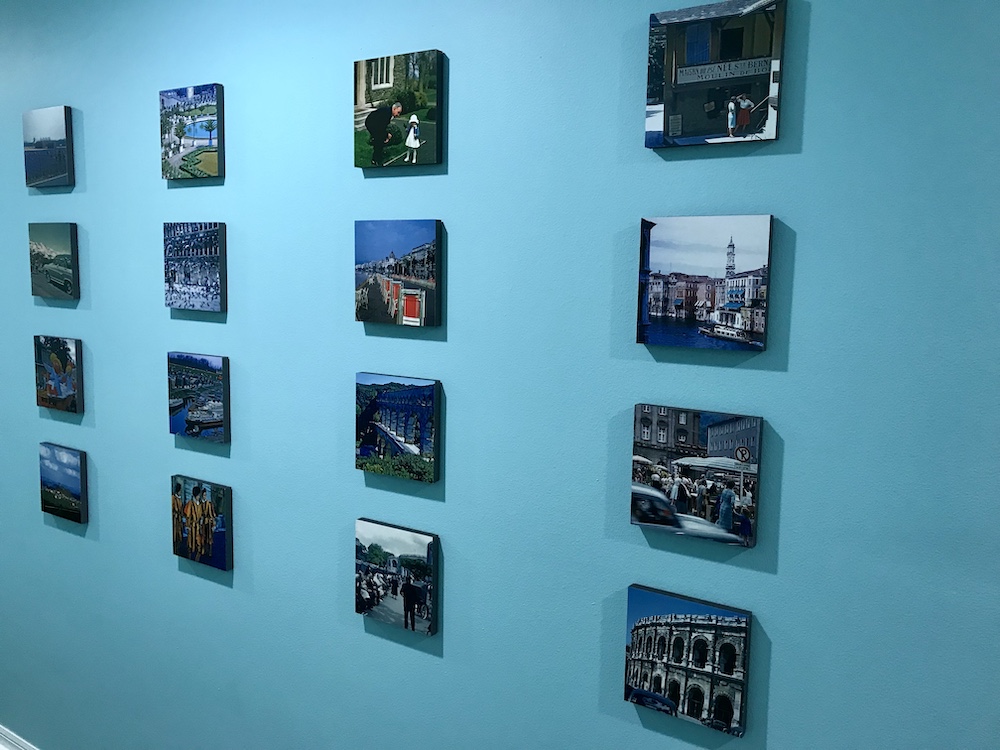
Megan’s wall of Mixtiles

For instance, I have lots of my father’s slides from our time living in Europe, so I selected and edited some and now have a display along a long hallway. To do that, I used the Mixtiles app, and what’s great about it is that each “tile” can be applied and removed multiple times, so I can rotate the content over time. Then I took it a step further and made a slender book of these same slides using Blurb and sent copies to my dad and siblings.

If you were starting out new as a genealogist what would you do differently?

When I first shifted careers to genealogy, I said ‘yes’ to every opportunity that came my way, and I would still do that again today. That said, I should have started turning down some invitations earlier than I did. While I’m beyond grateful for all the opportunities that have come my way, I got myself over-obligated and it took years to dig out.

Do you keep a research log? If so, what format?

It depends on the project and scale, but for the most part, conventional research logs in good, old-fashioned Word. And I’m a big fan of white boards when juggling multiple sub-projects (e.g., orchestrating research for a TV season). I once worked in a place that had an entire wall made of white board and I’d love to have that again!

How do you keep track of clues or ideas for further research?

Again, fairly old school. For instance, a dedicated notebook for a particular project. Or a generic notebook for multiple projects where I scribble ideas and then create an on-going table of contents (from the back of the notebook in) so I can easily find what I’m looking for (color-coding often comes into play). Sometimes I’ll append pages for this purpose to a research log. Also, for those times when I trip across cool new sites I want to explore, but know I’ll get distracted by, I’ll add them into a slot in my calendar app and then give myself time – usually a random Friday afternoon – to play with several at once.

What’s the most important thing you do to prepare for a research trip?

Homework, homework, homework. I explore the websites of all the repositories I plan to go to and dig into their catalogs, online collections, and the like so I know exactly what’s necessary and exactly what’s possible. I’ll often wind up back-and-forthing with an archivist or librarian in advance – sometimes to have materials waiting, perhaps to clarify details about a particular collection, or maybe to pick their brains for further ideas. I recently did this for a research trip to the Archives of Macau, and it saved so much time – not to mention, gave me some gems I probably wouldn’t have found on my own.

What’s your biggest piece of advice to genealogists in terms of organizing their research?

This is probably a blinding flash of the obvious, but get yourself organized when you’re first starting out. Form those habits early. If nothing else, you will save yourself so much re-work by not constantly re-inventing your research trail.

Do you have a dedicated space in your home for doing genealogy research? What’s it like?

Yes, since I’ve been a professional genealogist for two decades now, I’ve always had a dedicated room for my office wherever we lived (Virginia, New Jersey and Florida so far), and they’ve all had their own vibe. My current one is lighter and airier than in the past – partly due to digitization reducing the need for filing cabinets and other storage. I have a large sit/stand desk (very reasonable at IKEA), a filing credenza, a bookcase, and a utility cart (IKEA again) and library cart (Demco caters to libraries, but sells to individuals) – the last two for current projects. I also have a sleeper ottoman (that’s hardly ever been opened into a bed) where visitors can plop themselves down and get comfortable. The walls are light teal, the furniture is mostly white, and there’s lots of colorful art. So all that, terrific views and Mixtiles. More Mixtiles.

I love Megan’s light-hearted, but wise, responses and this peek into the organizational life of such an experienced genealogist. I had never of Mixtiles and excited to explore more! Thank you so much, Megan, for sharing!

Filed Under: Excitement, Genealogy tips Tagged With: How They Do It, Megan Smolenyak, organizing aids

How They Do It: Kenyatta D. Berry

March 14, 2019 By Janine Adams 4 Comments

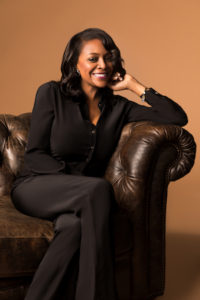
You may well be familiar with professional genealogist Kenyatta D. Berry, a host of PBS’ Genealogy Roadshow. She has a new book out, The Family Tree Toolkit and when I heard her talking about it on the podcast Genealogy Happy Hour, I knew I wanted to interview her about she organizes her genealogy research. So here’s this month’s How They Do It interview. Enjoy!

How They Do It: Kenyatta BerryHow They Do It: Kenyatta D. Berry

How long have you been doing genealogy?

I have been doing genealogy research and writing for over 20 years.

What’s your favorite thing about being a genealogist?

I love helping people find their people especially descendants of enslaved individuals. Their reaction when I uncover and share some remarkable information about their family history gives me chills. It is my calling to help people uncover their family history and share their ancestors story. I have seen people literally change before my eyes on Genealogy Roadshow.

What’s your biggest challenge when it comes to organizing your genealogy?

The biggest challenge is digitizing the research I have collected over the past twenty years. I have a closet full of binders and boxes of research from when I started doing genealogy and took field trips to my ancestral homelands.

What is your favorite technology tool for genealogy?

I like using Evernote to help organize research projects, stories and my family history. I also use Dropbox to share documents with clients and family members. I have created Dropbox folders for my maternal and paternal ancestors.

If you were starting out new as a genealogist what would you do differently?

I would have cited my sources, developed better research logs and started an organizational system from the beginning.

Do you keep a research log? If so, what format?

I keep a loose version of a “research log” in Evernote for projects. When I am doing enslaved genealogy research, all of my notes are handwritten. I am a visual person and I need to track the movement of enslaved and enslavers on a blank piece of paper. Once I have analyzed my notes, then I enter them into Evernote.

How do you keep track of clues or ideas for further research?

I use notebooks and small sheets of papers to keep track of clues or ideas for further research. I type the notes into Evernote and update as needed. Transferring the notes helps me work through any outstanding questions and organize my thoughts in a logical process.

How do you go about sharing your personal research with cousins or other interested parties?

I share my personal research with my family members via family stories, biographical sketches and documents on Dropbox.

What’s the most important thing you do to prepare for a research trip?

The most important thing is to know everything about the county including the resources available at the local repositories, courthouses and archives. Also, be nice to the court clerk because it goes a long way.

What’s your biggest piece of advice to genealogists in terms of organizing their research?

Create a system that works for you and don’t be afraid to try something new if something doesn’t work. We all learn differently and as your research expands you might need to alter your system for organizing research. There isn’t a right or wrong answer for organizing your research.

Do you have a dedicated space in your home for doing genealogy research? What’s it like?

I do not have a dedicated space in your home in my apartment because I live in a one-bedroom. My research is stored in closets, cabinets and a portion of my bookshelves are dedicated to genealogy books.

Do you have anything to add?

Develop your library of genealogy and historical resources based on your interests. This will help broaden your knowledge as you continue to uncover your ancestors place in history.

I can so relate to these responses, especially what Kenyatta said there being no right way to organize and that organization systems sometimes need to change. Also, as someone who keeps a very casual research log in Evernote, I was thrilled to read that Kenyatta also keep a loose version of a log there. For more information from Kenyatta, I encourage you to check out her book, The Family Tree Toolkit: A Comprehensive Guide to Uncovering Your Ancestry and Researching Genealogy.

Filed Under: Challenges, Excitement, Genealogy tips, Organizing Tagged With: How They Do It, Kenyatta Berry, organizing aids

Organizing your family history research with Zotero

February 23, 2019 By Janine Adams 11 Comments

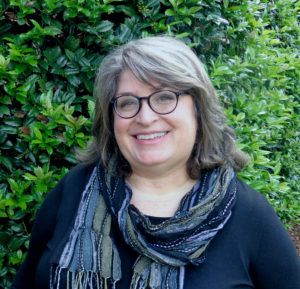
I interviewed the author of this guest post, Donna Cox Baker, in my How They Do It series last year. In it, she mentioned she used Zotero, which I had not been familiar with, to organize her genealogy research. I asked her to write a guest post about Zotero and here it is! I haven’t checked out Zotero yet, but I very much appreciate reading Donna’s perspective as a Zotero power user. For more information, check out Donna’s book, Zotero for Genealogy.

I want to thank Janine for offering me the chance to expand on the wonders of Zotero. It is the core of my genealogical research, as it once was in my doctoral research.

With thousands of resources to cite in my doctoral research, Zotero sold me the minute I experienced the “Zotero Connector” add-on. The connector is an extension for web browsers that allows you to click a single button and extract citation data from any number of places it appears, even Amazon. The citation for virtually anything that appears in a library catalog online can be stored in your Zotero database in less than a second.

Through another extension, Zotero can be linked to Microsoft Word. You can create your footnotes and bibliography straight from Zotero, letting it format the citation.

Discovering Zotero for genealogy

Well, that was graduate school. Within minutes of finishing the dissertation, I had pulled out my long-neglected genealogy box, and got back to the thing that first made me care about history.

Our family tree solutions—like Family Tree Maker, Ancestry.com, Legacy, RootMagic, MyHeritage, and so forth—give us adequate ways to document individual facts. We add a birthdate to an ancestor’s profile and cite the source. But research—what I call Big-R Research—starts way before the individual facts and goes much bigger than an isolated birthdate.

Genealogists have file cabinets full of Big-R Research, if we’re doing true family history, and not just filling in the blanks on a chart. We want to know about where our people lived and how they lived. We want road maps of their communities and the minutes kept at their church’s business meetings. We want photographs and letters and court transcripts that fill in the story. Our research can fill a room.

It doesn’t have to fill a room, though. It can take up gigabytes, instead. But we need a tool to store and retrieve it. My search for a proper Big-R Research tool began.

I tried OneNote, then Evernote, but I continued to feel a nervous sense of distrust. Would the structure hold together? Was it portable to other tools?

Then it hit me. I already had the tool I needed. It was tried and sure. It was both structured and flexible, controlled but expansive. Zotero would be great for genealogy!

Before I get into the reasons it is great, let me be transparent in this: it was not made for genealogy or by genealogists. I’ve developed tweaks here and there to deal with the differences between history and genealogy. You will not dump perfectly formatted Evidence Explained citations from Zotero (or most other tools I’ve tried). But you can come pretty close. And I’m working on some technical tweaks that will get us even closer.

Why Zotero matters

Zotero is great for genealogy for all of these reasons and more:

  • It is free, with the stability and support of a university backing it up. Even if you are syncing to the Zotero cloud, you can do that for years on free storage, before you have to buy some. And when you do buy storage, it’s inexpensive and unlimited.
  • It provides the structure missing from tools like OneNote and EverNote, but brings substantial flexibility, along with the structure.
  • It can add most catalogued online source citations to your Zotero library with one click.
  • It can organize and provide one-click access to the thousands of documents, spreadsheets, photographs, and other files you have saved to your hard drive. In essence, it can draw all those files together into a uniform, organized system. Zotero becomes your door to all you have collected.
  • It allows you to create a record once but to file it in as many folders as you want without taking up significant extra space. You make a change once, and it changes in every folder.
  • You can find things rapidly, even if you only have vague memories of having long ago found a document that might be of use in solving a new genealogical problem.
  • It will sync to the cloud, allowing you to access your work at Zotero.org, wherever you have Wifi access.
  • It can replace your to-do list and your research log with something more efficient and always accessible.
  • It allows you to set up group arrangements, so multiple people can collaborate together on a research collection.
  • It can import from and export to a number of other bibliographic managers or databases, making it portable and survivable in a changing world.
  • And while you are in Zotero every day anyway, why not store personal things there? How about storing recipes, your journal, articles about financial management in retirement. It can be your photo album. It can even store every article coming out of an RSS feed you have subscribed to.

Giving it a try

Since Zotero is free, you can try it with no risk. In fact, I encourage you to take up the challenge I offered to the readers of The Golden Egg Genealogist blog not long ago. I asked them to test out the one feature that sold me utterly and forever on Zotero: its ability to grab citations from online sources like Amazon and your local library catalog. Here’s the article: Instant citations: Zotero’s magic bullet.

I’ve also set up an online discussion forum at the Zotero for Genealogy website. It is growing fast, and we are teaching each other how to handle citations and research organization with maximum efficiency. Join us there for free.

If you want guidance in the use of Zotero, I have written the book I wish someone had given me ten years ago, as I struggled to organize my history research for school. It’s called Zotero for Genealogy: Harnessing the Power of Your Research and debuted in January 2019 as Amazon’s “#1 New Release in Genealogy.” You can find it on Amazon or at my online store. In fact, there is a free excerpt of the book there, if you want to check it out.

I hope to see the field of genealogy moving to Zotero in large numbers. Give it a try!

Filed Under: Challenges, Genealogy tips, Organizing, Technology Tagged With: Donna Cox Baker, genealogy tools, organizing aids, record keeping, research log, resources, source documentation, technology, Zotero

  • « Go to Previous Page
  • Page 1
  • Interim pages omitted …
  • Page 46
  • Page 47
  • Page 48
  • Page 49
  • Page 50
  • Interim pages omitted …
  • Page 59
  • Go to Next Page »

about me

I'm Janine Adams, a professional organizer and a genealogy enthusiast. I love doing family history research, but I find it's very easy for me to get overwhelmed and not know where to turn next. So I'm working hard to stay organized and feel in control as I grow my family tree.

In this blog, I share my discoveries and explorations, along with my organizing challenges (and solutions). I hope by sharing what I learn along the way I'll be able to help you stay focused and have fun while you do your research, too.

tags

30 x 30 Adams amy johnson crow anniversary Brown cemetery census Civil War conferences connections dna electronic files Evernote excitement Family Curator family photos genealogy tools getting started goals How They Do It Igleheart Jeffries keepsakes learning opportunities maps newspapers NGS organizing aids overwhelm paper files planning quick tips rasco record keeping research research log research trip resources RootsTech social history source documentation Stacy Julian technology time management vital records

join the facebook community!

join the facebook community!

My organizing business

Learn more about my organizing business, Peace of Mind Organizing®.

Subscribe by RSS

  • RSS - Posts
  • RSS - Comments

© 2026 Janine Adams


Loading Comments...