• BLOG
  • ABOUT
    • Privacy Policy

Organize Your Family History

Stay focused and happy while exploring your roots

How They Do It: Barbara Schmidt

April 25, 2018 By Janine Adams 2 Comments

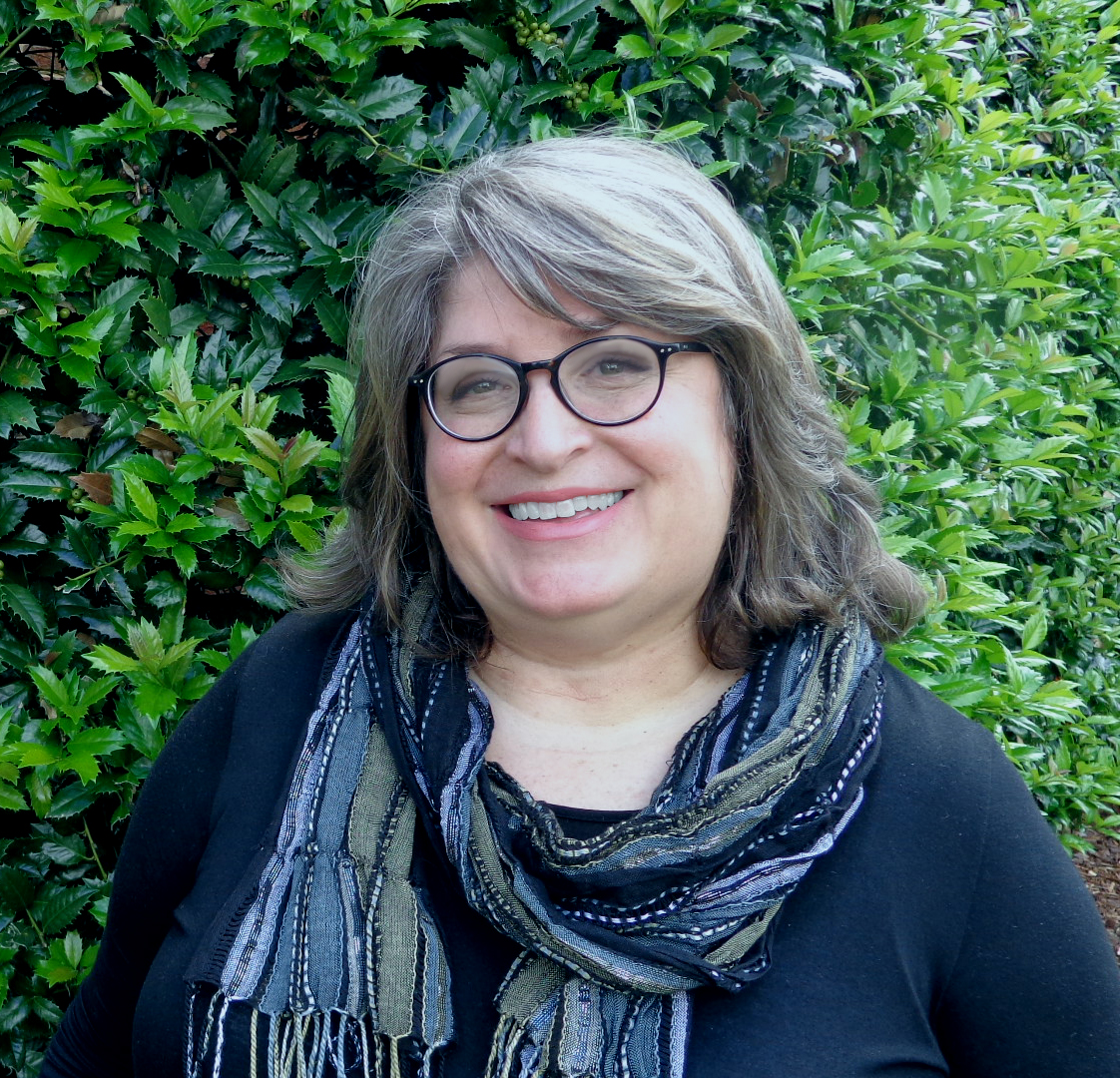
I’m delighted to present a How They Do It interviewee from Europe! Barbara Schmidt is a communication specialist and genealogy researcher in Frankfurt, Germany, whom I met at RootsTech in 2017. She’s active in social media for both her work and her genealogy. Her blog Connecting the Worlds is doing exactly that: Connecting her worlds of genealogy, corporate history (she is a member of the historical association of Deutsche Bank), and everything around being and living digital including Working Out Loud.

Barbara speaks at genealogy events on topics like how to connect with other researchers through forums, social media, blogs, and how to travel safely through this new digital world. She blogs in English and German with the same overall topics but different angles.

How They Do It: Barbara SchmidtHow They Do It: Barbara Schmidt

How long have you been doing genealogy?

I started with researching my family tree when I was about 20 years old. That makes it now 25 years, It’s amazing, how time flies. Sometimes it feels like I just started. There are still moments today where I act and research like a rookie.

What’s your favorite thing about being a genealogist?

When I started I just wanted to get an overview of my big family at the usual family gatherings like weddings, baptisms and funerals. As a child I never really understood who was who and who belonged to whom. All those aunts and uncles and siblings of my grandparents who were called aunt or uncle. All of them having three names didn’t help either. But throughout the years my motivation to keep going is coming from the small and big stories I learnt about my family.

And my biggest highlight is always when I “meet” new family members. I re-connected my father with his cousin after 42 years, that was really emotional for me and his cousin’s wife. They behaved like they had just seen each other the week before. It was so typical northern German – not a lot of words.

I learnt about a family branch that emigrated to the United States and got in contact with one of the descendants. And just later I realized, he is a real cousin of my mom. Or I met a distant cousin of my Dad last year who was on a Germany visit from Australia. Those are the big moments. But there are lots and lots small ones. Too many to mention them all.

What’s your biggest challenge when it comes to organizing your genealogy?

I tend to re-invent my organizing system every couple of years. I haven’t really found THE system yet. I always want to go digital because I cannot stand paper. It takes up too much space and I always get lost in the paper piles and files. The bigger my family tree and the more documents I had to store the more I got overwhelmed with finding the “perfect” system. Until I realized there is no perfection in organizing my genealogy. I had to find MY system. That took about 20 years until I found something that really worked.

What is your favorite technology tool for genealogy?

Definitely my scanner! I mentioned before I want to go digital. Which means I either only order digital copies of documents or if I receive paper copies I scan them and destroy the paper. Only copies of course. Originals get stored in specific acid free binders. No paper clips, no glue, no rubber bands. [I asked Barbara what kind of scanner she uses and it’s an HP MP500 flatbed/sheetfed scanner. — Janine]

If you were starting out new as a genealogist what would you do differently?

I would ask more questions and would research more within my own family when they are still alive. I spent way too much money ordering documents from archives to receive information which would have been easily available if I would have just asked.

Do you keep a research log? If so, what format?

Upon your recommendation I actually started using a research log but I don’t really keep up with them, to be honest. Again, I haven’t really found a system yet how to really incorporate it into my research. I tried various templates, on- and offline. In the cloud or on my desktop but I find myself not really using them. Although I really understand that they are helpful. But I’m not there yet.

How do you keep track of clues or ideas for further research?

I use Evernote a lot. I take notes of ideas not only for further research but also for my blog. I travel a lot, therefore I need something that synchronizes on all my devices like notebook, smartphone and tablet. I am also a heavy user of audio notes on my smartphone. For me that is the best way to set reminders for myself when a thought crosses my mind.

How do you go about sharing your personal research with cousins or other interested parties?
 
Unfortunately, my family is not really interested in my family research, except for my direct family like my parents and some of my siblings. But for interested parties I share my family tree online via Ancestry and wikitree. I am all for sharing and exchanging information. I make one exception though and that is pictures. Most important for me when we talk about a platform to share is the possibility to synchronize on all my devices. That’s why I work with the ancestry app.

What’s the most important thing you do to prepare for a research trip?

Portable battery chargers (powerbanks)! No kidding. When I started going digital in archives it happened more than once that I had to stop because I had no way to charge my devices. Now I always carry at least 2 powerbanks with me and make sure I have all the charging cables. I have a special tupperware for those. I always check for opening hours of archives. You never know what changes there might have been since the last visit. Another important thing? Comfortable shoes 😃

What’s your biggest piece of advice to genealogists in terms of organizing their research?

Don’t expect perfection. There is none. Find a simple system that works for you and don’t change it too often. Just because someone tells you of something different that works for him/her that doesn’t mean you have to change your way of organizing. If it’s not broken – don’t fix it. Leave enough flexibility for your family tree to grow. My first mistake was to make it too specific with colour coding and filing. It became way too complicated as my family tree grew.

Do you have a dedicated space in your home for doing genealogy research? What’s it like?

Not anymore. I just moved houses three weeks ago. I still have to find my spot in my new apartment which is a bit smaller than the one I previously had. But that is good in a way. It forces me to sort out everything which I don’t  need and to digitize even more. I have to downsize my storage and filing.

Thank you so much, Barbara, for your wise words. Your caution about not chasing perfection in a genealogy organizing system particularly resonated with me. It’s nice to see that genealogy research and organizing seems universal no matter where in the world you are!


Filed Under: Challenges, Excitement, Genealogy tips, Organizing Tagged With: Barbara Schmidt, How They Do It, organizing aids

How many trees?

April 12, 2018 By Janine Adams 41 Comments

How many family trees should you have?I’m occasionally asked how genealogy researchers should split up their family trees. Should they have a separate tree for each parent’s line? Each grandparent’s line? Just one tree?

It’s a question that I didn’t even consider when I set up my family tree in Reunion (the genealogy software I use on my Mac) and in Ancestry. To me, it made sense to start with myself and just work my way up one tree.

(If I were doing my husband’s tree, which may happen some day, I would have a separate tree for him, since our ancestors come from completely different places and have no relevance to one another.)

One thing I like about having all my ancestors together in one tree is that I can easily access a different ancestor if I’m chasing a clue. I use the quickbar button at the top of the Family View for instant access to my most researched ancestors. Or if a name seems familiar, but I’m not sure it’s my person, a quick search will reveal where that person resides in my tree. It’s easy and it works for me.

All that said, I have only 570 people in my tree. (Only verified people with cited source documents I’ve seen are added to my tree, which is my excuse for that number being so small.) If I had a much larger tree, perhaps I’d be singing a different tune.

So I’m curious: How many trees do you have? How have you divided them up? Do you have any regrets?

Unmodified photo by Nichole Renee via Flickr. Used under Creative Commons License.

Filed Under: Challenges, Genealogy tips, Organizing Tagged With: genealogy tools, organizing aids, research

Keeping track of the FAN Club

March 24, 2018 By Janine Adams 16 Comments

I’ve heard over the years about researching our ancestors’ Family, Associates and Neighbors (or FAN Club or FAN Principle, a term credited to Elizabeth Shown Mills) as a way to learn more and get past brick walls. At RootsTech, I heard a terrific talk from Drew Smith on the topic. (Another term for the FAN principle is Cluster Research.)

When I came home and decided to spend some time doing FAN research, I was initially flummoxed by the question of how I would keep track of these people. I typically document all information about my ancestors in my desktop genealogy software. (I use Reunion.) Everyone in Reunion is related by blood or marriage and is connected on the tree. (I’m at the base of the tree.) But some of these FANs aren’t family, so it didn’t make sense to me to put them into Reunion.

I googled a little and didn’t come up with definitive advice, so I decided on an organizing system for FAN research that I think will work for me. In Evernote, in my Genealogy stack, I already have follow up notebooks for different family lines. This is a way to keep me focused so that I don’t pounce on every clue that I come across. So, for example, I have a notebook called Follow Up: McEuen and when I come across a research topic or clue for a McEuen, I put it there, in an individual note. At some point, I’ll refocus my efforts on the Follow Up notebooks and until then, all this information is safe in Evernote. It gives me peace of mind.

So I figured I could do the same with FANs. I can start a series of FAN: [Surname] notebooks and when I’m doing FAN research, I can create notes within each notebook about various associates and neighbors who seem significant. When I uncover evidence about my family that I want to record in Reunion, I’ll put it there (always with a source). But when I have FAN information that doesn’t make sense to add to Reunion, I’ll keep it in Evernote. Of course, I can also add associates and neighbors to the notes section in Reunion when appropriate. And Evernote allows me to create links to notes, which I can use in Reunion notes, if I want.

As I apply the FAN principle more, I’ll see if this simple method of keeping track of them will be sufficient. My overriding principle is to keep things as easy as possible.

Please share: how do you record information on your ancestors FANs?
Filed Under: Challenges, Genealogy tips, Organizing Tagged With: organizing aids, record keeping, research, research techniques

How They Do It: Donna Cox Baker, The Golden Egg Genealogist

February 13, 2018 By Janine Adams 6 Comments

The next interviewee for my How They Do It series is Donna Cox Baker, the blogger behind The Golden Egg Genealogist and the co-founder of the Beyond Kin Project. Donna has a PhD in history and is editor-in-chief of Alabama Heritage magazine. Her first book, Views of the Future State: Afterlife Beliefs in the Deep South, was published in January 2018. One of my readers suggested I invited Donna to participate in this series and I’m so glad! I found myself nodding in agreement as I read her insightful responses. Enjoy.

How They Do It: Donna Cox Baker shares how she organizes her genealogyHow They Do It: Donna Cox Baker

How long have you been doing genealogy?

I first got hooked on family history around 1986 at the public library in Fort Wayne, Indiana, where I lived briefly. Far away from family for the first time in my life, a local advertisement for “family history” caught my eye, and I was captivated. Since then, I have gone through long periods when I had no time for it, especially when I was pursuing graduate education while working full-time. As soon as I put the last touches on my PhD dissertation, though, I pulled out the old dusty genealogy box, and it was back to my first love.

What’s your favorite thing about being a genealogist?


At the risk of sounding corny, it is a spiritual thing for me. Oh, I love the thrill of the hunt, like everybody else. I love filling in the blanks that time has left. But there is something mystical-magical about reaching back to restore to memory the people without whom I would not be. It is an act of gratitude for those who came before, and an act of service to those yet to come. There is a grounding quality to the act of writing in birth dates and death dates again and again, person after person. You become truly conscious of the brevity of each life and want to make every day count.

What’s your biggest challenge when it comes to organizing your genealogy?

In the highest stress years of my career, I finally realized that I was psychologically allergic to paper. Piles and piles of sheets to remind me perpetually that the work was never done. That things had been forgotten. That I would never find what I needed. After a tornado wiped out 7,000 structures in my town and all the hoarded materials in them in 2011, I determined never to depend on paper again. Had the storm shifted two blocks north, every piece of paper my team had collected over 25 years would have been gone in three seconds. I make every effort to be paperless—for my sanity and the security of my research. The challenge, then, is in doing that in a smart way.

What is your favorite technology tool for genealogy?

My favorite tool is the one that got me through a PhD dissertation without giving up: Zotero. This free tool, developed by George Mason University, allows me to have everything I would have stored in paper files with me, wherever there is WiFi. I love it more than the unstructured tools like Evernote and OneNote, because it blends structure with free-form capabilities. It allows me to find a source online and click once to put all of the bibliographic information into its database. It can extract every comment and highlight I make in a PDF. It’s amazing and is the subject of my next book. I’ve written a number of blog posts about it on The Golden Egg Genealogist.

If you were starting out new as a genealogist what would you do differently?

I would get formal training. I was arrogant enough to think I didn’t need it for the first couple of decades. But then I went to the Institute for Genealogy and Historical Research. I took the beginner’s class, just in case I had missed things along the way. And BOY had I missed things along the way. I had been making mistakes that rendered whole branches of my family tree questionable. This summer will be my fourth trip to IGHR.

Do you keep a research log? If so, what format?


Zotero replaces that for me. It gives me everything the traditional logs give, but in a much more efficient format. If I was doing genealogy for others, I might need a log to keep up with time spent, but I don’t have that need. With Zotero, I know what sources I consulted, where I found them, and what I extracted. It keeps up with the date I first added the source record and the last time I modified it—the only two dates I really care about. And unlike the traditional research logs, I only have to add the source and repository information once—no matter how many times I might return to that source and gather new information. In my notes, I make a habit of including a statement about what I was looking for at any given time—say, “All Mayberrys,” or “Ransom Payne.”

How do you keep track of clues or ideas for further research?


Again, Zotero is my hero. I have a master To Do folder, in which I add subfolders for places I might need to visit to do future research. As I encounter a library catalog record or some other notice of a source I want to see at that repository, I create the Zotero source record and drag it into the folder for the repository. That way, I’m collecting a to-do list for a repository and have it waiting when I have the time to make that trip. In fact, if I happen to find myself at a repository unexpectedly—say a meeting ends early at the state archives, and I have an hour—I can find a computer there, look up my to-do list in Zotero’s cloud, and get to work. I am also able to drag and drop the same source record into folders for the person or family I’m researching. So the record exists only once, but I can find it in multiple places.

How do you go about sharing your personal research with cousins or other interested parties?


I give them access to my Ancestry tree, which is syncing with Family Tree Maker. Because I still have some of that old questionable research that I mentioned in my largest tree, I keep that one private. I caution the curious cousin up front that they need to check everything behind me. My research is a clue, not the gospel. I have a couple of public trees that represent more recent (post-IGHR) work. I’ve had little time to work on the general family tree there. I am spending most of my time on a tree that is a slaveholding branch of my family that serves as a prototype for the Beyond Kin Project, which represents our method of documenting enslaved populations.

What’s the most important thing you do to prepare for a research trip?

I go through any available catalogs or lists of what the local repositories have, and then determine what specific research questions I need to try to answer. I also try to determine which of the local records might be available online through FamilySearch or Ancestry or are in a library in my vicinity. I want to spend my time on the sources I will not find any other way. I make sure I have my smart phone and laptop and the ability to keep both charged. My phone becomes my scanner, and I am often keying things directly into Zotero, as I work on-site.

What’s your biggest piece of advice to genealogists in terms of organizing their research?

Get rid of the paper. You cannot carry it with you on your research trip with any ease. If a piece of paper mentions twenty different people, will you make twenty copies of the page to file in twenty folders? And here’s another really important reason to break the paper habit. Your descendants will not want your file cabinets and boxes. If you depend on paper, your research may stop with you. Don’t let that happen. Now for those who have twenty years of paper piled up and wonder how they could possibly go paperless now, I say start today with a paperless ethic. Make everything you work on from now on paperless, and slowly work backward through the paper mountains in your home, scanning them as you are able.

Do you have a dedicated space in your home for doing genealogy research? What’s it like?


The beauty of paperless genealogy is that I can do 99% of my work at home on a laptop. Everything I’ve gathered has been scanned and can be accessed there (being backed up faithfully to the cloud at all times). I have a great little office in my house, but it feels too much like my day job. I usually work in an armchair with headphones on, so I can enjoy the company of my husband and cat-children. When I retire someday, maybe I’ll be willing to sit at a desk again. But more likely I’ll want to be on a lounge chair on the deck.

 Now all of this is possible because I’m not a person who wants to be the keeper of my family’s precious documents and photographs. If you are that person, you have to be able to preserve things in acid-free boxes, fire-proof safes. And I salute that person, but it will not be me.

I hadn’t heard of Zotero before hearing about it from Donna and now I’m excited to check it out. Her enthusiasm for it is contagious! I’m also intrigued by the Beyond Kin Project and can’t wait to learn more. And, finally, I agree completely with Donna about paper. (I love her phrase “psychologically allergic to paper.”) Eliminating paper creates such freedom and her advice to start with from this point forward with going paperless then chip away at the backlog is spot on. Thank you, Donna, for taking the time to answer these questions!

Filed Under: Challenges, Excitement, Genealogy tips, Organizing Tagged With: Beyond Kin, Donna Cox Baker, Golden Egg Genealogist, How They Do It, organizing aids, Zotero

  • « Go to Previous Page
  • Page 1
  • Interim pages omitted …
  • Page 17
  • Page 18
  • Page 19
  • Page 20
  • Page 21
  • Interim pages omitted …
  • Page 43
  • Go to Next Page »

about me

I'm Janine Adams, a professional organizer and a genealogy enthusiast. I love doing family history research, but I find it's very easy for me to get overwhelmed and not know where to turn next. So I'm working hard to stay organized and feel in control as I grow my family tree.

In this blog, I share my discoveries and explorations, along with my organizing challenges (and solutions). I hope by sharing what I learn along the way I'll be able to help you stay focused and have fun while you do your research, too.

tags

30 x 30 Adams amy johnson crow anniversary Brown cemetery census Civil War conferences connections dna electronic files Evernote excitement Family Curator family photos genealogy tools getting started goals How They Do It Igleheart Jeffries keepsakes learning opportunities maps newspapers NGS organizing aids overwhelm paper files planning quick tips rasco record keeping research research log research trip resources RootsTech social history source documentation Stacy Julian technology time management vital records

join the facebook community!

join the facebook community!

My organizing business

Learn more about my organizing business, Peace of Mind Organizing®.

Subscribe by RSS

  • RSS - Posts
  • RSS - Comments

© 2026 Janine Adams


Loading Comments...