• BLOG
  • ABOUT
    • Privacy Policy

Organize Your Family History

Stay focused and happy while exploring your roots

Organizing your family history research with Zotero

February 23, 2019 By Janine Adams 11 Comments

I interviewed the author of this guest post, Donna Cox Baker, in my How They Do It series last year. In it, she mentioned she used Zotero, which I had not been familiar with, to organize her genealogy research. I asked her to write a guest post about Zotero and here it is! I haven’t checked out Zotero yet, but I very much appreciate reading Donna’s perspective as a Zotero power user. For more information, check out Donna’s book, Zotero for Genealogy.
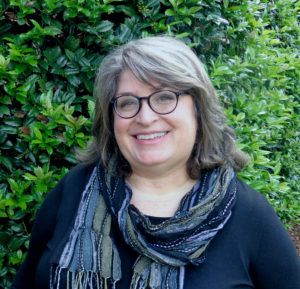
I want to thank Janine for offering me the chance to expand on the wonders of Zotero. It is the core of my genealogical research, as it once was in my doctoral research.

With thousands of resources to cite in my doctoral research, Zotero sold me the minute I experienced the “Zotero Connector” add-on. The connector is an extension for web browsers that allows you to click a single button and extract citation data from any number of places it appears, even Amazon. The citation for virtually anything that appears in a library catalog online can be stored in your Zotero database in less than a second.

Through another extension, Zotero can be linked to Microsoft Word. You can create your footnotes and bibliography straight from Zotero, letting it format the citation.

Discovering Zotero for genealogy

Well, that was graduate school. Within minutes of finishing the dissertation, I had pulled out my long-neglected genealogy box, and got back to the thing that first made me care about history.

Our family tree solutions—like Family Tree Maker, Ancestry.com, Legacy, RootMagic, MyHeritage, and so forth—give us adequate ways to document individual facts. We add a birthdate to an ancestor’s profile and cite the source. But research—what I call Big-R Research—starts way before the individual facts and goes much bigger than an isolated birthdate.

Genealogists have file cabinets full of Big-R Research, if we’re doing true family history, and not just filling in the blanks on a chart. We want to know about where our people lived and how they lived. We want road maps of their communities and the minutes kept at their church’s business meetings. We want photographs and letters and court transcripts that fill in the story. Our research can fill a room.

It doesn’t have to fill a room, though. It can take up gigabytes, instead. But we need a tool to store and retrieve it. My search for a proper Big-R Research tool began.

I tried OneNote, then Evernote, but I continued to feel a nervous sense of distrust. Would the structure hold together? Was it portable to other tools?

Then it hit me. I already had the tool I needed. It was tried and sure. It was both structured and flexible, controlled but expansive. Zotero would be great for genealogy!

Before I get into the reasons it is great, let me be transparent in this: it was not made for genealogy or by genealogists. I’ve developed tweaks here and there to deal with the differences between history and genealogy. You will not dump perfectly formatted Evidence Explained citations from Zotero (or most other tools I’ve tried). But you can come pretty close. And I’m working on some technical tweaks that will get us even closer.

Why Zotero matters

Zotero is great for genealogy for all of these reasons and more:

  • It is free, with the stability and support of a university backing it up. Even if you are syncing to the Zotero cloud, you can do that for years on free storage, before you have to buy some. And when you do buy storage, it’s inexpensive and unlimited.
  • It provides the structure missing from tools like OneNote and EverNote, but brings substantial flexibility, along with the structure.
  • It can add most catalogued online source citations to your Zotero library with one click.
  • It can organize and provide one-click access to the thousands of documents, spreadsheets, photographs, and other files you have saved to your hard drive. In essence, it can draw all those files together into a uniform, organized system. Zotero becomes your door to all you have collected.
  • It allows you to create a record once but to file it in as many folders as you want without taking up significant extra space. You make a change once, and it changes in every folder.
  • You can find things rapidly, even if you only have vague memories of having long ago found a document that might be of use in solving a new genealogical problem.
  • It will sync to the cloud, allowing you to access your work at Zotero.org, wherever you have Wifi access.
  • It can replace your to-do list and your research log with something more efficient and always accessible.
  • It allows you to set up group arrangements, so multiple people can collaborate together on a research collection.
  • It can import from and export to a number of other bibliographic managers or databases, making it portable and survivable in a changing world.
  • And while you are in Zotero every day anyway, why not store personal things there? How about storing recipes, your journal, articles about financial management in retirement. It can be your photo album. It can even store every article coming out of an RSS feed you have subscribed to.

Giving it a try

Since Zotero is free, you can try it with no risk. In fact, I encourage you to take up the challenge I offered to the readers of The Golden Egg Genealogist blog not long ago. I asked them to test out the one feature that sold me utterly and forever on Zotero: its ability to grab citations from online sources like Amazon and your local library catalog. Here’s the article: Instant citations: Zotero’s magic bullet.

I’ve also set up an online discussion forum at the Zotero for Genealogy website. It is growing fast, and we are teaching each other how to handle citations and research organization with maximum efficiency. Join us there for free.

If you want guidance in the use of Zotero, I have written the book I wish someone had given me ten years ago, as I struggled to organize my history research for school. It’s called Zotero for Genealogy: Harnessing the Power of Your Research and debuted in January 2019 as Amazon’s “#1 New Release in Genealogy.” You can find it on Amazon or at my online store. In fact, there is a free excerpt of the book there, if you want to check it out.

I hope to see the field of genealogy moving to Zotero in large numbers. Give it a try!
Filed Under: Challenges, Genealogy tips, Organizing, Technology Tagged With: Donna Cox Baker, genealogy tools, organizing aids, record keeping, research log, resources, source documentation, technology, Zotero

Reconnecting with my ancestors

December 6, 2018 By Janine Adams Leave a Comment

I miss my ancestors. November was a crazy month–in the first half I was busy with some big projects for my organizing clients and in the second half I was hosting a visit from my brother, Larry and his daughter, Miranda, who live in Australia. Then the three of us left to go visit my father in Walla Walla, Washington. That’s where I am now.
Looking at my research log, I see that I researched exactly once in November 2018. That is unacceptable and such a far cry from the almost-daily research I’d been enjoying.

Even though my routines are still messed up by traveling, at the beginning of December I pressed reset and started back with daily research. I missed yesterday, but I hope not to miss any more days this month. If I do, I’ll cut myself some slack and get right back on board.

This morning, I re-read a post I’d written in May 2017 where I talked about circumstances leading up to a (much briefer) research hiatus. In that post, I talked about the fall-back projects I have where I can make a little progress in a brief period of time and keep the daily research going, even if it’s very brief.

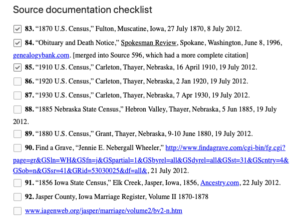
I’m so glad I read it and was reminded of my source documentation project from 2016, where I started going back through my sources, making sure they were cited consistently and that all the relevant data was extracted from each document. I also make sure that an image of the source document is attached to the source record in Reunion.

I’ve found that over the last half dozen years, I’ve become a more skilled researcher. Back in the day, I missed a lot, so this is a really worthwhile endeavor. When I started checking my source documentation in 2016 I had 300 sources and I’ve checked 85 of them. Two and a half years later, I have 896 sources. I’d like to think that at some point I’ll decide that I can stop checking the sources because I knew what I was doing and there’s nothing to be gained. I can’t wait to find out at what point that happened!

Unless feel like exploring something else, I’ll stick to reviewing my source documents for the rest of the year as I think about my genealogy goals for 2019. I’m excited to get back in the swing of things and reconnect with my ancestors!

Edited to add: During today’s source documentation checking, I discovered that my great grandmother’s sister was married the same day she was. My 2nd great aunt and her husband are on the same scan of the marriage record book as my great grandparents. Shame on me for missing that, but I’m so glad I was able to add a person to my tree simply by checking my sources!

Filed Under: Challenges, Organizing Tagged With: record keeping, source documentation, time management

Just say no to “should”

November 6, 2018 By Janine Adams 5 Comments

It’s natural to ask about questions about organizing (your genealogy or anything else) that start with the word “should.” Should I organize my documents this way or that way? Should I store things here or there? Should I focus on this or that?

When I try to answer a question that starts with should, the answer is almost always, “It depends.” Because it’s all about what will work for you.

I encourage my clients (and anyone else who will listen to me) to let go of the word should. And to also let go of asking questions that start with, “What’s the right way to…” or What’s the best way to….”

Because here’s the thing: I can’t tell you what you should do. Only you know what’s right for you. It can be much more beneficial to think in terms of what you’d like to do, or what you think will work best for you, rather than what you should do. Especially when it comes to organizing your genealogy research, the thing you should do (in my opinion) is the thing that works well for you and that you can keep up.

For example:

  • Maybe you’ve always heard that you should store your paper documents in binders, but you have trouble keeping up with that. Let go of that should and consider using file folders or scanning your documents.
  • Maybe you think you should print every document for the sake of posterity but you’re overrun with unfiled paper. You can let go of that should, particularly if your electronic documents are already organized.
  • Conversely, maybe you’ve heard you should scan every bit of paper and store files electronically, but you’re overwhelmed by the prospect. Bye bye, should. You can let your paper files be sufficient. Or just start storing new files electronically and leaving your papers unscanned.
  • Maybe you’re told you should keep a research log, but you just can’t get yourself to do it. A research log can be hugely beneficial. But don’t beat yourself up if you don’t have one just because you think you should.

In other words, set yourself up for success and do what works for you. Decide what your priorities are (accessibility for you, accessibility for others, ease of use, etc.) and focus your organizing systems on those priorities. Don’t do something just because someone told you you should if it doesn’t seem like it will work for you.

All that said, there are some genealogy shoulds that I think you should pay attention to:

  • You should cite your sources so you can find them again and know where your facts came from (but you don’t have to cite them perfectly if that’s getting in the way of citing them at all).
  • You should back up your electronic data in case of a crash. (I use an external hard drive and automated cloud storage.)

Genealogy is supposed to be fun. Don’t let the shoulds drag you down. Make your own choices and own them. And keep yourself open to new ways of doing things. (See what I did there? I told you all sorts of things I think you should do, without using that word. Take what works for you and let go of the rest.)

[I initially published this post on May 17, 2016 with a different title. I came across it on my blog recently and liked the message so much I wanted to share it again for newer readers.]

Filed Under: Genealogy tips, Organizing, Reflections Tagged With: goals, organizing aids, overwhelm, research log, source documentation

Reviewing my source documents

August 17, 2018 By Janine Adams 2 Comments

Last weekend I had the great fortune to hear genealogist and speaker Amy Johnson Crow give several talks at the Missouri State Genealogical Association‘s terrific conference. One of her talks was called “How to Milk a Source for All It’s Worth” and in it she shared tips and techniques for harvesting every bit of information you can from a source.

That got me thinking about the source documents I had found early on in my genealogy research, six or seven years ago. Back then, I was focusing on direct-line ancestors, so I’m sure I left a lot of information on the table. Rather than entering every scrap of information into my genealogy database (Reunion), I would have just glossed over it.

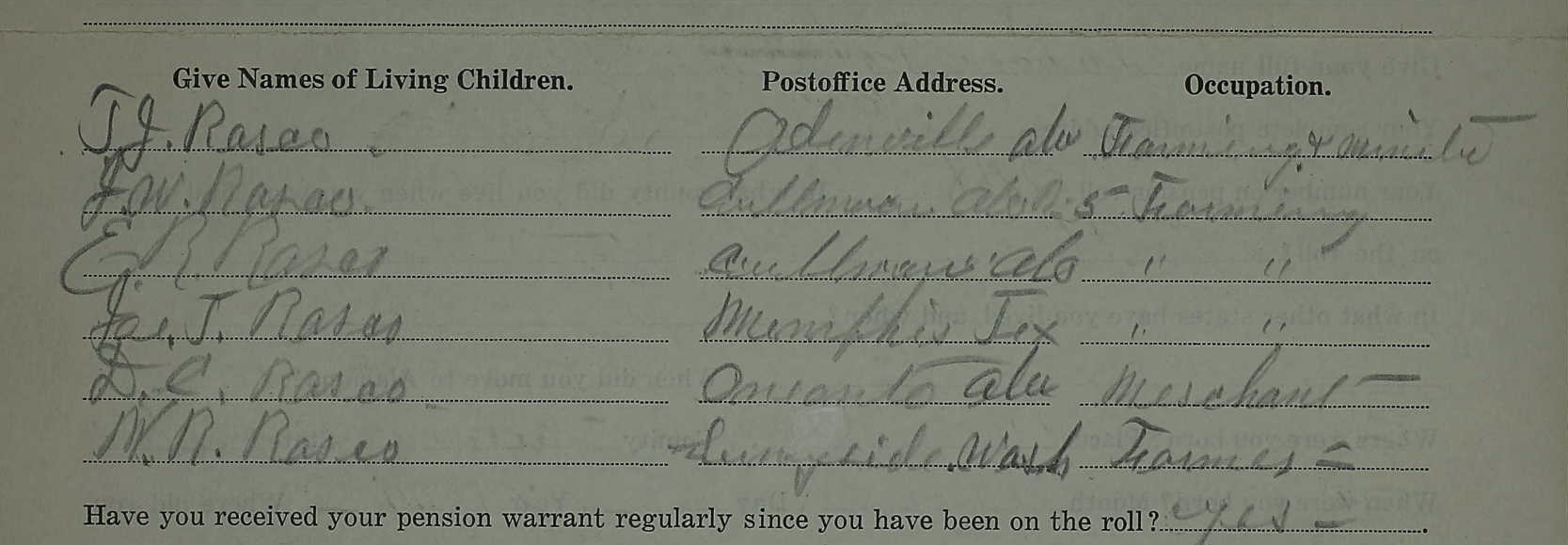
That was confirmed yesterday when I was going over an Alabama Census of Confederate Soldiers questionnaire my 2nd great grandfather, Laban Taylor Rasco (1844-1926) had filled out in 1921. I had found that source in 2012. (It’s source #127 in my database; I now have 834 sources.) I was shocked to see that I hadn’t recorded the information about his living children that was shared in that questionnaire. They were in my tree, because I’d added them at a later date, but back in 2012 I just wasn’t adding collateral lines. (I know, I was short-sighted.)

So I started adding that info and in doing so solved a little mystery. My grandmother Beatrix Rasco Adams, who was born in 1907, was living in Memphis, Texas, with her family on the 1920 census. In 1910, they were in Alabama, where she was born, and in the 1930 census they were in Washington state, where she lived the rest of her life. I never knew why they lived in Texas in 1920 (though I didn’t try very hard to find out). But I learned yesterday by focusing on that Confederate census, that her uncle, Joseph Taylor Rasco (1872-1964) was living in Memphis, Texas in 1921 and is nearby in the 1910 and 1920 censuses. Her family must have joined him. Mystery solved, or at least illuminated.

That made me realize that I have a lot of work to do with the source documentation that I have already downloaded and entered into Reunion. My genealogy research skills have improved so much that I find myself drawn to look at all those less recently found documents so I can pick all the meat off the bones.

Two summers ago, I started systematically going through my source documentation, primarily to correct the citations and to make sure that each source document was attached as a multimedia file to the source record in Reunion. At the time, I had 300 sources in my database. I got through Source #85 by the time I stalled out on that particular endeavor.

Fast forward two years and I now have an additional 500+ more sources, but I’m hopeful that the last several hundred were much better analyzed.

Last month, I shifted my focus to my father’s maternal line, the Rascos, and plan to work on them for the rest of 2018. So this is what I’ve decided to do: I’ve created a list of all the sources that pertain to the Rascos and I’m planning to systematically check each source record, making sure the citation is correct, that the source document is attached to the source record, and that all possible information is gleaned. When I see clues for further research within a document, I will either make a note of it in Evernote or, depending on time constraints and my whims, go ahead and pursue that clue.

I think this process will give me more confidence in my source citations and it will help me feel comfortable that my research is thorough–plus it will doubtless garner a lot more facts to add to my database! I also love that it will give me an easy starting point for research each day.

I’ll let you know how it goes!

Filed Under: Challenges, My family, Reflections Tagged With: rasco, record keeping, source documentation, time management

  • « Go to Previous Page
  • Page 1
  • Page 2
  • Page 3
  • Page 4
  • Page 5
  • Page 6
  • Interim pages omitted …
  • Page 9
  • Go to Next Page »

about me

I'm Janine Adams, a professional organizer and a genealogy enthusiast. I love doing family history research, but I find it's very easy for me to get overwhelmed and not know where to turn next. So I'm working hard to stay organized and feel in control as I grow my family tree.

In this blog, I share my discoveries and explorations, along with my organizing challenges (and solutions). I hope by sharing what I learn along the way I'll be able to help you stay focused and have fun while you do your research, too.

tags

30 x 30 Adams amy johnson crow anniversary Brown cemetery census Civil War conferences connections dna electronic files Evernote excitement Family Curator family photos genealogy tools getting started goals How They Do It Igleheart Jeffries keepsakes learning opportunities maps newspapers NGS organizing aids overwhelm paper files planning quick tips rasco record keeping research research log research trip resources RootsTech social history source documentation Stacy Julian technology time management vital records

join the facebook community!

join the facebook community!

My organizing business

Learn more about my organizing business, Peace of Mind Organizing®.

Subscribe by RSS

  • RSS - Posts
  • RSS - Comments

© 2026 Janine Adams


Loading Comments...