• BLOG
  • ABOUT
    • Privacy Policy

Organize Your Family History

Stay focused and happy while exploring your roots

Putting my imperfectionism to work

April 7, 2020 By Janine Adams 7 Comments

As I wrote in a post last week, I’ve been working on processing my 2nd great grandfather’s Civil War pension file. I got the tedious up-front source citation work completed, which involved creating source citations and labels for each of the 53 documents, affixing the labels to the paper documents and scanning the whole thing into a long pdf. I’m now working on transcribing the documents, one per day. (This is how I choose to process this type of document–I’m not saying it’s the only way or the best way, but it works for me.)

So today, I was working on Document Six and I realized that I have a typographical error in my source citation. The correct application number is 1007144 but I had typed 1006144 and copied it onto all my labels without realizing my error. That numbers appears 54 times (one for each document, plus an overall citation). Of course, it’s easy to fix in my software. But then I was faced with the pension document itself having the wrong application number on every document.

I considered my options:

  1. Fix all the labels, print them out again, affix the corrected label over the incorrect label on each document, and rescan the whole thing.
  2. Hand correct each label and rescan the whole thing.
  3. Add a notation to each label in the pdf itself
  4. Add a notation at the beginning of the pdf only

It felt like the “right’ thing to do would be option number 1. But what a pain in the butt that would be. I was okay with doing it once. But doing it a second time felt practically unbearable. Plus my printer is about to run out of toner.

I thought about what was important to me and realized that the most important citation was the one in my Reunion software (the one that I corrected in about 5 seconds). But I didn’t want my pension file pdf to be wrong, in case I pass it along to someone else.

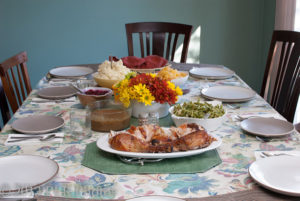
So I added a notation in the pdf, 54 times, that says “correct application no. 1007144.” (That’s a picture of it above.) And you know what? That’s going to be good enough. It didn’t feel good enough to just do it at the top of the file. I want each citation label corrected in case someone is looking at only one document.

It took me less than 10 minutes to make this electronic correction (thanks to the miracle of copying and pasting), substantially less time than option number 1 would have taken. Bonus: I didn’t use up toner or risk the frustration of jammed documents in my scanner. Luckily, this is not a situation I will encounter with any kind of frequency, since I so rarely deal with paper documents.

I try to take these little lessons about “good enough” to heart and pass them along when I can. When does good enough speak to you in your genealogy research?

ETA: In the comments to this post, Kay asked for an example of a placement of the label. As I mentioned in the reply, I usually put it wherever it fits (or on the back of the page). Here’s a full-page view of the label placement.
Filed Under: Challenges, Reflections Tagged With: Civil War, electronic files, Igleheart, learning opportunities

The 2020 Census is here!

March 20, 2020 By Janine Adams 5 Comments

As genealogists we understand the importance and value of the census. If you’re like me, you’re excited that this year is a census year. I’ve always loved filling out the census form and see it as a privilege, as well as an obligation. I spent my first five years after college working for the Population Reference Bureau, a non-profit clearinghouse for demographic information. We used census data all the time. Then when I got into genealogy the census became even more important.

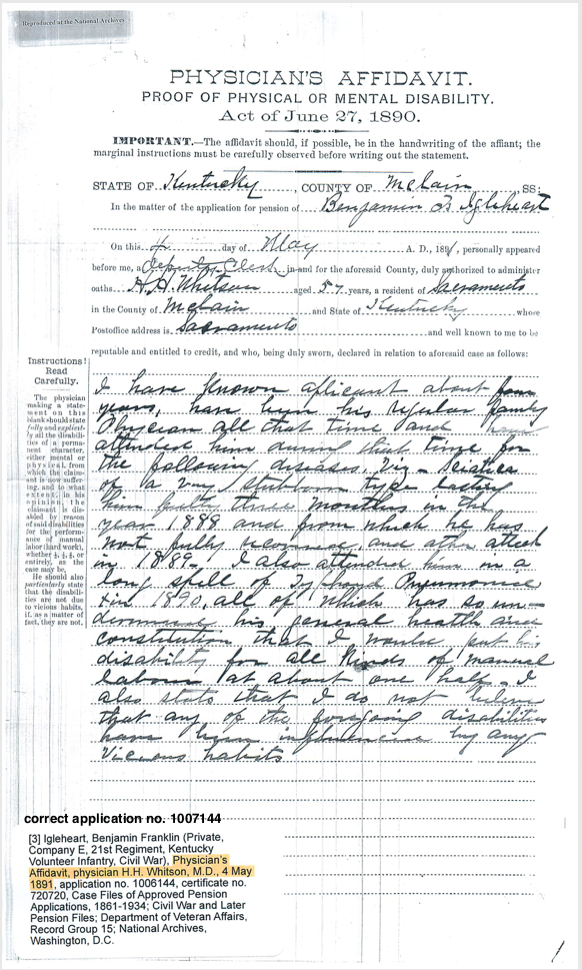
I received my census mailing this week and opened the envelope eagerly. This year, of course, I did not find a form to fill out. Instead, I found a code to enter when I went to the URL provided in the mailing. Filling out the form was quick–there were very few questions to answer. There are just two people in my household (my husband and me) and we have a straightforward relationship (opposite sex, married). I found it very interesting to read the various relationship options and was pleased at how inclusive it seemed to be.

The only challenge came in the Race section, when asked to provide origin. I actually checked my updated Ancestry DNA results so I could provide an accurate answer (“English, Irish”). But my husband wasn’t home and I wasn’t sure what to put for him. So I texted him for the answer (“Russian”). While I waited for his response, I took a look at various “Race” options and was kind tickled that I there were races I had to look up. I had never heard of Chamorro, for example: “a member of the indigenous people of the Mariana Islands (including Guam).”

If you haven’t taken the Census yet and would like a preview of the questions, check out this Questions Asked on the Form page on the Census2020 website. It provides rationale for each question, which is interesting.

My 89-year-old father doesn’t have a computer and doesn’t use the Internet. I offered to fill out the form for him on my computer (he received the mailing with the personalized code) but he’s hoping the Census Bureau will eventually send an enumerator. (Presumably after the COVID-19 crisis is over.) He’s a social guy and would welcome the human interaction!

In any case, filling out the form was a thrill for me, as it is every ten years, and it’s making me very excited for the 1950 census to be released in April 2022!

Filed Under: Excitement, Reflections Tagged With: census

Let’s create history for our descendants this Thanksgiving

November 27, 2019 By Janine Adams 2 Comments

Once again, here’s my annual Thanksgiving post, originally written three years ago. I wish all my readers a wonderful Thanksgiving!

This Thanksgiving week, I’ve been thinking about how the ordinary lives of my ancestors are endlessly fascinating to me. As I slowly plow through my great great grandfather’s Civil War pension file, I get very excited when I come to a form he filled out 125 years ago that has a little extra information in it (like the names and birth dates of his children). Any peek into what his life was like is a special treat.
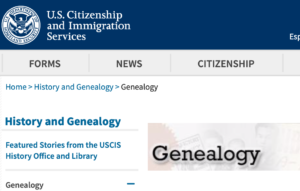
It got me thinking about how mundane aspects of our lives today might be really interesting 100 years from now to the people below us on the family tree.

Of course, we fill out fewer paper forms now. And genealogy will probably look very different in the twenty-second century. But I think photos and records will always be valuable.

This year, as we celebrate Thanksgiving (or really just go about our lives), we have the opportunity to create history for our descendants. We can be mindful of our legacy as we’re taking pictures. We can take care to label them (or add metadata to digital photos) so future generations know who the people in the photos are. We can do oral history interviews and carefully preserve them with labels for future generations.

If you have older relatives around your Thanksgiving table, I urge you to ask questions and preserve those conversations for generations to come (as well as for your own genealogy research). I sure wish I had. Wouldn’t it be great to put your hands on a recorded interview with one of your ancestors? You could be the person making that possible for your descendants.

Thanks to smartphone technology, it’s so easy for us to record conversations and take videos. Let’s do that while we can and mindfully tag and back up those recordings. (And hope that the medium will still be readable decades from now.)

As much as I urge my organizing clients to part with paper or other items that don’t serve any purpose any longer, I do sometimes encourage them to hang on to documents or photographs that might be of interest to their descendants. I encourage you to be mindful of that and store those items that so that they might be passed on to family-history-minded descendants when you pass.

Remember: Every day we have the opportunity to create history.

Photo by Robert and Pat Rogers via Flickr. Used under Creative Commons License.

Filed Under: Challenges, Preservation, Reflections Tagged With: family photos, keepsakes, planning, social history

Take action now to fight rate hike for genealogical immigration records

November 22, 2019 By Janine Adams 2 Comments

I follow genealogist Jennifer Mendelsohn on Twitter and through her learned that the United States Citizenship and Immigration Service (USCIS, which used to be called the Immigration and Naturalization Service) is proposing a substantial rate hike for genealogical records.

You can read all the details at Records Not Revenue, but the Reader’s Digest version is that, under the proposal, digitized genealogy records will cost $240 and paper copies will cost $625. The current rate for those same documents is $65. Prior to 2016, the rate was $20 to $35. Obviously, this rate hike would have a big effect on many genealogists’ ability to access these records, which include naturalization files, alien forms, visa files and registry files.

Records Not Revenue, an effort of “coordinated by an ad hoc group of genealogists, historians and records access advocates,” points out that this rate hike is relevant to all genealogists, not just those with immigrant ancestors whose records might be available through the USCIS. The website states, “If USCIS finalizes a rule to make these records much more difficult to access via significant fee hikes, who’s to say other governmental agencies won’t follow suit? Attempts to make one record set less accessible should make any researcher in any field nervous.”

I’m bringing it up now not to worry people but rather because there’s something those of us who are worried can do. Records Not Revenue urges us to read the proposed rule, and submit comments to the Federal Rulemaking Portal, copying our Senators and Representatives, before 16 December 2019. The provide all the links necessary, along with suggested conversation starters. They’ve made it as easy as possible.

To learn more, check out Records Not Revenue, as well as this article on Medium by Jennifer Mendolsohn. That article gives real-life examples of how these records can help people with their genealogy.

Filed Under: Challenges, Reflections Tagged With: genealogy tools, research, resources

  • « Go to Previous Page
  • Page 1
  • Interim pages omitted …
  • Page 8
  • Page 9
  • Page 10
  • Page 11
  • Page 12
  • Interim pages omitted …
  • Page 42
  • Go to Next Page »

about me

I'm Janine Adams, a professional organizer and a genealogy enthusiast. I love doing family history research, but I find it's very easy for me to get overwhelmed and not know where to turn next. So I'm working hard to stay organized and feel in control as I grow my family tree.

In this blog, I share my discoveries and explorations, along with my organizing challenges (and solutions). I hope by sharing what I learn along the way I'll be able to help you stay focused and have fun while you do your research, too.

tags

30 x 30 Adams amy johnson crow anniversary Brown cemetery census Civil War conferences connections dna electronic files Evernote excitement Family Curator family photos genealogy tools getting started goals How They Do It Igleheart Jeffries keepsakes learning opportunities maps newspapers NGS organizing aids overwhelm paper files planning quick tips rasco record keeping research research log research trip resources RootsTech social history source documentation Stacy Julian technology time management vital records

join the facebook community!

join the facebook community!

My organizing business

Learn more about my organizing business, Peace of Mind Organizing®.

Subscribe by RSS

  • RSS - Posts
  • RSS - Comments

© 2026 Janine Adams


Loading Comments...