• BLOG
  • ABOUT
    • Privacy Policy

Organize Your Family History

Stay focused and happy while exploring your roots

How They Do It: Gena Philibert-Ortega

December 7, 2021 By Janine Adams 4 Comments

Here’s my latest How They Do It interview, this one with author, researcher and instructor Gena Philibert-Ortega, whose focus is genealogy, social and women’s history. She holds a Master’s degree in Interdisciplinary Studies (Psychology and Women’s Studies) and a Master’s degree in Religion. Her published works include two books, numerous articles published in magazines and online, as well as five editions of the Tracing Your Ancestors series from Morsehead Publishing. Gena has presented to diverse groups worldwide including the Legacy Family Tree Webinar series. Her current research includes women’s repatriation and citizenship in the 20th century, foodways and community in fundraising cookbooks, and women’s material culture. I love her focus on women, as well as the confluence of genealogy and food in Gena’s work. Enjoy!
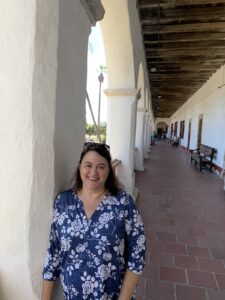
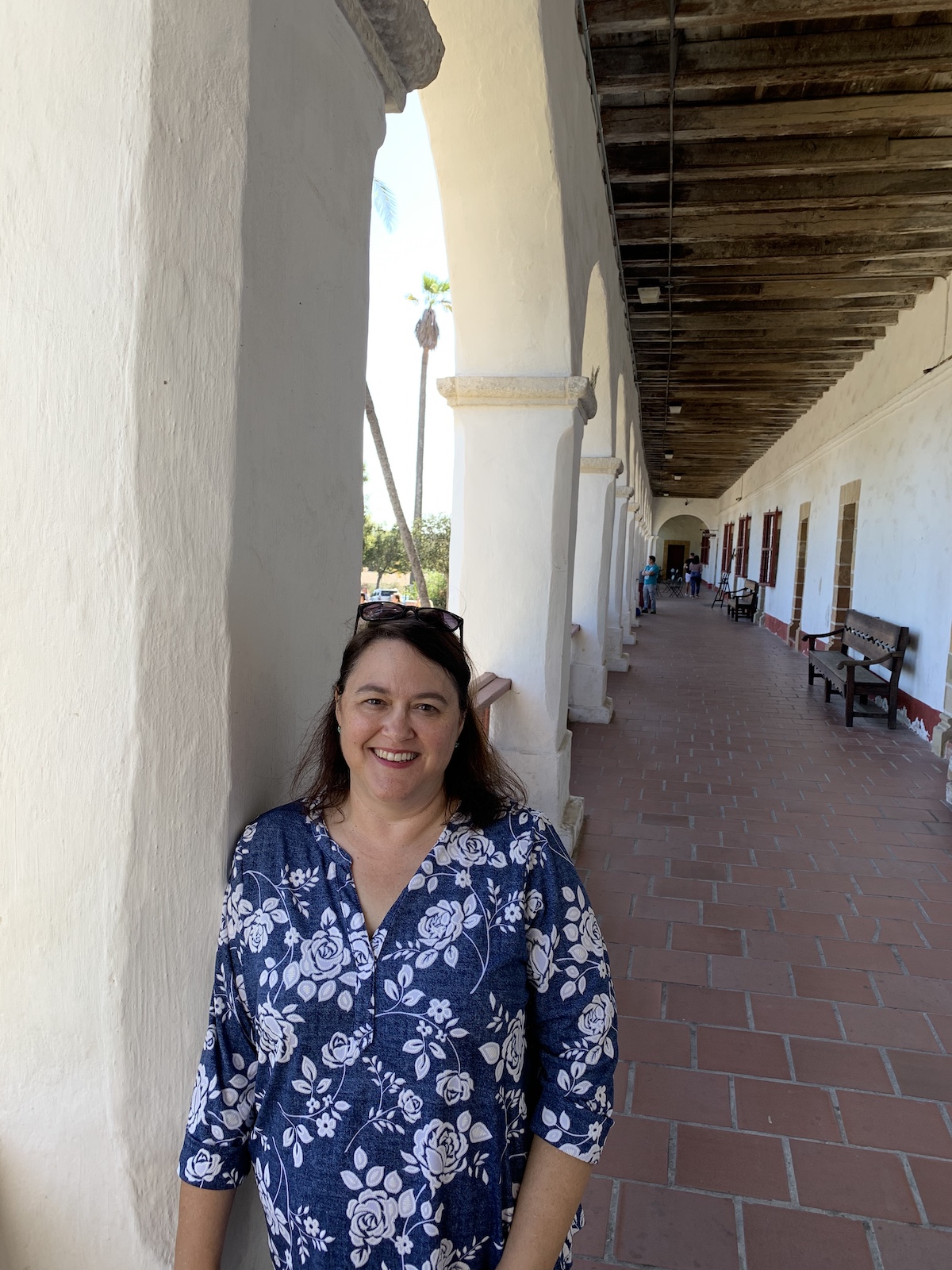
Photo of Gena Philibert-OrtegaHow They Do It: Gena Philibert-Ortega

How long have you been doing genealogy?

Professionally for a little over 20 years. But I’ve been in love with family history since I was a child. My maternal grandmother was family historian and she told me stories of our family and it intrigued me. I’ve always loved mysteries.

What’s your favorite thing about being a genealogist?

Research. I love research. My favorite place to be is a library, archive, or museums. I like asking questions and finding the answers in records.

What’s your biggest challenge when it comes to organizing your genealogy?

Since I have been doing genealogy since pre-Internet days I have a lot of paper and then I have all the computer files. Plus, I have the genealogy paper collections of several relatives that I have inherited. So organizing all that is a challenge.

What is your favorite technology tool for genealogy?

My iPhone. It’s the one must-have tool I use whenever I research. It’s always with me and it can do the work of several stand-along tools (camera, scanner, paper and pencil). I use it to take notes, email, search online catalogs, refer to my online family tree, and take photos of books and documents.

If you were starting out new as a genealogist what would you do differently?

I know most genealogists answer that they wish they would have kept better source citations. I can relate to that but I really wish I would have done a better job writing up narratives and research logs. I entered information into my genealogical program but I didn’t do a great job of noting what I knew, what I didn’t find, and what my next steps needed to be. I find that older research today and really wish I hadn’t assumed I would remember everything. Isn’t that the biggest lie we tell ourselves? I’ll remember!

Do you keep a research log? If so, what format?

YES! It’s vital. I usually keep it as a simple Microsoft Word Table that I customize according to the project. If it’s a larger project involving various people (related or not) I use a spreadsheet.

How do you keep track of clues or ideas for further research?

I try to use the Research Log or I’ll note it in my genealogy software program.

How do you go about sharing your personal research with cousins or other interested parties?

This is something I’ve been concerned about since I realize I won’t always be around. I’ve been working on making sure everything is online, via an online tree. I also email family with images and pedigree charts/Family Group Sheets. In the past I’ve burned CDs with images and information and have compiled small booklets with images, pedigree charts and short narratives and then gave one to everyone. I did this for a relative’s 50th wedding anniversary. I’m a firm believer that the more people who have a copy of something the better. We never know what can happen to us, our homes, or our “stuff.”

What’s the most important thing you do to prepare for a research trip?

Study the online catalog first. I always go through the catalog and make a list of what I want to look at. I prioritize that list so that the items that I can’t live without have a #1 next to it or the day of the week I want to look at it. I always assume that the unexpected will happen such as getting sick, the repository suddenly closing, or the item you want is lost. I try to build in a day that I haven’t planned anything so that I can use it to chase leads I found on the other days or change course and do something I wasn’t planning.

You waste a lot of time and money by not going through the repository’s online catalog first. You never want to go to a library or archive and find out that that must-have record was digitized and available online since last year.

What’s your biggest piece of advice to genealogists in terms of organizing their research?

Organize it so someone else can understand it. One day my oldest son said something to me that I am always thinking about. “How am I going to know what’s important?” No one wants to inherit a pile of “stuff.” People do want to inherit what’s meaningful. My son had a good point. I have other people’s genealogy, items I’ve purchased at antique stores, and copies of documents I’ve made for articles. It’s not all important and it’s not all about our family. I need to not only organize what I have but do it in a way that he can effortlessly see what is vital to keep and why.

Do you have a dedicated space in your home for doing genealogy research? What’s it like?

I do! (Thank goodness). I have my own office (basically a small bedroom in our home) with my desk, bookshelves, and a filing cabinet (remember I have a lot of paper from decades ago). I also have a more comfortable chair for reading.

Do you have anything to add?

Let’s face it. For most of us, organizing isn’t what gets us excited about genealogy. We like the research, the hunt, the discoveries. BUT without the organization we end up with a pile of papers that no one will look at after we are gone. Organizing is crucial and it’s a great idea to turn to those who are good at it (Janine 😊) to get ideas that work for us. Everyone’s different and you need to choose a system that works for you. Otherwise, you won’t stick with it.

So many wonderful nuggets in this interview! Thank you so much, Gena. I really loved the wise words on the value of organizing our research so that others can understand it and value it when we’re gone. To learn more about Gena, check out her blogs, Gena’s Genealogy and Food.Family.Ephemera, and the articles she writes for the GenealogyBank blog.
Filed Under: Excitement, Organizing Tagged With: Gena Philibert-Ortega, How They Do It, organizing aids

Registration open for RootsTech 2022 (entirely virtual!)

November 30, 2021 By Janine Adams 4 Comments

Last summer, RootsTech announced that its 2022 conference, to be held March 3 to 5, 2022, would once again be virtual. The pandemic caused the 2021 conference to go virtual and, according to RootsTech, it was such a success that they envision always having a virtual component to this popular conference. For safety reasons 2022 will be entirely virtual and I look forward to seeing what they do in the future to combine virtual and in-person attendance.

As it was last year, RootsTech will be 100% free of charge. I just signed up and it couldn’t be easier. Just go to the RootsTech website, fill in your name and how you want to be contacted (email, text or both), your email address and/or mobile number then click Sign Up for Free. You’ll be taken to a page that offers you an All Access Pass (also free) that requires a (free) FamilySearch account. One more click and you’re done.

The sessions for RootsTech 2021 sessions are still available for viewing, right from the RootsTech website. This was a great reminder of all the education I have not yet taken advantage of and I think I have until about the first of March to watch the classes from 2021 that I’m interested in. I’m going to try to create a routine of watching at least a class or two each weeek until then. (I also noticed that some keynotes and general sessions from past in-person conferences are available for viewing by clicking on the Previous Events in the footer.)

I did not propose to present a class at RootsTech 2022–I think I was in the middle of some sort of crisis when the proposals were due. I’m confident there will be another terrific slate of speakers and topics!

Here’s the video about RootsTech that you can also see on the RootsTech website when you register.

Filed Under: Excitement, Genealogy tips Tagged With: learning opportunities, RootsTech

Getting started going digital

November 26, 2021 By Janine Adams 10 Comments

If you’ve been pondering transitioning to digital organization of your genealogy records, you may be stymied about how to get started. It can feel overwhelming and perfectionism might be paralyzing you.

If you’ve been reading this blog for awhile, you know that I’m almost completely paperless in my genealogy research. I started out printing and filing everything but transitioned over a few years to digital. I didn’t make a decision to go paperless on a certain date. Rather, once I had a trustworthy digital folder structure and file-naming protocol in place, I didn’t feel like I needed to print anything out. I’m lucky, in a way. I came to this after just a couple of years of serious research. So I didn’t have a huge backlog to contend with.

I get a good number of questions from folks who have been researching for years and have a whole of lot paper to show for it. They want to go digital but don’t know where to start digitizing their research. If that’s something you think about, here’s a post designed to help you get started.

Here’s what I recommend as the first steps to organizing your genealogy research digitally.

  1. Create a folder structure and a file-naming protocol. This is critical so you easily find your documents. I describe my folder structure and file-naming protocol in step six of this blog post.
  2. From this point forward, stop printing and start downloading documents you find online, using your new folder structure and file-naming protocol. If you start now, you’ll familiarize yourself with your the new file system and you won’t add to your backlog of documents to be scanned and filed.
  3. Start scanning, renaming and filing your paper documents. What I did was go through my paper file folders, which were organized by couple, one by one, evaluating each piece of paper and scanning documents any that I didn’t already have in electronic form. I blogged about it in a post called Marrying my electronic and paper files. This may sound tedious, but I urge you to think about this as an opportunity to check your research. Looking at each paper, you may come across evidence that you overlooked when you first filed those papers. Here’s the good news: you don’t have to take a vacation to get it done. You can do it little by little, person by person or couple by couple (depending on how your paper documents are organized).
  4. Recycle or shred paper after you scan it. I see no reason to hang onto the paper files you have scanned, unless they have some historical value. For example, after I carefully scanned it, I kept the epic handwritten letter my grandfather wrote my grandmother before they married.
  5. If you find yourself pulling a paper document out of your files to help you in your current research, go ahead and scan and file it electronically. Then toss the paper.
  6. It should go without saying, but I’ll say it anyway. If you’re organizing your genealogy research digitally it’s imperative that you have a routine in place for backing up your hard drive. (Look no further than my recent experience of my backup saving my bacon when my computer died without warning.) It’s a good idea to have more than one back up.

This process reminds me of that age-old question: “How do you eat an elephant?” One bite at a time. Once you get your folder structure and file-naming protocol set up, you just take it paper by paper. Acknowledge that it will take awhile. Recognize the value of going through your old papers. And keep your eye on the prize: An easily accessible, readable and sharable archive of your genealogy records.

For detailed information on the digital organizing system I created for my research, check out my 2021 Orderly Roots Guide, How I Do It: A Professional Organizer’s Genealogy Workflow. The downloadable pdf is 37 pages and available for $19.99.

Photo by Tom Woodward via Flickr. Used under Creative Commons License.

Filed Under: Challenges, Genealogy tips, Organizing, Technology Tagged With: electronic files, organizing aids, paper files, record keeping, technology

At Thanksgiving, we can create history for our descendants

November 23, 2021 By Janine Adams Leave a Comment

I originally wrote this post five years ago, and I like repeating it on Thanksgiving where we might once again be getting together for a meal with our loved ones. Happy Thanksgiving to all my readers!

This Thanksgiving week, I’ve been thinking about how the ordinary lives of my ancestors are endlessly fascinating to me. As I slowly plow through my great great grandfather’s Civil War pension file, I get very excited when I come to a form he filled out 125 years ago that has a little extra information in it (like the names and birth dates of his children). Any peek into what his life was like is a special treat.

It got me thinking about how mundane aspects of our lives today might be really interesting 100 years from now to the people below us on the family tree.

Of course, we fill out fewer paper forms now. And genealogy will probably look very different in the twenty-second century. But I think photos and records will always be valuable.

This year, as we celebrate Thanksgiving (or really just go about our lives), we have the opportunity to create history for our descendants. We can be mindful of our legacy as we’re taking pictures. We can take care to label them (or add metadata to digital photos) so future generations know who the people in the photos are. We can do oral history interviews and carefully preserve them with labels for future generations.

If you have older relatives around your Thanksgiving table, I urge you to ask questions and preserve those conversations for generations to come (as well as for your own genealogy research). I sure wish I had. Wouldn’t it be great to put your hands on a recorded interview with one of your ancestors? You could be the person making that possible for your descendants.

Thanks to smartphone technology, it’s so easy for us to record conversations and take videos. Let’s do that while we can and mindfully tag and back up those recordings. (And hope that the medium will still be readable decades from now.)

As much as I urge my organizing clients to part with paper or other items that don’t serve any purpose any longer, I do sometimes encourage them to hang on to documents or photographs that might be of interest to their descendants. I encourage you to be mindful of that and store those items that so that they might be passed on to family-history-minded descendants when you pass.

Remember: Every day we have the opportunity to create history.

Photo by Robert and Pat Rogers via Flickr. Used under Creative Commons License.

Filed Under: Challenges, Preservation, Reflections Tagged With: family photos, keepsakes, planning, social history

  • « Go to Previous Page
  • Page 1
  • Interim pages omitted …
  • Page 40
  • Page 41
  • Page 42
  • Page 43
  • Page 44
  • Interim pages omitted …
  • Page 219
  • Go to Next Page »

about me

I'm Janine Adams, a professional organizer and a genealogy enthusiast. I love doing family history research, but I find it's very easy for me to get overwhelmed and not know where to turn next. So I'm working hard to stay organized and feel in control as I grow my family tree.

In this blog, I share my discoveries and explorations, along with my organizing challenges (and solutions). I hope by sharing what I learn along the way I'll be able to help you stay focused and have fun while you do your research, too.

tags

30 x 30 Adams amy johnson crow anniversary Brown cemetery census Civil War conferences connections dna electronic files Evernote excitement Family Curator family photos genealogy tools getting started goals How They Do It Igleheart Jeffries keepsakes learning opportunities maps newspapers NGS organizing aids overwhelm paper files planning quick tips rasco record keeping research research log research trip resources RootsTech social history source documentation Stacy Julian technology time management vital records

join the facebook community!

join the facebook community!

My organizing business

Learn more about my organizing business, Peace of Mind Organizing®.

Subscribe by RSS

  • RSS - Posts
  • RSS - Comments

© 2026 Janine Adams


Loading Comments...