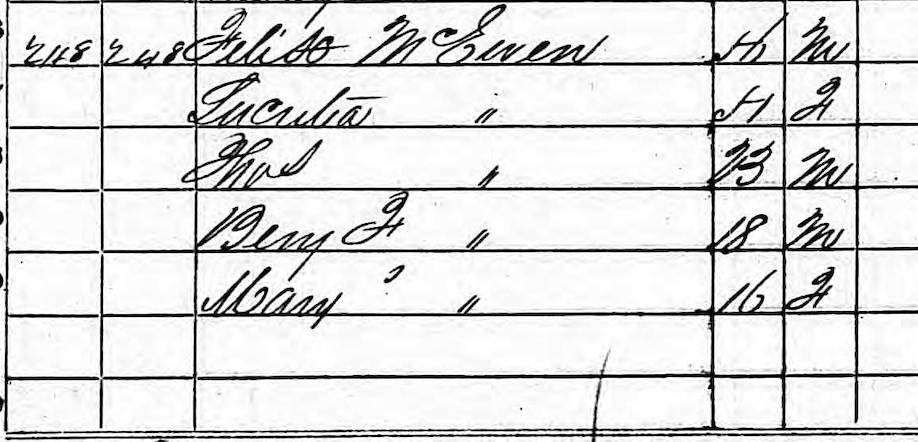
 Recently, I was doing some research with the 1850 census and almost missed a 10-year-old child in the family because he was listed on the next page. I’ve developed the good habit of always looking to the next page when the family I’m researching is on the last line of a census page. But in this case, though the family was last, there were two blank lines on the page, so I didn’t bother to click ahead. (That’s a snip of the page at the top of this post.) I’m not sure what caused me to look about a half hour later, but I’m glad I did!
That’s such a easy mistake to make, I thought I’d mention it here. Of course, even if the family you’re researching isn’t the last family on a census page, it’s a good practice to look at the next (and previous) page to observe their neighbors and see whether there are other family members living nearby. Lesson learned!
ETA: I had a feeling that there would be some great comments to this post that would provide additional advice and information and I was right! Please be sure and read the comments. And thank you to those who have commented!
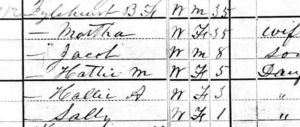 I was going crazy looking for my great great grandfather, Benjamin Franklin Igleheart, and his family on the 1880 census. None of my searches of various sites turned him up. I really wanted to find that census, because I knew from the 1900 census that his wife, Mattie, had given birth to 11 children, only three of whom were alive in 1900. I had found five of them, but I assumed that finding the 1880 census would reveal the names of more. (Mattie was 25 in 1870.)