• BLOG
  • ABOUT
    • Privacy Policy

Organize Your Family History

Stay focused and happy while exploring your roots

Quick Tip #21: Ignore nothing

June 8, 2021 By Janine Adams 4 Comments

Here’s the next in my occasional series of bite-size Quick Tips. Click on the Quick Tips tag for my other Quick Tips. Because I tend to write longer posts, I wanted to provide a quick-to-read (and quick-to-write) post every couple of weeks on a small topic that pops into my head. I often find myself glad that I’ve paid attention to a small detail!

Ignore nothing

I’ve been doing my share of newspaper research lately. (I treated myself to a six-month subscription to Publisher Extra on newspapers.com recently.) When I do a newspaper search on my relatives I often unearth tiny mentions of them that seem unimportant and not worth the time to download and process.

I’ve learned that these small mentions can be important additions my research and that I shouldn’t ignore them. Case in point: I downloaded an article from the Owensburg Owensboro (Kentucky) Messenger-Inquirer from 16 Jun 1903 that offered a single sentence about my great grandfather: “Mr. Elmer Adams’ horse ran off Sunday morning and tore his buggy all to pieces.” (It was part of a larger article full of single-sentence updates about residents of Sacramento, McLean, Kentucky including a mention of Elmer’s mother’s funeral.)

I’m so glad I downloaded it because later, when I was trying to figure out when Elmer moved his family from Kentucky to Oregon where my grandfather was born in 1904, this became a data point on my timeline. It helped me narrow down when he might have left Kentucky.

Now I remind myself to go ahead and take a few minutes to download each piece of information I find (in a newspaper or elsewhere), no matter how trivial it may seem at that moment. It just might come in handy later!
Filed Under: Genealogy tips Tagged With: quick tips, research

Genealogy Jamboree is virtual this year!

June 1, 2021 By Janine Adams 2 Comments

The Southern California Genealogical Society Genealogy Jamboree starts this week! (I don’t know why I haven’t blogged about this year’s Jamboree, but I appreciate a comment from reader Rebecca Stanley mentioning it.) This is always such a robust conference and this year it’s even more so: There are two days for DNA topics and two days for the Genealogy Jamboree, which focuses on traditional genealogy. And it’s virtual this year, so you don’t have to travel to southern California to attend.

The Genetic Genealogy conference will be held June 4 & 5. The Genealogy Jamboree will be held June 11 & 12. Each conference consists of six live lectures that you can attend live or access the recording later. In addition, there will be 20 Genetic Genealogy and 50 Genealogy Jamboree recorded sessions. That’s a lot of learning opportunities Here’s the schedule for both conferences.

There are two levels of registration. If you purchase the Standard Registration for Genetic Genealogy ($190), you have access to 10 recordings. The Standard Registration for the Genealogy Jamboree ($175 for non-members) gives you access to 30 recordings. You can watch recordings until October 2021.

Alternatively, you can purchase the Plus Registration for each conference and have access to the live presentations plus all the recorded sessions for that conference. The Plus Registration for the Genetic Genealogy conference is $260 for non-members and gives you access to 20 recorded sessions. The Plus Registration for the Genealogy Jamboree is $275 for non-members and gives you access to 50 recorded sessions. You’ll get a $20 discount for registering for both conferences and SCGS members receive a $20 to $30 discount, depending on the package.

Again, you can access the entire schedule here.

And here’s an exciting addition: On Monday, June 7 and Wednesday, June 9 several live presentations are being offered free of charge in a program called JamboFree. (These sessions are not recorded.) You simply have to complete a free registration (or log in with your SCGS login) to get access.

There’s lots of information available on the website. This page is a good place to start if you’d like to learn more.

I attended the Jamboree in person back in 2015 and was really impressed by the professionalism of the whole event. I’m confident the virtual event will be equally well done!


Filed Under: Excitement, Genealogy tips Tagged With: conferences, dna, learning opportunities

Quick Tip #20: Write everything down

May 25, 2021 By Janine Adams 4 Comments

Here’s the next in my occasional series of bite-size Quick Tips. Click on the Quick Tips tag for my other Quick Tips. Because I tend to write longer posts, I wanted to provide a quick-to-read (and quick-to-write) post every couple of weeks on a small topic that pops into my head. This one saves time and frustration!

Write everything down

I learned a number of years ago that I can’t rely on my memory when it comes to genealogy. (Or a lot of things, for that matter.) I can keep a few ancestors’ names and birth and death dates in my head, but only a few. I used to think I would remember to pick up where I left off in a session or to pursue a clue (from a previous session or even the current one). But now I don’t take a chance, I write it down.

The key to success in taking these notes is having a place to put them so you know where to look. That could be a spiral bound notebook or a pad you keep by your keyboard. Or it could be a note in your genealogy software. Or it could be in follow-up notebooks in a platform like Evernote (that’s what I use). Or in your research log, in whatever form it takes

The takeaways here are twofold: (1) don’t rely on your memory and (2) have a consistent place where you put follow-up notes or lists of tasks. This small practice makes everything easier!

Filed Under: Challenges, Genealogy tips, Organizing Tagged With: best practices, quick tips, research log

How They Do It: Julie Miller

May 14, 2021 By Janine Adams 2 Comments

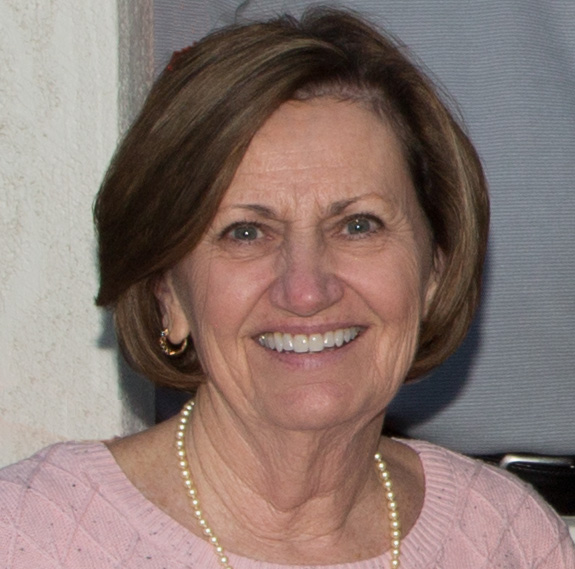
I am so excited to bring you another interview in my How They Do It Series. Julie Miller is a Certified Genealogist and a Certified Genealogical Speaker and a fellow of the National Geneaological Society. Julie is a full-time professional researcher, speaker, and writer who lives in Colorado. Those of us who enjoy attending NGS Family History Conferences have a lot to thank Julie for. She was the conference chair of the 2010 and 2012 NGS Family History Conferences, was Chair of the NGS Conference Committee from 2012–2018, and is currently a member of the committee. I was so happy when she agreed to do a How They Do It interview!

How They Do It: Julie Miller

How long have you been doing genealogy?

Forty-five years. I was in college and was inspired by the book Roots by Alex Haley.

What’s your favorite thing about being a genealogist?

It makes me feel connected to family I never knew personally. 
Also, I love that there’s always something new to learn.

What’s your biggest challenge when it comes to organizing your genealogy?

Slowing down and taking my time. Things get missed when I don’t.
 For example, it’s a challenge to make myself process a document before going on to the next document. I want to keep researching and find all that I can. When I do that, I not only wind up with a mess that takes a lot of time to sort out but I also overlook information that makes it necessary to redo the research. This happens when I’m working on the computer at home and it’s especially hard when I’m researching in a library or repository.

What is your favorite technology tool for genealogy?


Evernote. I’ve always been a pretty organized person so I look for things that will improve my organizing methods, but only if it will save time allowing me more time for research. 
I’ve been using Evernote for ten years now and it has changed how I research, create a lecture, write an article, etc. Evernote for me is a temporary place for information, I don’t store all of my genealogy there. I use it as I used to use notebooks, except Evernote stores everything in one place and I take it with me everywhere.

If you were starting out new as a genealogist what would you do differently?


So many things but to name just a few:

  • I would cite all my sources. Not just those I was sure about but those sources or clues that I used to get to where I wanted to go.
  • I would take one question at a time and try to find the answer. I tried to do too much all at once and the result was a lot of partially finished research.
  • 
I would take a beginning genealogy class instead of teaching myself.
  • 
I would join a genealogy society to learn from others and to connect to others with an interest in genealogy. Genealogy can be a lonely and isolating interest even before the internet but it can be more so now.

Do you keep a research log? If so, what format?


Yes. I have a combination research log and plan that is in Evernote. I have the template that I copy when starting a new project.

How do you keep track of clues or ideas for further research?

I have a future research and notes columns in my research plan. 
I also use Evernote to save ideas.

How do you go about sharing your personal research with cousins or other interested parties?


Private web site that is just for family. I have a skeleton tree on some DNA websites. Other inquiries are handled on an individual basis.

What’s the most important thing you do to prepare for a research trip?

Hands down, a research plan(s). I always take more plans than what I think I can get done. There are times when the information just isn’t there or a problem is solved faster than expected. If you don’t have more to do, precious time is wasted.

What’s your biggest piece of advice to genealogists in terms of organizing their research?


Be consistent. No matter how you choose to organize (and it will be different for each person), write down how you want to organize and consistently stick to your choices. I recommend creating a personal style guide to record the choices selected.

Also, it is so important to research and evaluate different organizing methods before starting. Then you can decide on what’s right for you. Don’t listen to what other people think are the best methods. Their situation and thinking process are not exactly the same as yours and so what’s the best system for them will not necessarily be the best for you.

Do you have a dedicated space in your home for doing genealogy research? What’s it like?

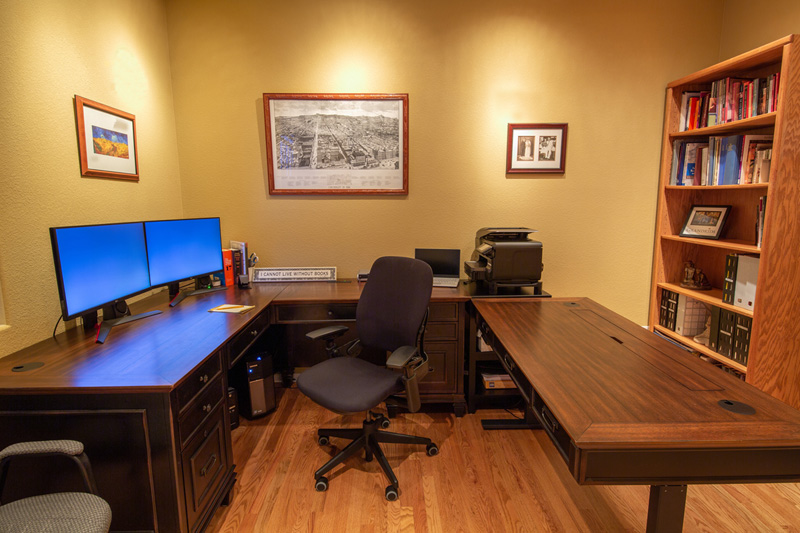
Yes, it is my office. I have an L shaped desk, a standing desk that is height-adjustable, a desktop with dual monitors, printer, scanner, and bookcases.

Do you have anything to add?

If we want our genealogy to stand the test of time and be handed down to the next generation, we have to have it organized. Too much work has been tossed in the trash because descendants don’t have the time or the inclination to organize the research that they have been given.

Amen, sister! So much of what Julie had to say resonated with me; I found myself nodding along as I read her answers. I’ve admired Julie since I heard her speak at the NGS conference in St. Charles, Missouri, back in 2015. Her talk on Civil War Pension Files set me off on a wonderful journey with these records. (She even helped me when I was trying to get my source citation right!) For more information about Julie and her services, check out her website JPM Research. Thank you so much, Julie, for sharing such great advice and for giving us a peek at your spacious, organized research space. (I’m green with envy.)

Filed Under: Excitement, Genealogy tips, Organizing Tagged With: How They Do It, Julie Miller, organizing aids

  • « Go to Previous Page
  • Page 1
  • Interim pages omitted …
  • Page 22
  • Page 23
  • Page 24
  • Page 25
  • Page 26
  • Interim pages omitted …
  • Page 106
  • Go to Next Page »

about me

I'm Janine Adams, a professional organizer and a genealogy enthusiast. I love doing family history research, but I find it's very easy for me to get overwhelmed and not know where to turn next. So I'm working hard to stay organized and feel in control as I grow my family tree.

In this blog, I share my discoveries and explorations, along with my organizing challenges (and solutions). I hope by sharing what I learn along the way I'll be able to help you stay focused and have fun while you do your research, too.

tags

30 x 30 Adams amy johnson crow anniversary Brown cemetery census Civil War conferences connections dna electronic files Evernote excitement Family Curator family photos genealogy tools getting started goals How They Do It Igleheart Jeffries keepsakes learning opportunities maps newspapers NGS organizing aids overwhelm paper files planning quick tips rasco record keeping research research log research trip resources RootsTech social history source documentation Stacy Julian technology time management vital records

join the facebook community!

join the facebook community!

My organizing business

Learn more about my organizing business, Peace of Mind Organizing®.

Subscribe by RSS

  • RSS - Posts
  • RSS - Comments

© 2026 Janine Adams


Loading Comments...