• BLOG
  • ABOUT
    • Privacy Policy
  • CONTACT

Organize Your Family History

Stay focused and happy while exploring your roots

Research your military ancestors this Veteran’s Day

November 10, 2017 By Janine Adams Leave a Comment

Tomorrow is Veteran’s Day and Find My Past is making it easier to dig deeper into your ancestors’ military service. The website is offering free access to their military databases through November 12.

This offer seems particularly helpful if you have ancestors from Great Britain. Find My Past’s military databases include British Army Service Records, Prisoners of War, 1715-1945; British Royal Navy and Royal Marines Service and Pension Records; Napoleonic War Records; British Army Casualty Lists, 1939-1945; WWI Ships Lost at Sea, 1914-1919. The databases aren’t limited to the UK, though. I did a quick search when I was writing this post on an ancestor who lived in the United States and was able to quickly find his 1903 Army enlistment record.

To get started, search for an ancestor at the Military Access Page. When you click on a search result, it will ask you to sign up for a free account. During this free promotion period, you’ll be able to access (and download or print) the documents you find.

If you’re not sure what wars your ancestors might have fought in, check out this Family Search Wiki page on Ages of Serviceman in Wars. Also check out this blog post I wrote about creating a spreadsheet to help you identify your military ancestors easily.
 

Filed Under: Genealogy tips Tagged With: learning opportunities, military, resources

How They Do It: Kitty Cooper

November 7, 2017 By Janine Adams 5 Comments

For this month’s entry in the How They Do It series, I’ve interviewed genealogist, DNA expert, and blogger Kitty Cooper of Kitty Cooper’s Blog: Musings on Genealogy, Genetics and Gardening. I’ve had the pleasure of meeting Kitty at the Southern California Genealogical Society’s Genealogy Jamboree in 2015. She was speaking on DNA–a topic that I find  challenging to understand–and made me really appreciate the value of genetic genealogy. Since I know she’s a very busy genealogist and blogger I was interested in learning how she organizes her research.

How They Do It: Kitty Cooper

How long have you been doing genealogy?

I have been doing genealogy for 20 years and genetic genealogy for six years but I was always asking for family stories from my relatives from the time I was little.

What’s your favorite part of doing genealogy?

Solving puzzles and learning about the lives of my ancestors. Using DNA to solve mysteries, particularly unknown parentage cases. Blogging about it all. I am constantly surprised by how much I love blogging and how much effort I put into writing and rewriting my posts.

Do you consider your genealogy research well organized?

The electronic part is very well organized, paper less so. Everything is in well labeled folders but the problem is where those folders have wandered to. The scan pile? The current pile? The desk pile? Or the file cabinet drawer it should be in. After reading your blog I decided to reorganize my office in 2015. I am trying to get all the paper documents scanned in and uploaded to my various trees

What type of software do you use for organizing your genealogy research?

I have a folder for every client and for every ancestral line and for the lines within those lines so some of my folders are nested fairly deeply! All of these folders are in dropbox so I can move seamlessly from computer to computer to tablet to smartphone. As I regularly destroy laptops (coffee, water, dropping them, etc) this is very important. I no longer have a desktop computer.

I have Family Tree Maker 2017 but I mainly use it to export gedcoms of specific lines for cousins. I also have Rootsmagic which I like for its synching with familysearch. However my up-to-date tree is online at GENI.com and Wikitree.com (great for its DNA features) as well as somewhat at familysearch.org

I am a heavy user of spreadsheets (OpenCalc) for tracking all my matches, my correspondence, my clients, my time and many other things. I also have found that using a spreadsheet to do a McGuire diagram is really helpful for tough DNA cases or just drawing the picture. I take copies of documents from archives by taking photos with my smartphone. Next I use Adobe Photoshop Elements to improve and crop images as well as to make diagrams for my blogs. I use Google images to archive photos from my phone. I use WordPress for blogging and CMS Made Simple for my family history site. I use slides.com for my presentation slides. I would be lost without the ability to search my email, thank you Google for gmail.

For DNA work, I am a “pro” user of the tools at GEDmatch and DNAgedcom (Gworks). I keep a separate folder system for DNA data which is all in spreadsheets and text file logs. One for every relative I track. Plus my own online mapping tools to make pictures for family and my blog.

There are many other online tools and apps I use, if only I could remember which ones.

Do you keep a research log? If so, what format?

I keep a research log for each client, each family line, and each DNA tested relative. Plus a log of what to look up in the Norwegian farm books when I am next in Salt Lake City and what to look up in the NYC municipal archives when visiting there. These are just free form text files in Notepad and I note what I find in them as well. I often just take a tablet or smartphone to an archive which can easily update those logs since they are plain text files in dropbox.

Do you have a tree on Ancestry? If so, is it public or private? Why?

Yes I have a public imperfect tree so that ancestry’s cool DNA matching can match me to relatives who also have trees. With only one parent and one grandparent born in the USA (to immigrants), I do not have that many matches, or circles and no NADs.

What’s your biggest challenge when it comes to organizing your genealogy?

Finding the time to scan in the photos and documents from before I was mainly online. Dealing with the fact that my memory is not as good as it once was so I need to track everything in lists including paper and pencil for my daily to do list.

What’s your biggest piece of advice to beginning genealogists in terms of keeping track of their research?

CLUB: Cite, Log, Understand, Backup. In other words, keep good track of where each piece of information and record is from (cite) as well as what you found or did NOT find on a research trip (log), try to understand that dates and spellings often vary (as do Norwegian surnames), and always back up your work. Best to have off-site transparent backup whether dropbox or something similar. It is also good to contribute your work to one of the collaborative world trees for posterity.

What do you think is the most important thing for people to do to stay organized when it comes to family history research?

Use a system that works for them. Typically start with tools they use(d) in the work place, folders, spreadsheets, and word processors and then figure out what they need in addition. A genealogy program that fits their needs is a good thing to have as well.

If you were starting out new as a genealogist what would you do differently?

Note which relative told me what. I did not cite my sources well in the beginning. Scan and upload everything as soon as I got it. Filename should say what it is, for example LJMunsons1940census.jpg or HMLeeWWIdraftCard.jpg, with the person or family name first so that they are listed together in the folder.

Not be so trusting of the random trees online, especially at Ancestry.

Do you keep paper or electronic files (or both)?

Electronic only but I have extensive paper files from the 90s and archive forays before smartphones could take great pictures of documents and book pages. These are slowly getting scanned and added to my folders and online trees

Are you folder or binder person for your paper files?

Folders. Although I do have a binder from my first year of doing genealogy.

Do you use Evernote, One Note or any other electronic organizing system for your genealogy? If so, how do you use it?

No to Evernote. I use spreadsheets extensively via OpenCalc and Google Docs. Plus simple text files and FTM 2017.

Do you have a dedicated space in your home for doing genealogy research? What’s it like?

I have a home office for all my endeavors (I also have a web design business that I am slowly retiring from). It is a full sized room, formerly a bedroom, with a view of my fig tree, good natural light, good closet space, two file cabinets and two bookcases and a sweet dog keeping me company. Plus my wonderful husband has his own office in the next room over, so much better than when we shared an office, but still within shouting distance.

CLUB (Cite, Log, Understand, Backup) is a new acronym to me and I love it! I was fascinated to read all the tech tools that Kitty uses. I must also add Kitty’s disclaimer: “My brother, Shipley Munson, works for familysearch.org – he organizes the yearly RootsTech conferences and my son works for Google.” Those of us who attend RootsTech are very familiar with Shipley–it’s fun to learn that he and Kitty are siblings. What a genealogy-rich family!

Filed Under: Challenges, Excitement, Genealogy tips, Organizing Tagged With: How They Do It, Kitty Cooper, organizing aids

The value of daily research

November 3, 2017 By Janine Adams 6 Comments

The benefits of dailiy genealogy researchI know some of you work on genealogy research every day. But I think the majority of folks are like I once was. I’d wait until I had a free day or half day on the weekend before I’d do any research. And sometimes when that day finally came I’d be paralyzed with all the choices of things to research and very slow to start. Very occasionally, I wouldn’t get anything done because I couldn’t decide!

This year, I’ve been trying hard to research daily. As I mentioned in my last post introducing a new 30 x 30 challenge, I haven’t missed a day since August 1. That feels great.

It got me thinking about some of the advantages to short, frequent research sessions over long, infrequent ones. Here’s what I came up with.

  1. I’m more connected with my ancestors. Because I’m thinking about them every single day, I don’t have to review everything in order to get started.
  2. I forget less. In addition to researching daily I’m also keeping a very informal research log in Evernote that helps me stay on top of what I’ve researched.
  3. I keep a “next steps” list in my  research log so I know exactly what to work on when I sit down to research in the morning. Overwhelm and paralysis is a thing of the past!
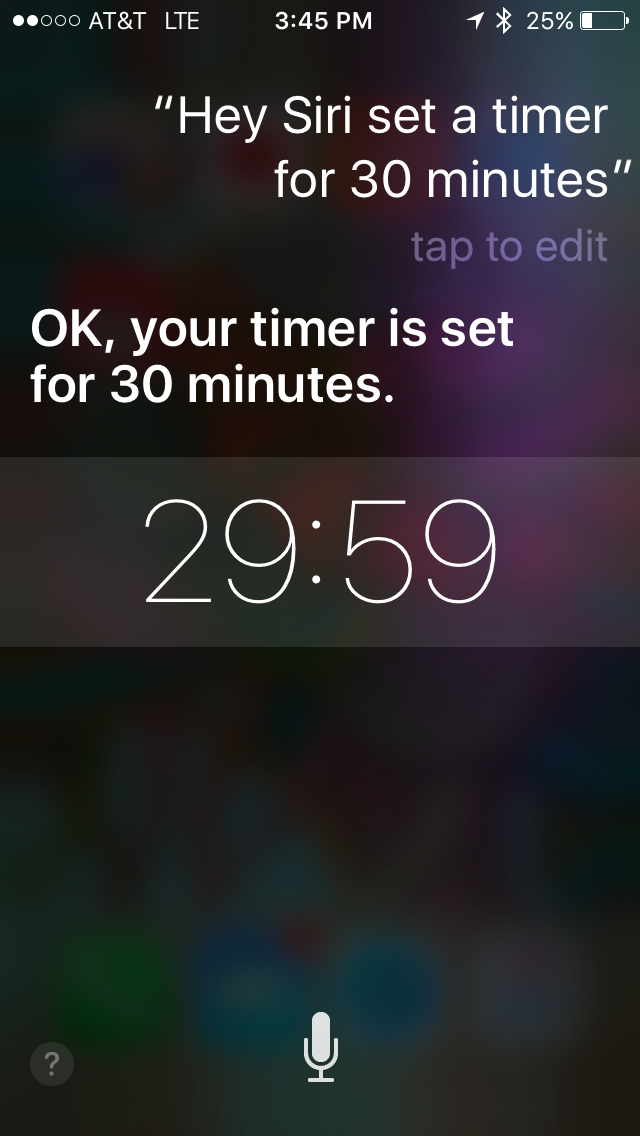
  4. I stay focused. I don’t have the luxury of going down rabbit holes when my timer is going and I know I’ll have to stop before long. This does a great job of keeping me focused. When I’m tempted to get distracted, I just add the bright shiny object to my genealogy task list.
  5. I’ve created a habit! Doing 30 minutes of genealogy research is a great way to start the day. It used to be I’d forget to research. No more. It’s part of my routine and I love it.
  6. It’s easier for me to find 30 minutes a day (3.5 hours a week) than a weekly half day or biweekly full day to research. Taking a whole weekend once a month feels pretty much impossible. I still love having longer sessions–it’s truly a special day when I spend the whole day researching. (Thankfully, I have had a few of those this year.) But daily research means that researching is getting done without my feeling like I’m sacrificing other things.

I really do enjoy longer sessions and I consider those a bonus. This year’s daily research, which is usually a minimum of 30 minutes, means that 2017 will be my most productive year yet when it comes to family history research. And from a time perspective, it’s been really easy!

Filed Under: Challenges, Genealogy tips Tagged With: time management

How indexing might make me a better genealogist

October 25, 2017 By Janine Adams 8 Comments

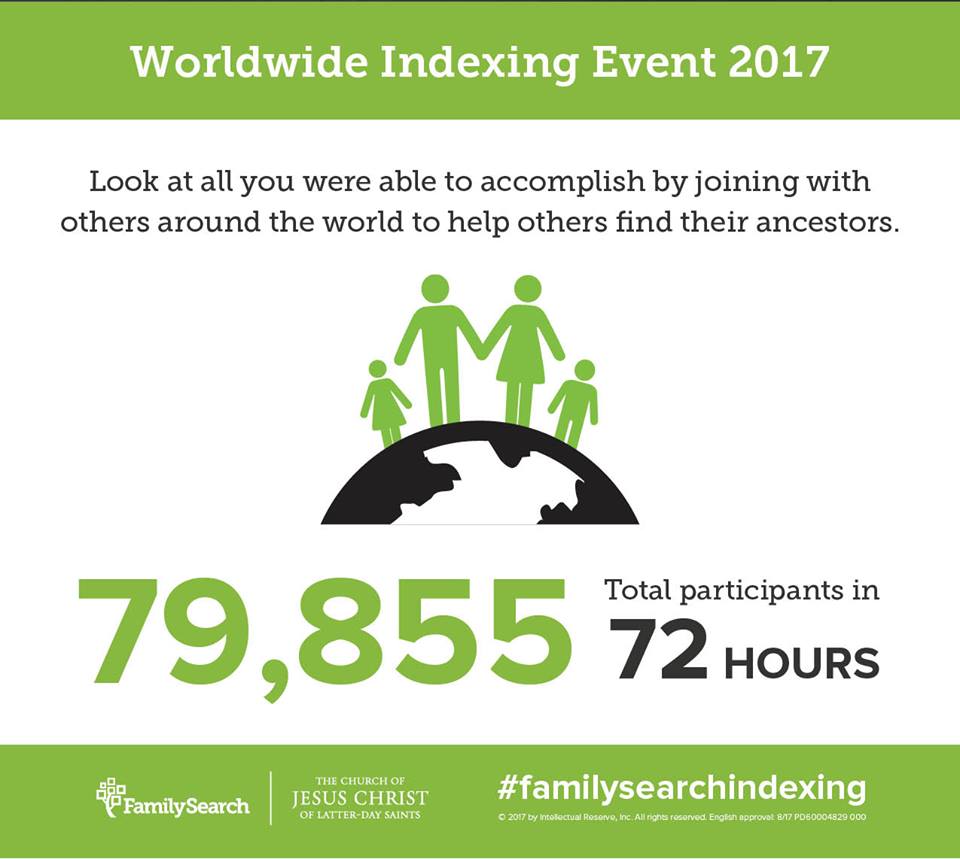
I participated in the Worldwide Indexing Event this past weekend. I’m so glad I did! I’m really grateful to Family Search for making it so easy.

By all appearances, the Worldwide Indexing Event was a big success. Almost 80,000 people participated and 7.2 million records were indexed. I indexed 541 of those records.

I ended up working at the intermediate level, indexing school censuses from Oklahoma schools in the first few decades of the 20th century. These were handwritten cards, each listing a parent and that parent’s children’s names, birth dates and ages. It was fun seeing the names and the birth dates of these kids–some of these families were large!

As I indexed, I realized that I was gaining new insights that would help me in my own genealogy research. I think seeing the challenges of interpreting handwriting, as well as the sloppiness of some of the enumerators, will help me come up with creative searches when I can’t find an ancestor in an index.

Being an indexer also made me realize how easy it is for mistakes to be made. Family Search makes indexing really easy, but if I hadn’t double-checked my work, many August birth dates would have been recorded as April. And a few boys with names like Marion would have been indexed as girls. I’m glad there are arbitrators checking the work, but now when I see errors in an index, I’m going to have a better understanding of how that happened.

Now that I’ve dipped my toe in the indexing pool, I’m going to try to do some indexing for Family Search on a regular basis. If you haven’t tried it, I encourage you to give it a try. Just go to FamilySearch.org, log in, and click Indexing at the top of the screen.

Filed Under: Challenges, Genealogy tips Tagged With: indexing

  • « Go to Previous Page
  • Page 1
  • Interim pages omitted …
  • Page 60
  • Page 61
  • Page 62
  • Page 63
  • Page 64
  • Interim pages omitted …
  • Page 106
  • Go to Next Page »

about me

I'm Janine Adams, a professional organizer and a genealogy enthusiast. I love doing family history research, but I find it's very easy for me to get overwhelmed and not know where to turn next. So I'm working hard to stay organized and feel in control as I grow my family tree.

In this blog, I share my discoveries and explorations, along with my organizing challenges (and solutions). I hope by sharing what I learn along the way I'll be able to help you stay focused and have fun while you do your research, too.

tags

30 x 30 Adams amy johnson crow anniversary Brown cemetery census Civil War conferences connections dna electronic files Evernote excitement Family Curator family photos genealogy tools getting started goals How They Do It Igleheart Jeffries keepsakes learning opportunities maps newspapers NGS organizing aids overwhelm paper files planning quick tips rasco record keeping research research log research trip resources RootsTech social history source documentation Stacy Julian technology time management vital records

join the facebook community!

join the facebook community!

My organizing business

Learn more about my organizing business, Peace of Mind Organizing®.

Subscribe by RSS

  • RSS - Posts
  • RSS - Comments

© 2026 Janine Adams


Loading Comments...