• BLOG
  • ABOUT
    • Privacy Policy

Organize Your Family History

Stay focused and happy while exploring your roots

Join me for the What the Pros Know workshop!

December 29, 2017 By Janine Adams Leave a Comment

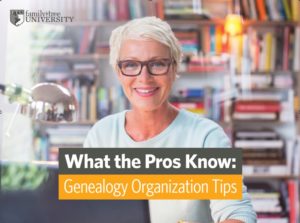
I was tickled pink to be asked by Family Tree University to host a workshop called What the Pros Know: Genealogy Organization Tips. In this one-hour workshop, which will start on January 29, I interview four prominent genealogy experts. Each interview will focus on a particular aspect of genealogy organization. It’s designed to provide some great practical tips that will help you make your genealogy more organized and streamlined.

The experts are:

  • Denise Levenick, on organizing family archives
  • Joshua Taylor, on time management and streamlining your research
  • Drew Smith, on organizing the research process and
  • Thomas MacEntee on using research logs

Also included in the workshop is the opportunity to ask questions in the workshop’s online forums; I will be on hand to answer them.

Click here to learn more and sign! [registration is closed]
Filed Under: Excitement, Genealogy tips, Organizing Tagged With: Denise Levenick, Drew Smith, Family Curator, family tree university, Joshua Taylor, learning opportunities, organizing aids, Thomas MacEntee

Themes from 2017’s How They Do It series

December 26, 2017 By Janine Adams 4 Comments

I spent an enjoyable hour or so going through all 12 of this year’s How They Do It interviews to see whether there were common themes that emerged among all the interviews. I wasn’t surprised to learn that there were!

Here are the 2017 participants (in chronological order), with links to their interviews:

  • Thomas MacEntee
  • Denise Levenick
  • Michael Lacopo
  • Diahan Southard
  • Pat Richley-Erickson
  • D. Joshua Taylor
  • Amy Johnson Crow
  • Melissa Barker
  • Crista Cowan
  • Randy Seaver
  • Kitty Cooper
  • Drew Smith

There were a lot of commonalities among these successful genealogists. Most of them, for example, keep their data digitally, rather than on paper. Staying on top of paper was a bigger struggle than organizing digital files. Almost all wish they had crafted a source citation for all information when they first started out. (Don’t we all?) The thrill of the hunt, the problem solving, the discoveries and/or the connections were the favorite aspects of genealogy research with everyone.

The piece of advice that virtually everyone offered is no surprise. Cite your sources. Other themes that emerged include Keep a research log (and note unsuccessful searches as well as successful ones). Organize as you go — don’t let a backlog build up. Use an organizing system that works for you. And in order to avoid being overwhelmed, several of the interviewees suggested you focus on one line or one family at a time.

There was so much wisdom in these interviews that I don’t have space to quote them all. But here are some of my favorite quotes from the interviews:

My philosophy on organizing things right away is this: the more you put it off or delay it the more difficult it will be. That time spent reorganizing could be better spent researching for ancestors. Lack of organization basically squanders your precious time. (Thomas MacEntee)

I’ve learned that “getting organized” can become an all-consuming goal if we get stuck in the mindset of finding the “perfect” system or solution. I do better when I remind myself that progress is better than perfection; fix what isn’t working and move forward. (Denise Levenick)

The Internet is a bittersweet trap. You will never solve your tough genealogical problems by using only online sources. There is so much more out there that will never see the light of digitization. (Michael Lacopo)

I would encourage people not to make their systems too complicated. If another researcher or a family member ever has to go through your papers later and it isn’t clear how things are organized, that’s when research ends up getting tossed. Simple is good. (Amy Johnson Crow)

When we freely and openly share, family history becomes this truly collaborative environment that helps us make discoveries quicker and helps us be more accurate. (Crista Cowan)

In 2017, I basically asked the same questions of all interviewees. I’m thinking I should change up the questions for 2018. Help me out. What would you like to hear from the experts? And do you have folks you’d like me to interview for the series in 2018? Please share!

Filed Under: Genealogy tips, Organizing, Reflections Tagged With: How They Do It

How They Do It: Drew Smith

December 5, 2017 By Janine Adams 6 Comments

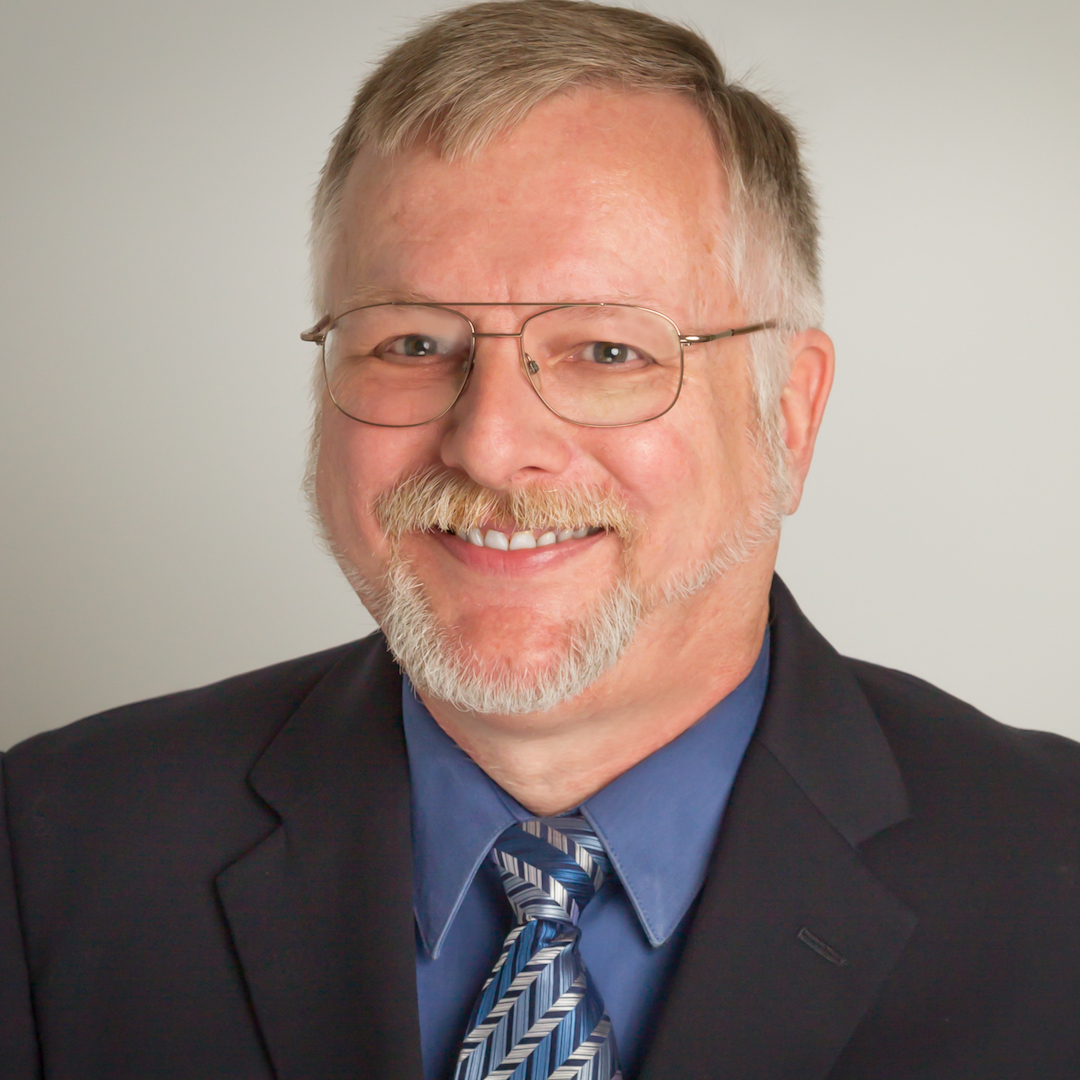
This final How They Do It interview of 2017 is with Drew Smith, genealogist, writer, speaker and podcaster. Drew literally wrote the book about genealogy organizing. He is the author of Organize Your Genealogy: Strategies and Solutions for Every Researcher (Family Tree Books, 2016). You may also know him from the Genealogy Guys podcast, which he presents every other week with cohost George G. Morgan. (Alternate weeks he hosts the Genealogy Connection podcast.) Drew is also a frequent speaker and has a genealogy resume as long as my arm. (You can read his full bio at the Aha! Seminars website.)

I was so pleased he agreed to do this interview. I love how much he and I are on the same page when it comes to organizing family history research!

How They Do It: Drew Smith

How long have you been doing genealogy?

Since 1992

What’s your favorite part of doing genealogy?

Solving puzzles by putting together pieces of evidence.

Do you consider your genealogy research well organized?

I have been more organized recently, but when I started I didn’t know the best way to organize, so I have a lot of papers and files that I still need to go through that I have collected over the years.

What type of software do you use for organizing your genealogy research?

I have RootsMagic to keep track of my genealogical conclusions, Dropbox for my files, and Evernote for my random notes and ideas.

Do you keep a research log? If so, what format?

I have not been regularly maintaining a research log, although I do recommend to everyone that they keep one. I do keep some of that material in Evernote, and I have also begun to use Evidentia to track my research methods.

Do you have a tree on Ancestry? If so, is it public or private? Why?

I have gone back and forth on having a public vs. private tree numerous times, and now I have a public tree that has a major disclaimer on it that asks people not to treat everything in it as well researched. I feel that the benefits of having a public tree outweigh the negatives, as I may be discovered by a distant cousin this way.

What’s your biggest challenge when it comes to organizing your genealogy?

It can be so much fun in discovering something new that it can be easy to forget all of the processes for recording what the information is, where it was found, etc.

What’s your biggest piece of advice to beginning genealogists in terms of keeping track of their research?

Try not to go off in too many different directions at the same time.  Focus on one line at a time, and one person.

What do you think is the most important thing for people to do to stay organized when it comes to family history research?

The most important thing is to have a simple, well thought out system for keeping files in both digital and paper form.

If you were starting out new as a genealogist what would you do differently?

I would make certain to make electronic copies of all papers, as digital files are easier to find than paper files.

Do you keep paper or electronic files (or both)?

I have both, although I feel that paper files are only important if they are one-of-a-kind documents, such as original copies of vital records. Otherwise, everything else can exist as electronic files, and be printed if needed.

Are you folder or binder person for your paper files?

I’m a folder person because I find it easier to move folders back and forth between the file drawer and my desk. And all my bookshelves are taken up by books!

Do you use Evernote, One Note or any other electronic organizing system for your genealogy? If so, how do you use it?

I’m a regular user of Evernote. I use it not only for genealogy but also for work-related projects and for items for home and personal care. I use it for grabbing useful genealogy blog postings, for keeping track of genealogy subscriptions and renewal dates, and for any ideas that might pop into my head on who to research next or what idea to pursue.

Do you have a dedicated space in your home for doing genealogy research? What’s it like?

I have my own home office where I do all my research. A desk for my 27″ iMac and an additional monitor of equal size. A side credenza that has two file drawers and space on top for my current projects. A small whiteboard on the wall where I write the things I want to be focused on. Between the credenza’s two file drawers are a trash can and a brand-new shredder. On the other side of the home office is a bookcase with my most used books, and another desk that houses a wireless printer. And next to my primary computer desk is a former printer stand that has a UPS and cable modem/router below it, and a flat space on top for my office assistant, Oxford the cat, to sleep while I work.

Do you have anything to add?

Genealogists should start to organize their research by starting simple and starting small, and building up from there. Otherwise, it’s too easy to become overwhelmed.

I love that Drew makes space for his cat, Oxford, in his workspace. It probably pleases me too much that even Drew Smith has trouble using a research log consistently. Thanks, Drew, for sharing your answers this month!

This has been a fun year of questions and answers in the How They Do It series. I plan to create a post this month about the themes that have emerged. Watch for new interviews in 2018!

Filed Under: Challenges, Excitement, Genealogy tips, Organizing Tagged With: Drew Smith, How They Do It, organizing aids

How They Do It: Kitty Cooper

November 7, 2017 By Janine Adams 5 Comments

For this month’s entry in the How They Do It series, I’ve interviewed genealogist, DNA expert, and blogger Kitty Cooper of Kitty Cooper’s Blog: Musings on Genealogy, Genetics and Gardening. I’ve had the pleasure of meeting Kitty at the Southern California Genealogical Society’s Genealogy Jamboree in 2015. She was speaking on DNA–a topic that I find  challenging to understand–and made me really appreciate the value of genetic genealogy. Since I know she’s a very busy genealogist and blogger I was interested in learning how she organizes her research.

How They Do It: Kitty Cooper

How long have you been doing genealogy?

I have been doing genealogy for 20 years and genetic genealogy for six years but I was always asking for family stories from my relatives from the time I was little.

What’s your favorite part of doing genealogy?

Solving puzzles and learning about the lives of my ancestors. Using DNA to solve mysteries, particularly unknown parentage cases. Blogging about it all. I am constantly surprised by how much I love blogging and how much effort I put into writing and rewriting my posts.

Do you consider your genealogy research well organized?

The electronic part is very well organized, paper less so. Everything is in well labeled folders but the problem is where those folders have wandered to. The scan pile? The current pile? The desk pile? Or the file cabinet drawer it should be in. After reading your blog I decided to reorganize my office in 2015. I am trying to get all the paper documents scanned in and uploaded to my various trees

What type of software do you use for organizing your genealogy research?

I have a folder for every client and for every ancestral line and for the lines within those lines so some of my folders are nested fairly deeply! All of these folders are in dropbox so I can move seamlessly from computer to computer to tablet to smartphone. As I regularly destroy laptops (coffee, water, dropping them, etc) this is very important. I no longer have a desktop computer.

I have Family Tree Maker 2017 but I mainly use it to export gedcoms of specific lines for cousins. I also have Rootsmagic which I like for its synching with familysearch. However my up-to-date tree is online at GENI.com and Wikitree.com (great for its DNA features) as well as somewhat at familysearch.org

I am a heavy user of spreadsheets (OpenCalc) for tracking all my matches, my correspondence, my clients, my time and many other things. I also have found that using a spreadsheet to do a McGuire diagram is really helpful for tough DNA cases or just drawing the picture. I take copies of documents from archives by taking photos with my smartphone. Next I use Adobe Photoshop Elements to improve and crop images as well as to make diagrams for my blogs. I use Google images to archive photos from my phone. I use WordPress for blogging and CMS Made Simple for my family history site. I use slides.com for my presentation slides. I would be lost without the ability to search my email, thank you Google for gmail.

For DNA work, I am a “pro” user of the tools at GEDmatch and DNAgedcom (Gworks). I keep a separate folder system for DNA data which is all in spreadsheets and text file logs. One for every relative I track. Plus my own online mapping tools to make pictures for family and my blog.

There are many other online tools and apps I use, if only I could remember which ones.

Do you keep a research log? If so, what format?

I keep a research log for each client, each family line, and each DNA tested relative. Plus a log of what to look up in the Norwegian farm books when I am next in Salt Lake City and what to look up in the NYC municipal archives when visiting there. These are just free form text files in Notepad and I note what I find in them as well. I often just take a tablet or smartphone to an archive which can easily update those logs since they are plain text files in dropbox.

Do you have a tree on Ancestry? If so, is it public or private? Why?

Yes I have a public imperfect tree so that ancestry’s cool DNA matching can match me to relatives who also have trees. With only one parent and one grandparent born in the USA (to immigrants), I do not have that many matches, or circles and no NADs.

What’s your biggest challenge when it comes to organizing your genealogy?

Finding the time to scan in the photos and documents from before I was mainly online. Dealing with the fact that my memory is not as good as it once was so I need to track everything in lists including paper and pencil for my daily to do list.

What’s your biggest piece of advice to beginning genealogists in terms of keeping track of their research?

CLUB: Cite, Log, Understand, Backup. In other words, keep good track of where each piece of information and record is from (cite) as well as what you found or did NOT find on a research trip (log), try to understand that dates and spellings often vary (as do Norwegian surnames), and always back up your work. Best to have off-site transparent backup whether dropbox or something similar. It is also good to contribute your work to one of the collaborative world trees for posterity.

What do you think is the most important thing for people to do to stay organized when it comes to family history research?

Use a system that works for them. Typically start with tools they use(d) in the work place, folders, spreadsheets, and word processors and then figure out what they need in addition. A genealogy program that fits their needs is a good thing to have as well.

If you were starting out new as a genealogist what would you do differently?

Note which relative told me what. I did not cite my sources well in the beginning. Scan and upload everything as soon as I got it. Filename should say what it is, for example LJMunsons1940census.jpg or HMLeeWWIdraftCard.jpg, with the person or family name first so that they are listed together in the folder.

Not be so trusting of the random trees online, especially at Ancestry.

Do you keep paper or electronic files (or both)?

Electronic only but I have extensive paper files from the 90s and archive forays before smartphones could take great pictures of documents and book pages. These are slowly getting scanned and added to my folders and online trees

Are you folder or binder person for your paper files?

Folders. Although I do have a binder from my first year of doing genealogy.

Do you use Evernote, One Note or any other electronic organizing system for your genealogy? If so, how do you use it?

No to Evernote. I use spreadsheets extensively via OpenCalc and Google Docs. Plus simple text files and FTM 2017.

Do you have a dedicated space in your home for doing genealogy research? What’s it like?

I have a home office for all my endeavors (I also have a web design business that I am slowly retiring from). It is a full sized room, formerly a bedroom, with a view of my fig tree, good natural light, good closet space, two file cabinets and two bookcases and a sweet dog keeping me company. Plus my wonderful husband has his own office in the next room over, so much better than when we shared an office, but still within shouting distance.

CLUB (Cite, Log, Understand, Backup) is a new acronym to me and I love it! I was fascinated to read all the tech tools that Kitty uses. I must also add Kitty’s disclaimer: “My brother, Shipley Munson, works for familysearch.org – he organizes the yearly RootsTech conferences and my son works for Google.” Those of us who attend RootsTech are very familiar with Shipley–it’s fun to learn that he and Kitty are siblings. What a genealogy-rich family!

Filed Under: Challenges, Excitement, Genealogy tips, Organizing Tagged With: How They Do It, Kitty Cooper, organizing aids

  • « Go to Previous Page
  • Page 1
  • Interim pages omitted …
  • Page 28
  • Page 29
  • Page 30
  • Page 31
  • Page 32
  • Interim pages omitted …
  • Page 69
  • Go to Next Page »

about me

I'm Janine Adams, a professional organizer and a genealogy enthusiast. I love doing family history research, but I find it's very easy for me to get overwhelmed and not know where to turn next. So I'm working hard to stay organized and feel in control as I grow my family tree.

In this blog, I share my discoveries and explorations, along with my organizing challenges (and solutions). I hope by sharing what I learn along the way I'll be able to help you stay focused and have fun while you do your research, too.

tags

30 x 30 Adams amy johnson crow anniversary Brown cemetery census Civil War conferences connections dna electronic files Evernote excitement Family Curator family photos genealogy tools getting started goals How They Do It Igleheart Jeffries keepsakes learning opportunities maps newspapers NGS organizing aids overwhelm paper files planning quick tips rasco record keeping research research log research trip resources RootsTech social history source documentation Stacy Julian technology time management vital records

join the facebook community!

join the facebook community!

My organizing business

Learn more about my organizing business, Peace of Mind Organizing®.

Subscribe by RSS

  • RSS - Posts
  • RSS - Comments

© 2026 Janine Adams


Loading Comments...