• BLOG
  • ABOUT
    • Privacy Policy

Organize Your Family History

Stay focused and happy while exploring your roots

In praise of the family fan chart

September 27, 2023 By Janine Adams 3 Comments

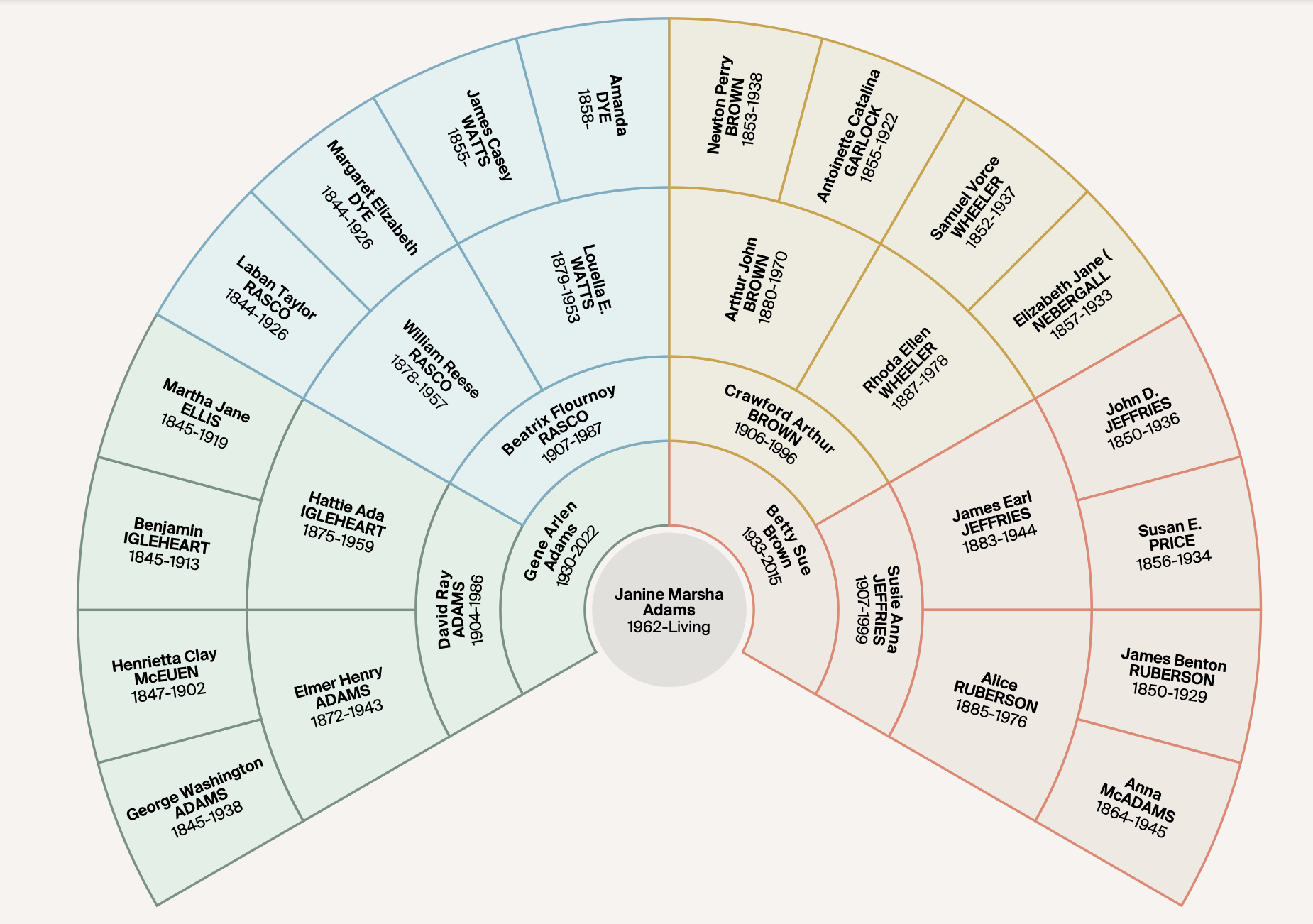
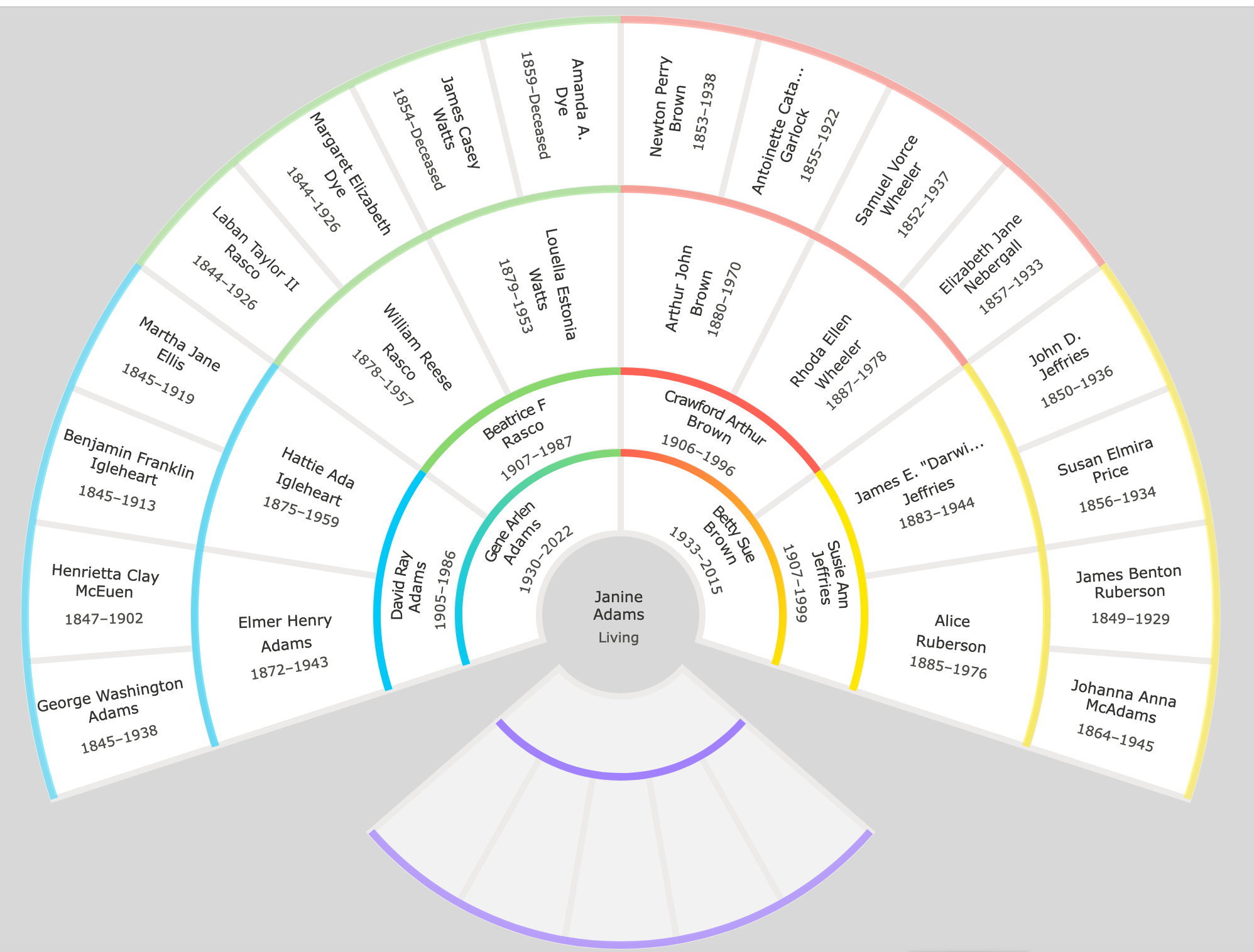
Ancestry has added a fan chart as a way to view your pedigree and navigate to direct-line ancestors in your tree. It’s in Beta now and when I checked it out, I really liked what I saw.

In my opinion, the fan chart is so much cleaner and less cluttered than the pedigree charts (horizontal or vertical) offered by Ancestry. (It doesn’t offer green leaves or Thrulines alerts however.) I can click on any ancestor in the chart and be taken to that ancestor’s Ancestry profile.

As an illustration, I’ll share my family chart on Ancestry, from me through my second great grandparents.

Here’s the fan chart:
And here’s the vertical pedigree chart, which had been my preference.
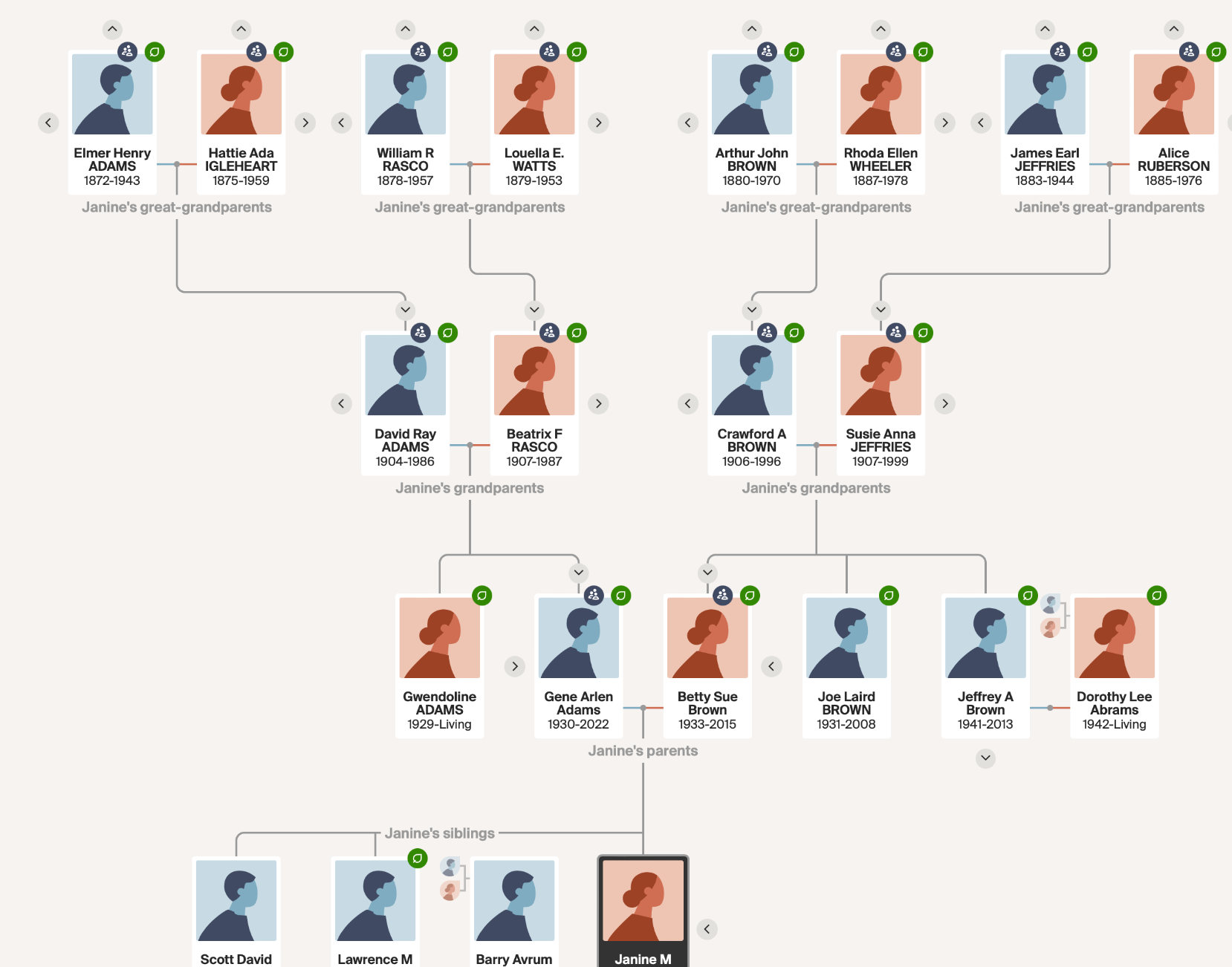
I love how fan charts provide an attractive and easy-to-understand progress of generations. The family-tree software I use on my Mac, Reunion, offers a fan chart too, but it’s not clickable like the Ancestry chart. Here’s what my Reunion fan chart looks like:
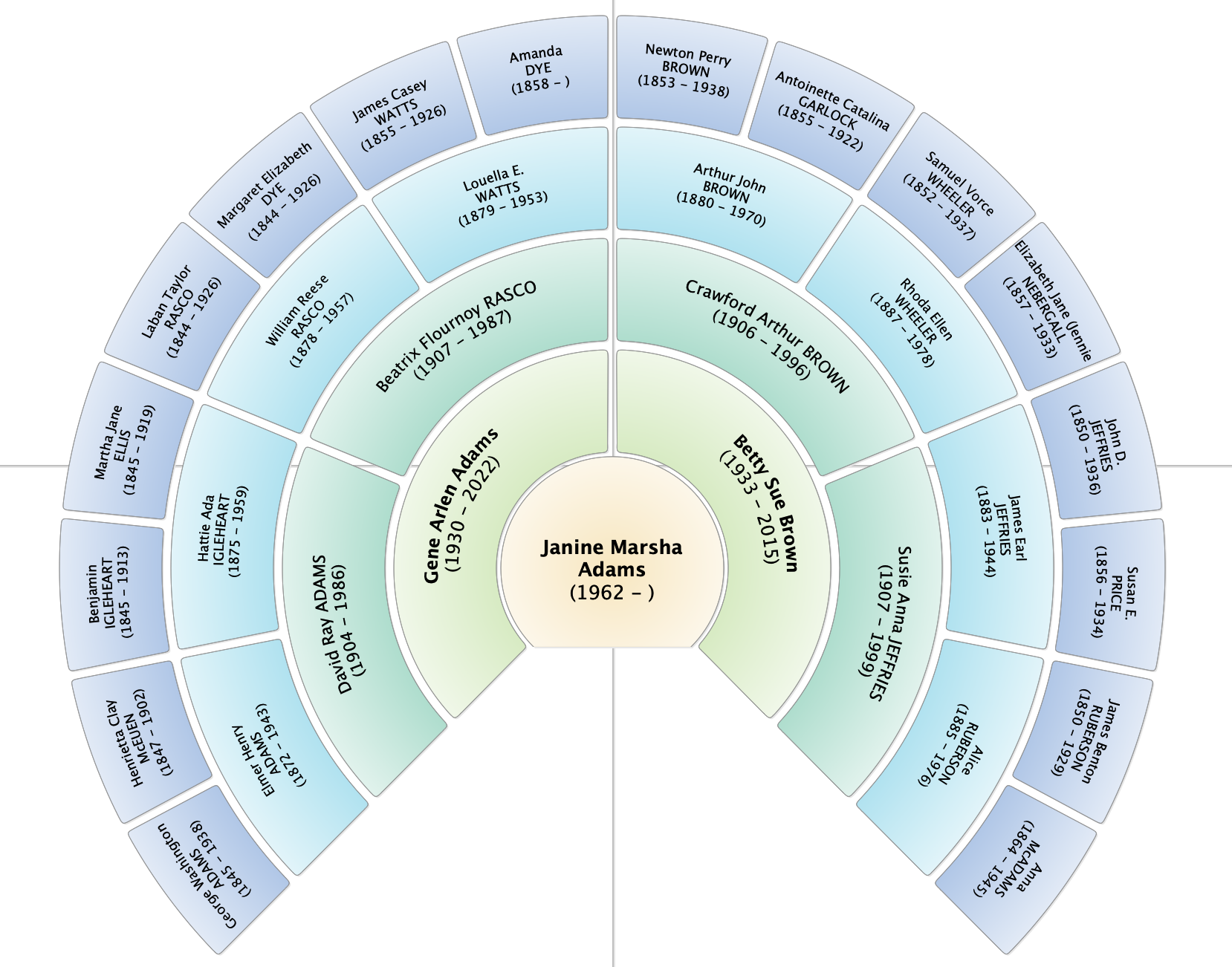
I’d be willing to bet that your family-tree software offers a fan chart. In my opinion, it’s worth looking for!

It just occurred to me to see whether Family Search has a fan-chart view and it does! I simply logged in and clicked Tree and there it was. Each ancestor is clickable and you can put a person in the middle of the fan chart by hovering over their section and clicking the fan icon. (I have not connected my husband on the Family Search family tree and rather than ignore that, it looks like Family Search included a blank grid for my husband and our non-existent children.)

Here’s what my Family Search fan chart looks like.
This is getting repetitive, so I’ll stop. I just wanted to take a moment to express my appreciation for fan charts!
Filed Under: Excitement, Genealogy tips, Organizing Tagged With: genealogy tools, organizing aids

Striving for “organized enough”

August 1, 2023 By Janine Adams 2 Comments

Ten years ago this month, I wrote a post called Are you organized enough?. Today, I present an updated version of that post. In my  opinion, striving for organized enough is far superior to striving for perfectly organized. It’s easier and it’s more sustainable!

A lot of people (including me) strive to be organized, especially when it comes to their genealogy. There are over 43,000 members of the Facebook group, The Organized Genealogist! It’s obvious that many people are looking for ways to get their genealogy research organized.

That begs the question: What does being organized really mean?

I think the answer varies by the individual, but generally speaking, as a professional organizer, I believe that being organized means that you’re able to put your hands on what you want, when you want it (well, within a minute or two). I always discourage people from striving to be “perfectly organized” (because that’s not really possible) and instead go for “organized enough.”

So how do you become organized enough? When it comes to family history research, the path to being organized starts with picking out a system that will work for you. There’s no one right way to organize your genealogy records. Pick what you think will work for you and try to keep it simple.

The next step is to implement your system going forward.  Start immediately, with the next document you find. Don’t wait until you get through your backlog to start filing your incoming documents! The third step is to  deal with your backlog. That is, implement your system using the papers or files you already have.

The final, very important, step is to maintain your system regularly. You don’t want to wait for a backlog to build back up before filing again. Instead, file as you go along. When you acquire a new document  (be it paper or electronic) process and file it right away.

For me, the big difference in how I organize my genealogy files between now and when I first started getting interested in the hobby about two decades ago is that I no longer use paper files. All my documents are digital. I download, rather than print. And if something does come to me in printed form, I scan it. (This post, My process for downloaded documents, details my file-naming protocol and folder structure. They allow me to easily find any document on my hard drive.) I use Reunion software to keep track of my family tree and my sources. That gives me great peace of mind. (And, yes, I back everything up both on an external hard drive and in the cloud.)

The best part? My genealogy research doesn’t impinge on my physical space. The few paper files I’ve retained are in a rolling file cart that I tuck into a closet in my office. And my digital files reside tidily on my hard drive and in the cloud.

I’m not perfectly organized, not by a long shot. But I can find virtually everything I’m looking for quickly, so that makes me organized enough. And that also makes me happy.

If you’re interested in a deep dive on how I organize my own genealogy research, check out my Orderly Roots guide, How I Do It: A Professional Organizer’s Genealogy Workflow.

Filed Under: Organizing, Reflections Tagged With: electronic files, organized enough, paper files, record keeping

How I store my electronic files

July 18, 2023 By Janine Adams Leave a Comment

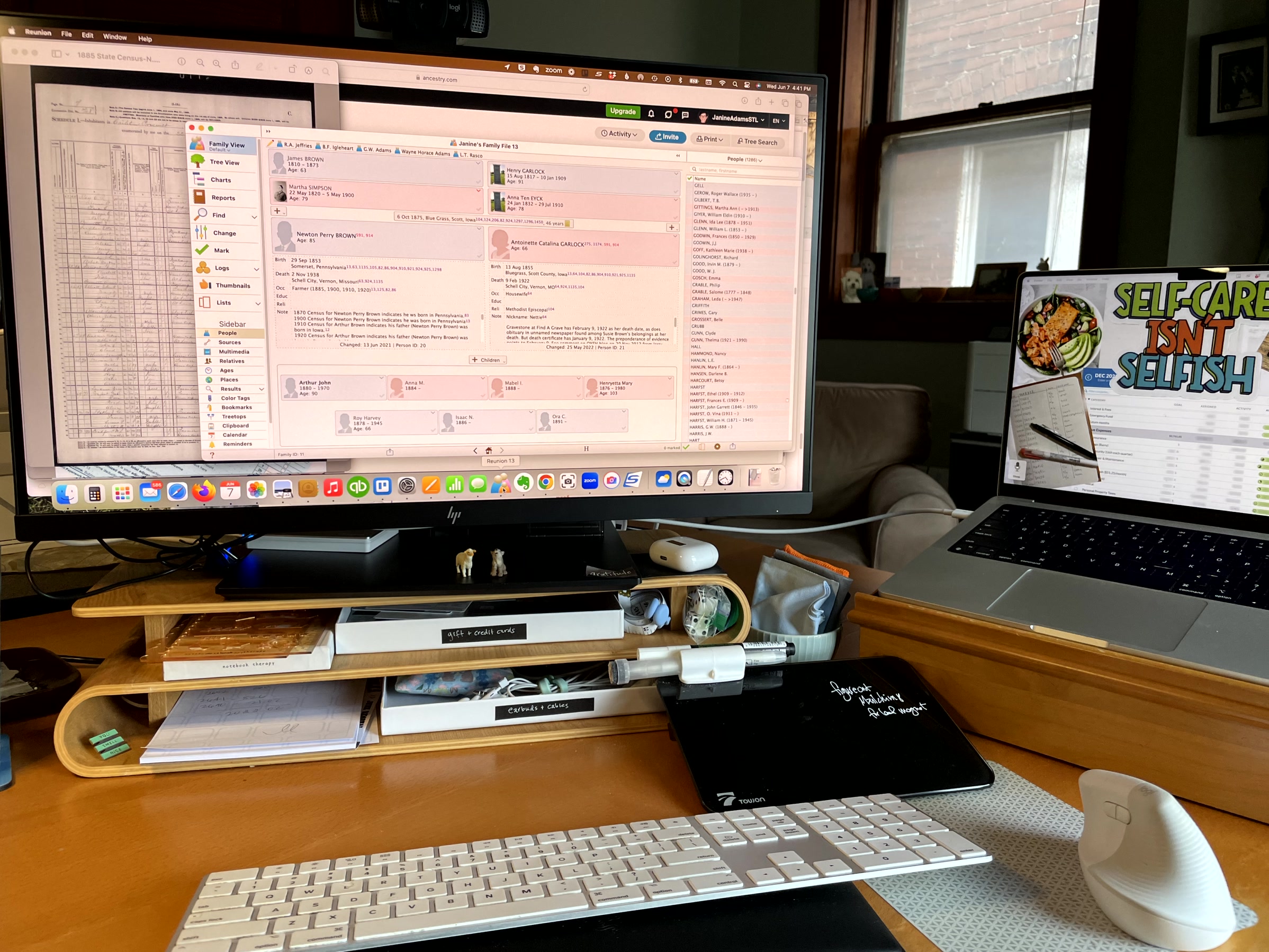
Computer monitor connected to laptop with one cord and wireless keyboard and mouseI first published this post in 2016 and it seemed to be helpful, so I thought I’d run it again. I’ve updated it a little to represent current practices, but very little has changed about my process in the last seven years!

I love organizing my family history research electronically. As I’ve mentioned here many times, I try not to print digital documents and instead store everything electronically where I can have easy access to it.

I don’t think I have been clear when I talk about storing my genealogy data electronically that I’m not talking about storing it as a family tree on Ancestry or Family Search. I’m talking about storing it on my hard drive.

To me, it would be folly to rely on an outside service to store my precious genealogy data. If the only copy of my information was at Ancestry, I would be required to renew my subscription to access my own data. Even storing all my information at a free site like Family Search feels risky to me. In addition to the fact that at Family Search there’s a single tree that anyone can change, it’s conceivable that they could change their terms of service to something unacceptable to me. Or start charging for access. Or simply vanish. Another place that some people store their genealogy documents is Evernote. I think that can be a great way to have easy, searchable access to information. But I wouldn’t store genealogy documents on Evernote that I don’t also have on my hard drive. They could go belly up. (It happened with Springpad.)

I enter all of my data into family-tree software that resides on my laptop’s hard drive. I use Reunion 13, a Mac program. It can sync with the iPhone and iPad using the ReunionTouch app. I like that storing my data on my computer, rather than an online service, is that the information is accessible even when I don’t have an internet connection (if I have my computer with me).

Of course, I back up my hard drive, both on an external hard drive via Time Machine and with an online backup service (Backblaze). Backing up is critical.

I’m not saying that my way is the right way or the best way. But I’ll share with you my process for storing info, in case you find it helpful or interesting. So far, it’s working well for me.

When I find a sourced piece of information pertinent to my research this is what I do:

  1. Add the information to the appropriate person(s) in Reunion (or add a person if need be).
  2. Cite the source in Reunion.
  3. Download the information (or scan it if I found it in paper form).
  4. Attach an image of the source document to the source citation in Reunion.
  5. File the digital document in that ancestor’s electronic folder on my hard drive, copying it if it applies to more than one ancestor.
  6. Scour the source for further information.
  7. Make a note in Evernote if it sparks potential further research.

So far this feels good to me and I haven’t second guessed it.

How do you store your family tree information?

If you’d like a deep dive on how I organize my genealogy research, check out my Orderly Roots Guide, How I Do It: A Professional Organizers Genealogy Workflow.

Filed Under: Challenges, Organizing Tagged With: electronic files, organizing aids, record keeping, technology

How They Do It: J. Mark Lowe

June 14, 2023 By Janine Adams 1 Comment

I’m so happy to publish another interview in my popular How They Do It series! This time, it’s with J. Mark Lowe, FUGA, a professional genealogist, author, and lecturer who specializes in original records and manuscripts throughout the southern U.S. A course coordinator for southern research for multiple genealogy institutes, Mark is a past president of the Association of Professional Genealogists (APG) and past president of the southern Kentucky Genealogical Society. I had the pleasure of working with him when we both presented at the Henderson County (Kentucky) Public Library seminar last year. I can tell you first hand that he is an organized individual. And he’s a delight to work with!

How They Do It: J. Mark Lowe

How long have you been doing genealogy research?

I became interested in family and connections when I was seven years old after my Grandmother passed. (Dad’s Mom) My Dad had some of the answers, but he connected me with his Aunts (my Grandmother’s Sisters) who started filling in some spots. One of those Aunts was the Secretary for the local Congressman and her office was across the street from the County Courthouse. She arranged for my Dad to bring me to visit, along with clothing. When he dropped me off, she took me to the County Court Clerk’s office in the Courthouse. Mr. Oval Motley, the Clerk, introduced me to original records, and encouraged me to create transcriptions from the originals. (Plain Paper copies were not yet available.)

That opened the door to a continuous flow of curiosity.

What’s your favorite thing about being a genealogist?

Learning the stories of my ancestors and the often untold/unheard stories of others.

What’s your biggest challenge when it comes to organizing your genealogy?

Widely diverse records with a mixture of Archival documents, copies, and digital records. Making them all accessible for different reasons.

What is your favorite technology tool for genealogy?

My cell phone, using the Ancestry app and Newspapers.com. I can answer my own question or a query on the fly about family or history.

If you were starting out new as a genealogist what would you do differently?

Focus on each person’s story more – I would not rush to collect the tree. This is especially when you have opportunity and time to learn about “near” living relatives before they or witnesses are gone.

How do you keep track of clues or ideas for further research?

I use 4×6 index cards, Google Keep & Google Tasks, and ToDos in my genealogical software.

How do you go about sharing your personal research with cousins or other interested parties?

I maintain a private tree on Ancestry that I share with folks who have an interest. I also maintain a Family website primarily for cousins.

What’s the most important thing you do to prepare for a research trip?

I take some time to mull & ponder the project, define the purpose of the trips, and determine the tasks to be completed with a timetable.

What’s your biggest piece of advice to genealogists in terms of organizing their research?

Locations are more important to research that just the single families. You are likely to have multiple family members in each location. Being able to look at the location independent of each family will save you time, money, and headaches.

Do you have a dedicated space in your home for doing genealogy research? What’s it like?

Everywhere! I have a library/office, but often do research on my front porch, in my living room chair or occasionally while lying in bed. Good wifi!

Do you have anything to add?

The best researchers are persistent. They don’s stop when the record they seek is not where they look. They back up, rethink the options, learn about the record creation, and go find the record.

So many wonderful nuggets in Mark’s concise responses! I think his advice to organize information around location as well as family is really interesting. It’s something I don’t do currently but will explore. I also love Mark’s wise words on taking the time to learn from your close relatives while they are still living and able to share family history information. Thank you so much, Mark, for sharing your wisdom and expertise! If you’d like to learn more about Mark, check out Kentucky Tennessee Research Associates. You can also find him on YouTube channel and Twitter.

Filed Under: Excitement, Genealogy tips, Organizing Tagged With: How They Do It, J. Mark Lowe

  • « Go to Previous Page
  • Page 1
  • Page 2
  • Page 3
  • Page 4
  • Page 5
  • Page 6
  • Interim pages omitted …
  • Page 69
  • Go to Next Page »

about me

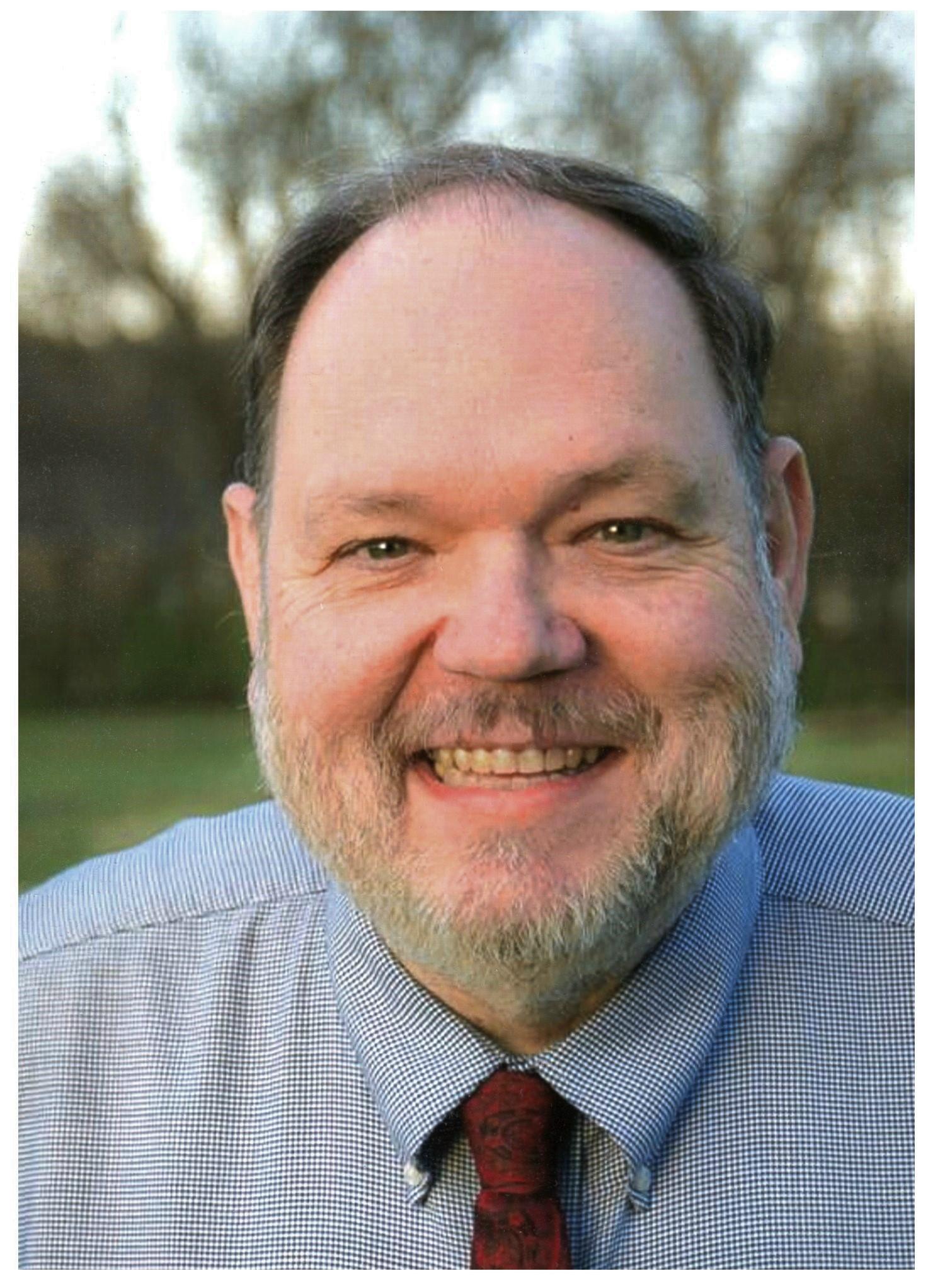
I'm Janine Adams, a professional organizer and a genealogy enthusiast. I love doing family history research, but I find it's very easy for me to get overwhelmed and not know where to turn next. So I'm working hard to stay organized and feel in control as I grow my family tree.

In this blog, I share my discoveries and explorations, along with my organizing challenges (and solutions). I hope by sharing what I learn along the way I'll be able to help you stay focused and have fun while you do your research, too.

tags

30 x 30 Adams amy johnson crow anniversary Brown cemetery census Civil War conferences connections dna electronic files Evernote excitement Family Curator family photos genealogy tools getting started goals How They Do It Igleheart Jeffries keepsakes learning opportunities maps newspapers NGS organizing aids overwhelm paper files planning quick tips rasco record keeping research research log research trip resources RootsTech social history source documentation Stacy Julian technology time management vital records

join the facebook community!

join the facebook community!

My organizing business

Learn more about my organizing business, Peace of Mind Organizing®.

Subscribe by RSS

  • RSS - Posts
  • RSS - Comments

© 2026 Janine Adams


Loading Comments...