• BLOG
  • ABOUT
    • Privacy Policy

Organize Your Family History

Stay focused and happy while exploring your roots

Search Results for: 30 x 30 challenge

How They Do It: Amie Bowser Tennant

April 13, 2021 By Janine Adams 7 Comments

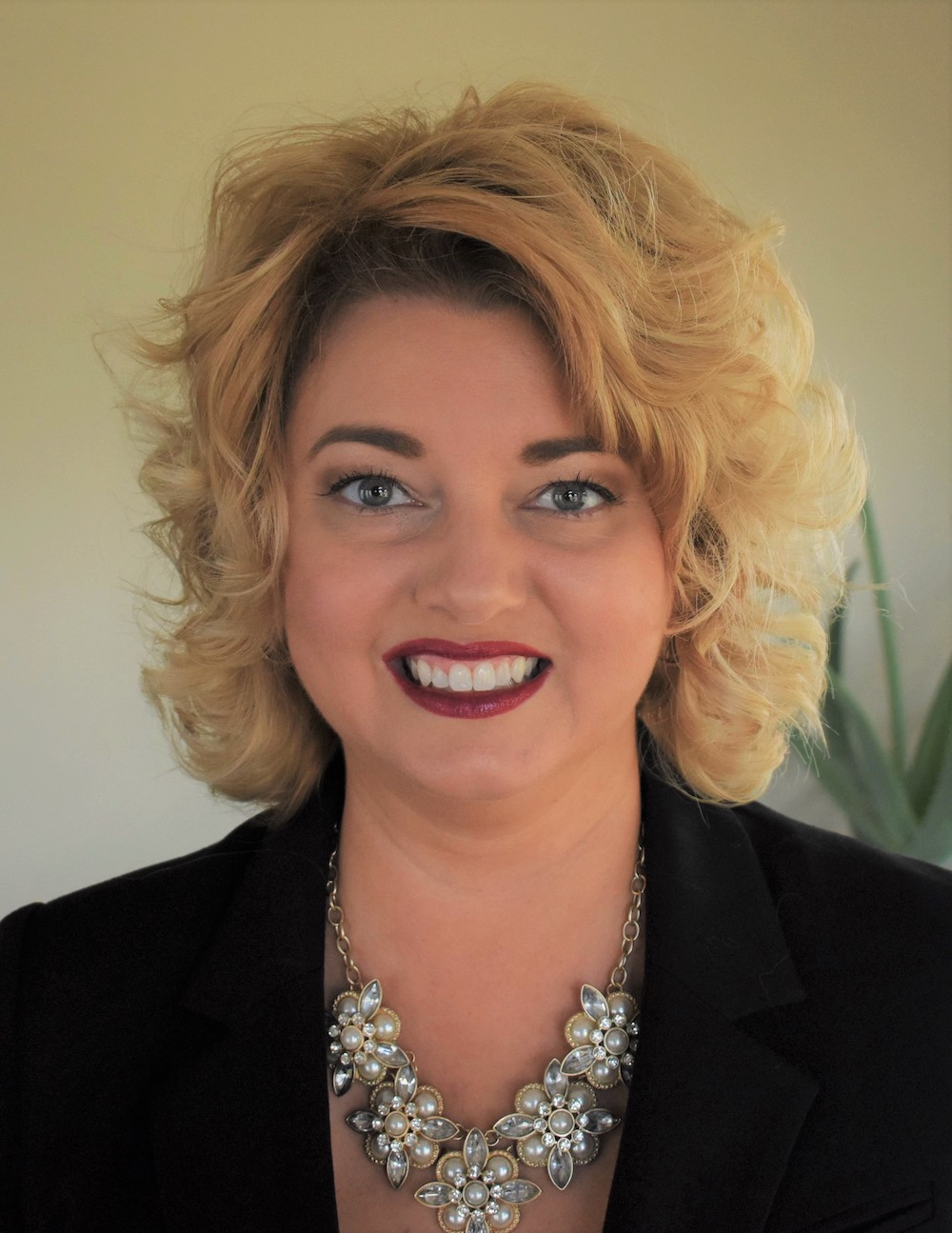
I am delighted to present a new interview in my How They Do It Series. I bet a number of you are familiar with Amie Bowser Tennant, The Genealogy Reporter, who brings us genealogy news, education and inspiration. Amie is a research genealogist and national speaker and, in addition to keeping her own blog, she is a blogger for FamilySearch. I’ve enjoyed hearing her speak at conferences and am so happy when she agreed to do this interview. Enjoy!
How They Do It: Amie Bowser Tennant

How long have you been doing genealogy?

I have been doing genealogy for 22 years. It started out as a passion to scrapbook, but when I realized how many pictures my parents had of people they didn’t know, I started investigating the family. That is how I got hooked!

What’s your favorite thing about being a genealogist?

Wow…my favorite thing about genealogy? There are so many! I guess when I find a document that no one else had been able to find.

What’s your biggest challenge when it comes to organizing your genealogy?

My biggest challenge to organizing my genealogy is getting ahead of myself. In other words, working on too many projects at once and not organizing as I go. I have everything I need print out documents, label them with a citation, file them in a folder or binder, and save them on the computer and on the cloud, and I still get excited and forget to print something or cite something from time to time!

What is your favorite technology tool for genealogy?

My favorite tech tool for genealogy is my smartphone with a camera! I don’t have to make Xerox copies anymore and it has made a world of difference to the quality of the images I can get while visiting a research center on site.

If you were starting out new as a genealogist what would you do differently?

If I were starting out as a new genealogist, I wouldn’t necessarily do anything different than what I did. The best thing I did was to take the National Genealogical Society American genealogy at-home course. It set a great foundation.

Do you keep a research log? If so, what format?

Yes, I keep a research log in Microsoft Excel usually. Across the top, I have the research question in bold. Then, each column gets a heading: Item Viewed, Date Viewed, What was looked for, What was found, URL link, Source Citation. I save this on Google Drive so I have it accessible anywhere I am doing research.

How do you keep track of clues or ideas for further research?
Lots of highlighters on document copies and my notebooks and I use colored sticky tabs to mark things in books or notebooks that I need to come back to.

How do you go about sharing your personal research with cousins or other interested parties?

I rarely share my personal research with other genealogy minded people. Not because I don’t want to, but because my family members aren’t interested in getting a traditional report. For this reason, I have done lots of unique things. I made a giant poster with all the descendants of my grandparents; I created a scrapbook of fun stories of just the grandmothers in the family; and I wrote a narrative about one side of our family after having done several interviews of family members. On occasion, I do a special something for the kids that has to do with their ancestor…like an ancestor birthday party or a potted plant of a flower/vegetable one of their ancestors used to grow in their garden.

What’s the most important thing you do to prepare for a research trip?

The most important thing I do before a research trip is make sure my car is in good running condition. I once got a flat tire on a research trip and that was not fun! I also make sure I have a way to charge all my devices (phone, laptop, gps, etc.)

What’s your biggest piece of advice to genealogists in terms of organizing their research?
My biggest piece of advice for genealogists is to remember to not only cite their record sources, but to remember to source their pictures. I always add metadata or text on the front of a digitized photo with a source citation of where it came from.

Do you have a dedicated space in your home for doing genealogy research? What’s it like?

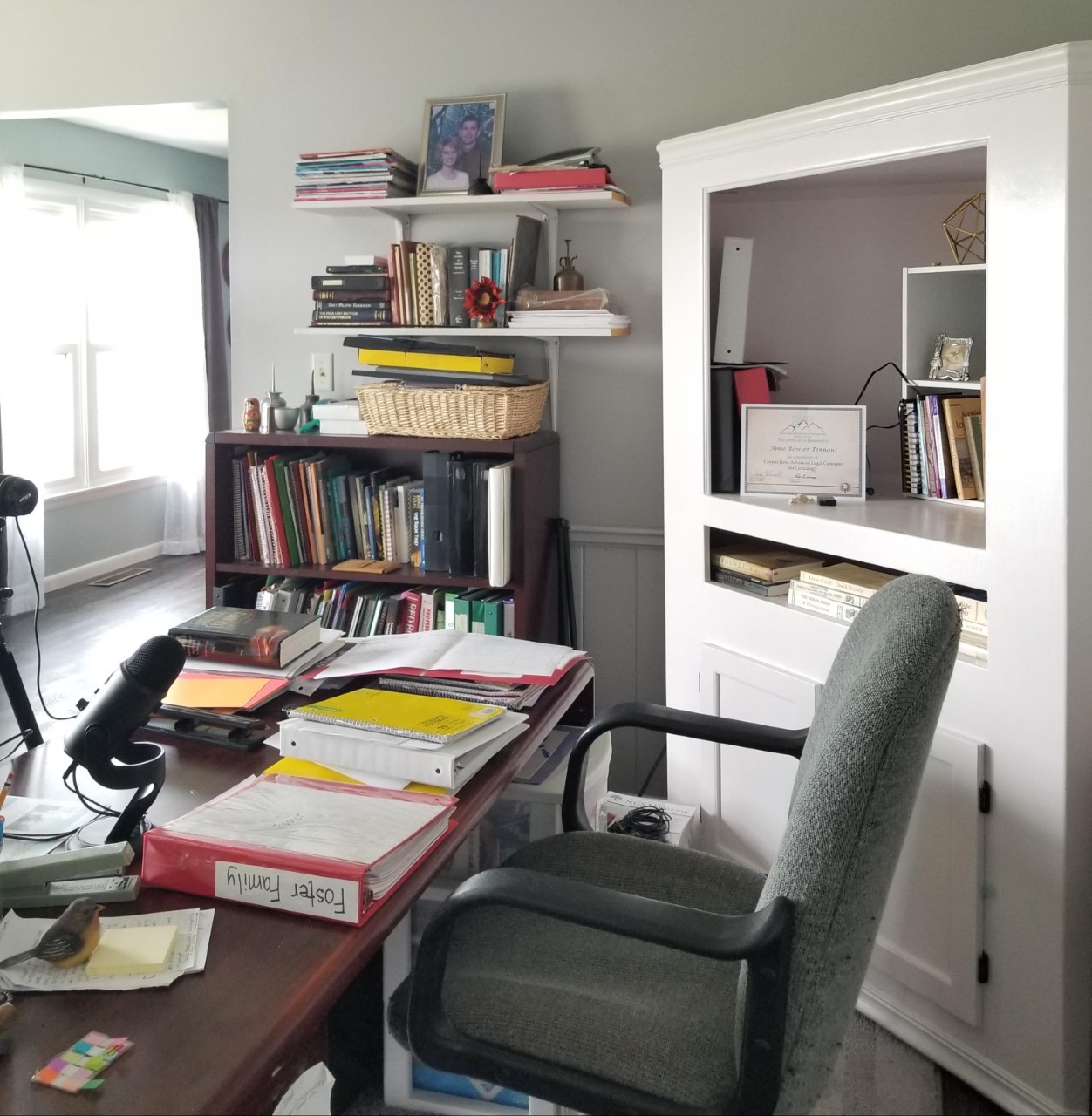
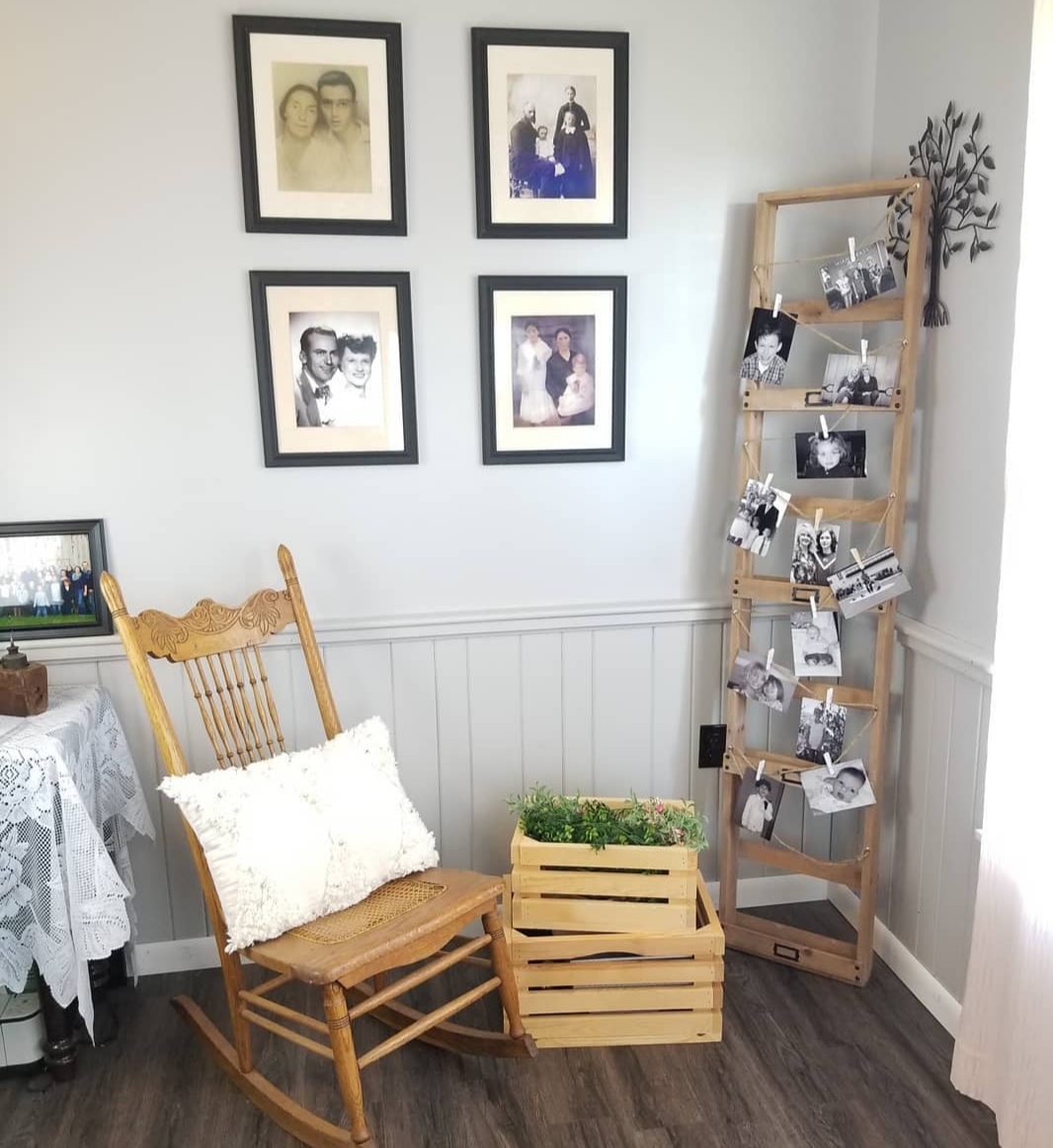
I have a genealogy office that I feel very fortunate to have the room for! I have a nice big desk, shelving, and it is entirely decorated with pictures of family ancestors and my collection of oil cans. It has a big window that I can see out while sitting at the desk so I can enjoy looking over the fields as I work.

Raise your hand if you can relate to getting ahead of yourself and not organizing as you go! It’s nice to know that this also happens to the pros we admire! I love Amie’s ideas for sharing genealogy research. And I think I will now always give my car a check up before leaving for a research trip. Thank you so much, Amie, for sharing how you do it and for sharing the photos of your delightful genealogy space!
Filed Under: Excitement, Genealogy tips, Organizing Tagged With: Amie Bowser Tennant, How They Do It, organizing aids

How They Do It: David Allen Lambert

July 7, 2020 By Janine Adams Leave a Comment

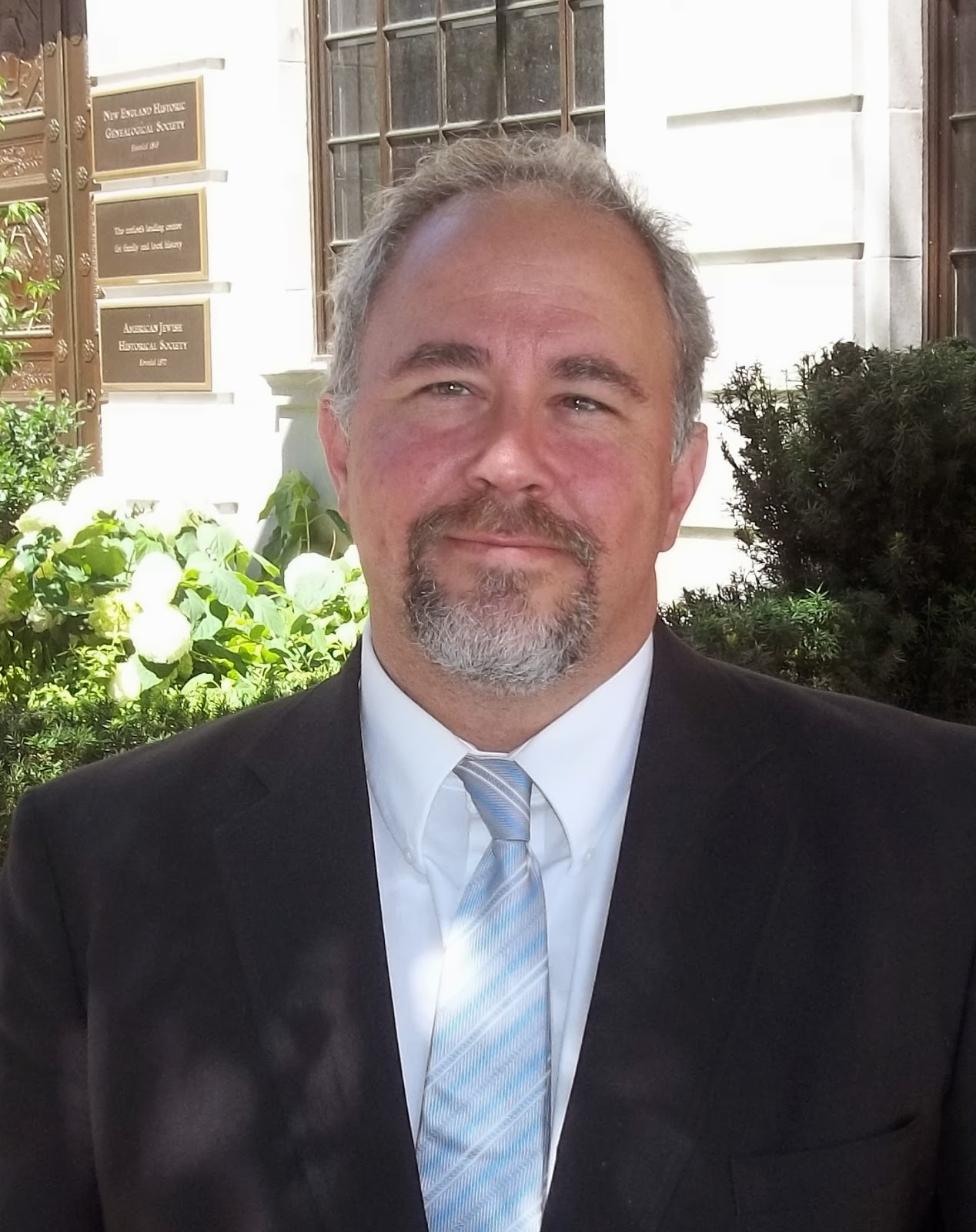
It’s been a little while since I published a How They Do It interview and I’m delighted to present this one, from David Allen Lambert, Chief Genealogist for the New England Historic Genealogical Society in Boston and co-host of the Extreme Genes podcast. David is a prominent speaker at genealogy conferences and I was thrilled that he agreed to participate when I approached him at the NGS conference last year!

How They Do It: David Allen Lambert

How long have you been doing genealogy?

I started being interested in genealogy as a child at the age of seven during the Bicentennial in 1976.  Seeing Roots on Television also ignited this passion which I have enjoyed for over 40 years now.

What’s your favorite thing about being a genealogist?

My favorite thing in genealogy is having had the opportunity for the past 27 years to work at the New England Historic Genealogical Society in Boston and assist others with their research.  The ability to pass along a tip, or have a full day consult and break down a genealogical brick wall with a fellow genealogist is quite rewarding.

What’s your biggest challenge when it comes to organizing your genealogy?

I have been currently undertaking during COVID-19 to organize my genealogical records digitally.  Creating digital folders for each ancestor and scanning documents.  As it is for most people, the challenge is finding the time to commit to your own research.  So I would say my biggest challenge is “free time”.

What is your favorite technology tool for genealogy?

I enjoy all the tools for genetic genealogy.  However I must say that I have enjoyed Gedmatch and DNA Painter the most in the last couple years for research into DNA mysteries.

If you were starting out new as a genealogist what would you do differently?

I would concentrate on getting all the stories from your older relatives before they are gone.  By the time I was 30 my parents had both died, and also my grandparents.  Stories are so important because they bring our ancestors back to life.  A life story can be compared to like the dash on a gravestone, the names and dates are important – but the dash gives us the stories of their lifetime.

Do you keep a research log? If so, what format?

I use notebooks for each research trip to the Family History Library in Salt Lake City and the National Archives in Washington, D.C.   I look back through these notebooks and use forms to list my to do list so I do not duplicate my research efforts twice.

How do you keep track of clues or ideas for further research?

I often use a genealogical program or an online tree to add notes that I can go back and reference.  I also print off these notes and add them to a binder.

How do you go about sharing your personal research with cousins or other interested parties?

I believe in public trees online.  This is how people will find you, and you then have the ability to connect with lost family members.  I also create “homestead” groups on Facebook to share the photos and stories I have with cousins who are not on commercial genealogical websites.

What’s the most important thing you do to prepare for a research trip?

I keep a genealogical notebook that I have for research trips handy and updated.  I bring a laptop computer, a portable hard drive, and a few portable thumb drives.  I make sure my camera has plenty of space, or my cloud-based storage will allow for up to 1,000 images.

What’s your biggest piece of advice to genealogists in terms of organizing their research?

Find a system that works for you.  But also create a system that your family members will understand after you’re gone.  There are many publications on organizing your research to guide you.  I find having folders on each family surname I have has worked best for me over the past forty-plus years.

Do you have a dedicated space in your home for doing genealogy research? What’s it like?

I split my time between my downstairs office computer, and an old bedroom now converted into my genealogical archives in my home.

Do you have anything to add?

Your genealogy is the story of your ancestors, but it is also important to concentrate on your recent family members.  Have you ever written down how your parents met?  What were all the place you lived, worked or went to school?  Have you identified all the photos you have ever taken?  When you find it frustrating that you cannot identify photos, or not locate stories on your ancestors – remember someday you will be an ancestor too.  Take on the responsibility of recording your story, and that of your parents and grandparents.  We are the story tellers for the generations not yet born.  Let’s teach them about our generation, and leave them a rich genealogical heritage to be proud of starting from you and going back in time.

Thank you, David! The message about taking responsibility of capturing stories and identifying photos for our descendants is so important! You can learn more about David and read his blog posts on the American Ancestors blog, Vita Brevis. I also enjoy following him on Twitter at @DLGenealogist.

Filed Under: Excitement, Genealogy tips, Organizing Tagged With: David Allen Lambert, How They Do It, organizing aids

NGS moves to virtual for its May 2020 conference

April 16, 2020 By Janine Adams 3 Comments

I feel so fortunate that the RootsTech conference was held in February, just prior to the COVID-19 crisis’s grip on the world. The National Genealogical Society wasn’t so lucky with its conference, which was to be held, like RootsTech, at the Salt Palace Convention Center in Salt Lake City. The NGS conference was scheduled for May 20 to 23, 2020.

Today, NGS announced that the 2020 conference will be virtual. The plan, as explained on their website, is for a full day of NGS Live! on May 20, from 11 am to 7 pm eastern. “In addition, streaming access to many more sessions will be available starting in July.” The conference organizers promise more updates as they become available.

To me, this seems like a smart approach and it’s better than canceling the conference. (RootsTech announced last month that its planned November 2020 conference in London is being postponed for a year. But that announcement came less than a month after the conference was announced, so the planning was in its early stages.) I’m sure it was a very difficult decision for the conference organizers and that it will be a logistical challenge.

I was to have attended the conference of the National Association of Productivity and Organizing Professionals in early April and that conference was canceled entirely. I’m happy for the NGS registrants that there will be some type of conference next month.

These are interesting times, aren’t they?

Filed Under: General, Reflections Tagged With: conferences, learning opportunities, NGS

Putting my imperfectionism to work

April 7, 2020 By Janine Adams 7 Comments

As I wrote in a post last week, I’ve been working on processing my 2nd great grandfather’s Civil War pension file. I got the tedious up-front source citation work completed, which involved creating source citations and labels for each of the 53 documents, affixing the labels to the paper documents and scanning the whole thing into a long pdf. I’m now working on transcribing the documents, one per day. (This is how I choose to process this type of document–I’m not saying it’s the only way or the best way, but it works for me.)

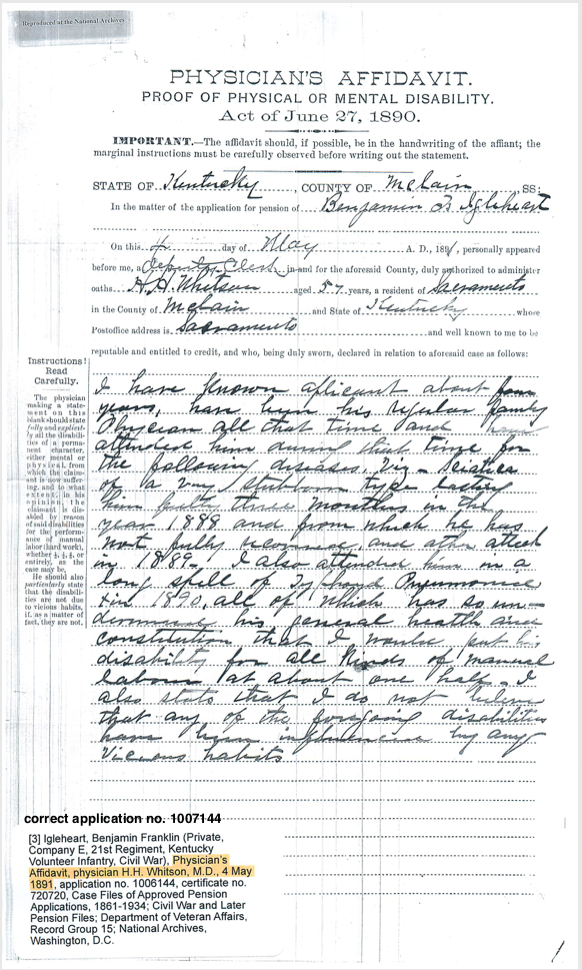
So today, I was working on Document Six and I realized that I have a typographical error in my source citation. The correct application number is 1007144 but I had typed 1006144 and copied it onto all my labels without realizing my error. That numbers appears 54 times (one for each document, plus an overall citation). Of course, it’s easy to fix in my software. But then I was faced with the pension document itself having the wrong application number on every document.

I considered my options:

  1. Fix all the labels, print them out again, affix the corrected label over the incorrect label on each document, and rescan the whole thing.
  2. Hand correct each label and rescan the whole thing.
  3. Add a notation to each label in the pdf itself
  4. Add a notation at the beginning of the pdf only

It felt like the “right’ thing to do would be option number 1. But what a pain in the butt that would be. I was okay with doing it once. But doing it a second time felt practically unbearable. Plus my printer is about to run out of toner.

I thought about what was important to me and realized that the most important citation was the one in my Reunion software (the one that I corrected in about 5 seconds). But I didn’t want my pension file pdf to be wrong, in case I pass it along to someone else.

So I added a notation in the pdf, 54 times, that says “correct application no. 1007144.” (That’s a picture of it above.) And you know what? That’s going to be good enough. It didn’t feel good enough to just do it at the top of the file. I want each citation label corrected in case someone is looking at only one document.

It took me less than 10 minutes to make this electronic correction (thanks to the miracle of copying and pasting), substantially less time than option number 1 would have taken. Bonus: I didn’t use up toner or risk the frustration of jammed documents in my scanner. Luckily, this is not a situation I will encounter with any kind of frequency, since I so rarely deal with paper documents.

I try to take these little lessons about “good enough” to heart and pass them along when I can. When does good enough speak to you in your genealogy research?

ETA: In the comments to this post, Kay asked for an example of a placement of the label. As I mentioned in the reply, I usually put it wherever it fits (or on the back of the page). Here’s a full-page view of the label placement.

Filed Under: Challenges, Reflections Tagged With: Civil War, electronic files, Igleheart, learning opportunities

  • « Go to Previous Page
  • Page 1
  • Interim pages omitted …
  • Page 43
  • Page 44
  • Page 45
  • Page 46
  • Page 47
  • Interim pages omitted …
  • Page 59
  • Go to Next Page »

about me

I'm Janine Adams, a professional organizer and a genealogy enthusiast. I love doing family history research, but I find it's very easy for me to get overwhelmed and not know where to turn next. So I'm working hard to stay organized and feel in control as I grow my family tree.

In this blog, I share my discoveries and explorations, along with my organizing challenges (and solutions). I hope by sharing what I learn along the way I'll be able to help you stay focused and have fun while you do your research, too.

tags

30 x 30 Adams amy johnson crow anniversary Brown cemetery census Civil War conferences connections dna electronic files Evernote excitement Family Curator family photos genealogy tools getting started goals How They Do It Igleheart Jeffries keepsakes learning opportunities maps newspapers NGS organizing aids overwhelm paper files planning quick tips rasco record keeping research research log research trip resources RootsTech social history source documentation Stacy Julian technology time management vital records

join the facebook community!

join the facebook community!

My organizing business

Learn more about my organizing business, Peace of Mind Organizing®.

Subscribe by RSS

  • RSS - Posts
  • RSS - Comments

© 2026 Janine Adams


Loading Comments...