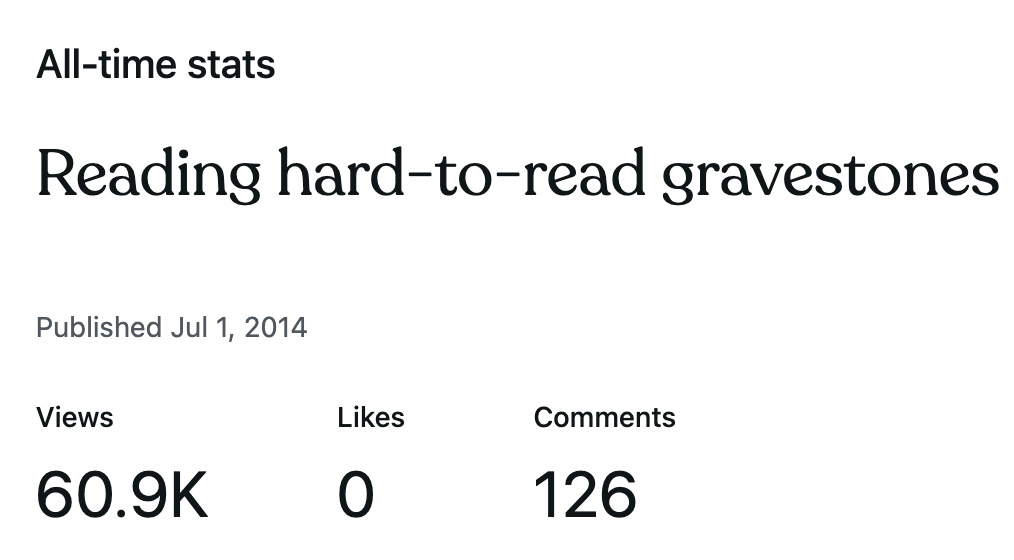
 This article, which I published almost exactly 11 years ago, on July 1, 2014, is easily my most-read blog post. I looked at the stats today and saw that it has had almost 61,000 views in the past 11 years. That’s a lot of views for my little blog. I thought I’d re-run it today for readers who may not have seen it before.
My family reunion was last weekend and I had a great time. Family members were so warm and welcoming to my husband and me despite the fact that my branch of the family had not been represented at that reunion in a couple of generations. I was given family pictures (some of which I’ll probably scan and share here) and well as a painting that my grandmother had painted. It was a great weekend.
On Saturday, my husband and I paid a visit to the cemetery where my grandmother’s ancestors were buried. (This was a reunion of people from my grandfather’s side of the family, so it was an adjunct activity.) I had visited that cemetery, Meyer Cemetery, last year when I traveled to western Missouri. Three generations of Jeffries are buried in that cemetery: my great grandfather, James Earl Jeffries; his parents, John D. Jeffries and Susan Price Jeffries; his in-laws, John Price and Mary Puffenbarger Price; and his grandparents, Richard Anderson Jeffries and Harriet McKinley Jeffries. I wanted to capture some more photos of the gravestones, as well as find the graves of the Prices, which I hadn’t seen on my first visit.
Fortunately for me, I’d learned just the prior week about using aluminum foil to make reading hard-to-read gravestones much easier. I’d seen a link to a blog post called safe solutions for hard to read tombstones on the fabulous Organized Genealogist Facebook page. That post described how you can cover a gravestone with foil and gently rub it to make the hidden words on a gravestone almost magically appear. The post linked above suggested using a clean makeup brush. I didn’t have one so I dug around a bit more on the web and found a post on Save a Grave that suggested using a damp sponge.
So I went to the dollar store and bought some cheap aluminum foil. I grabbed a sponge from under the sink and was ready to head to the cemetery the next day. The method really felt like magic.
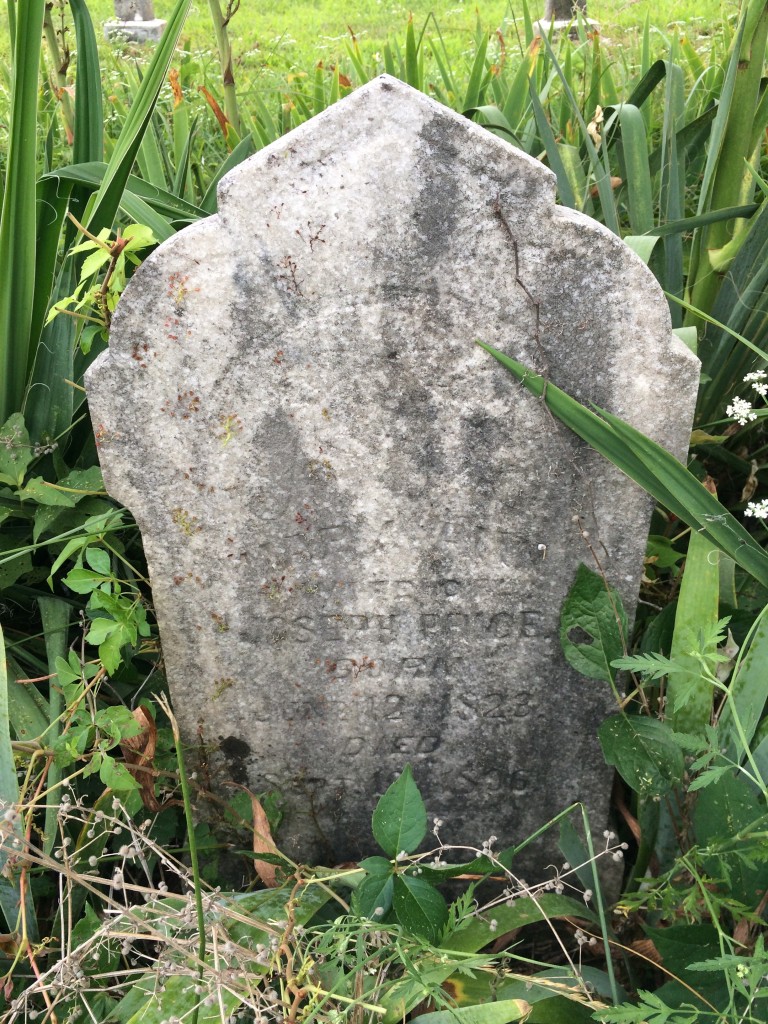
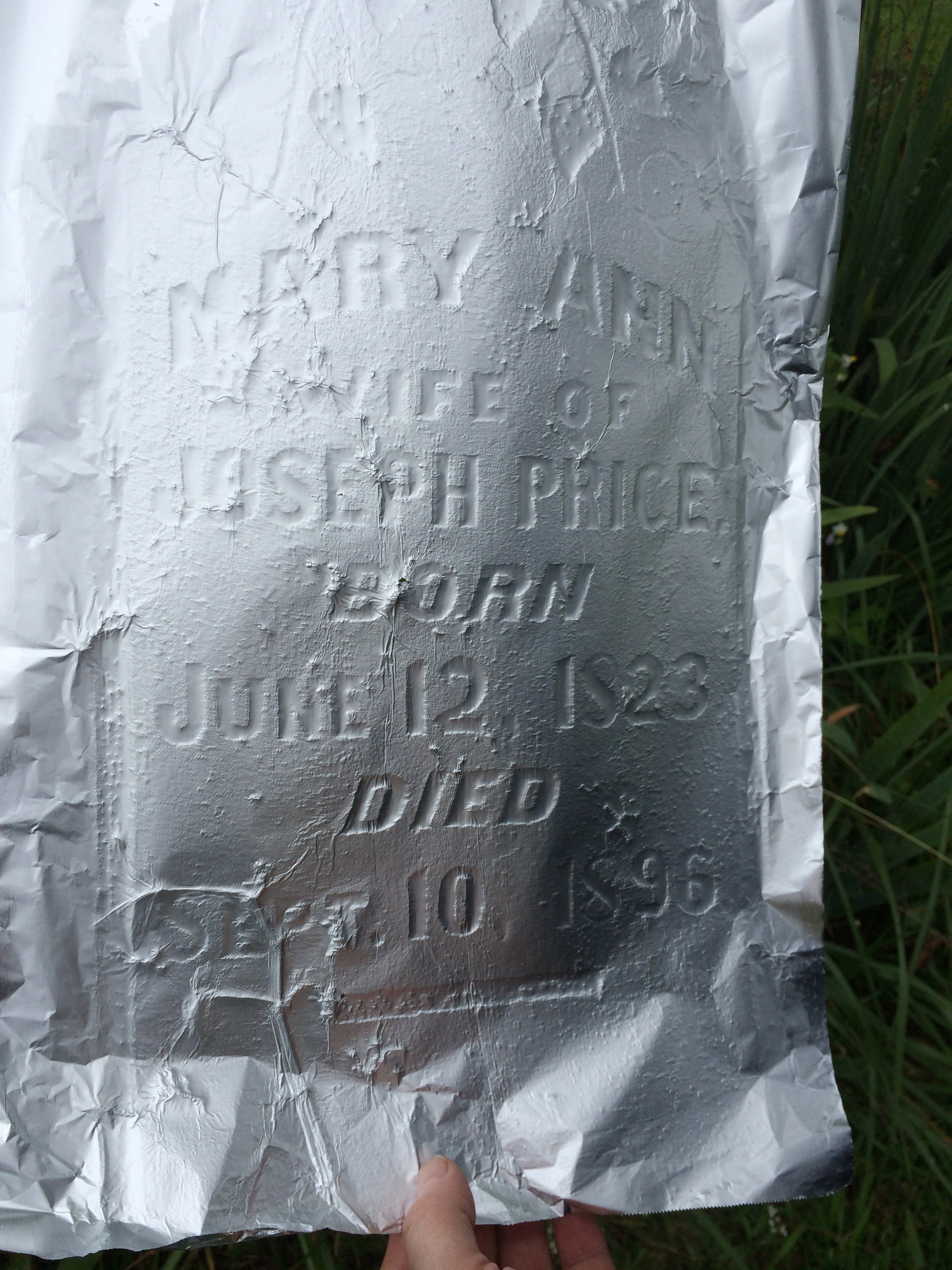
This is the stone of the Mary Ann Price, my great great great grandmother.
Cover it in foil and rub and voila, the writing emerges.
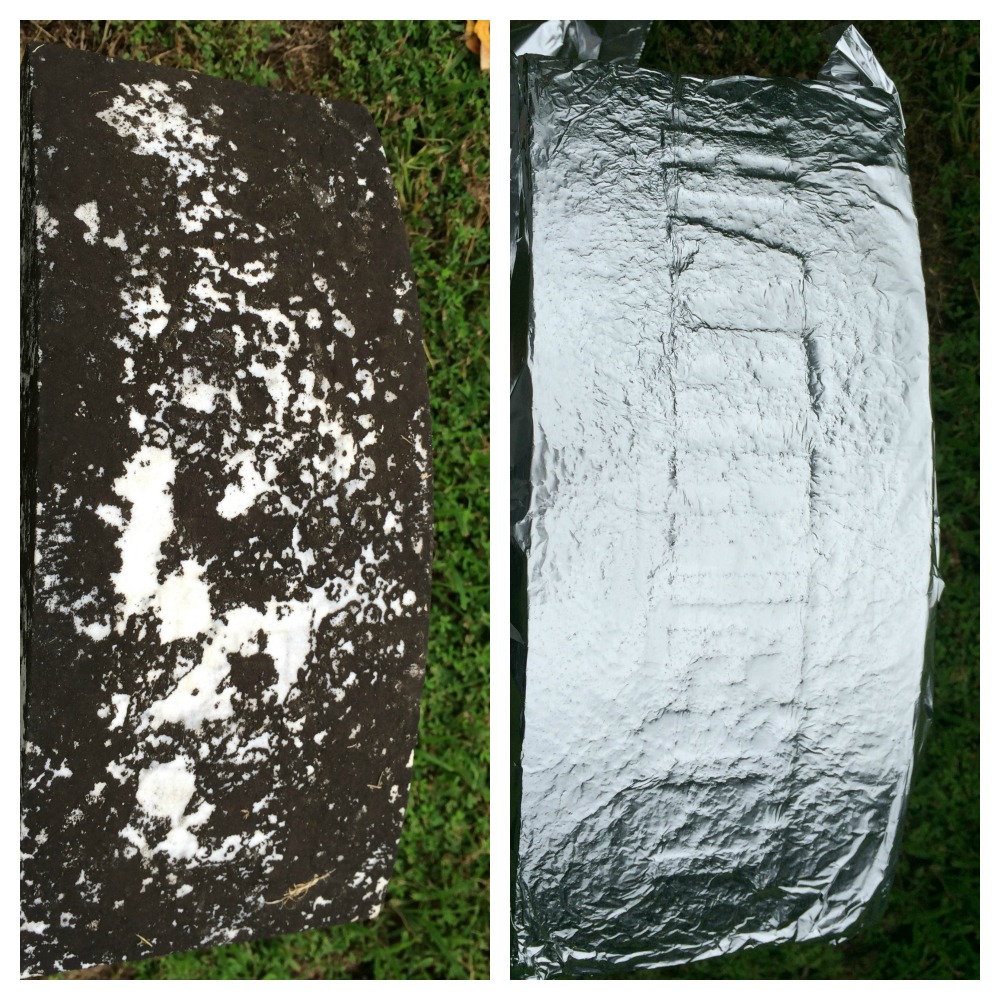
There’s a gravestone right next to my great great grandfather’s grave. The top of that same stone was so worn and dirty you couldn’t really tell that there was a name on it. But when I covered it in foil and rubbed it with a damp sponge, the name “Harriett” appeared. Amazing!
 I love this method! The downside is that, unlike gravestone rubbings–which I learned are harmful to the gravestone–it’s not easy to keep and store foil rubbings. I consider them temporary and my digital photo of the rubbed stone to be my permanent record. I can’t quite get myself to throw away the foil (it’s driving around in the back of my SUV), but soon I expect I’ll put it in the recycling bin. [ETA in 2025: I recycled it shortly thereafter!]