• BLOG
  • ABOUT
    • Privacy Policy

Organize Your Family History

Stay focused and happy while exploring your roots

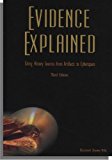
How important are formal citations?

January 13, 2017 By Janine Adams 30 Comments

I may be opening up a can of worms here, but a conversation in the comments of my post about accountability for research logs has me pondering the question again.

How important is it for the hobbyist genealogist to use properly formatted citations?

(Please understand that my question is about the format of source citations, not about whether we should cite sources. I absolutely believe every fact should be backed up by at least one source.)

I think many folks would agree that Elizabeth Shown Mills’ book Evidence Explained is the gold standard source citations. I own Evidence Explained and I do consult it occasionally. But generally I relax the rules for myself. I make sure that my citations would allow me to find the source again and I typically use the citation templates found in my Reunion software.

Basically, I want to make sure that it’s easy to cite sources so that I always cite them. If I’m hung on doing it right, I may put off citing the source, which does not do me any good.  So, for example, I used templates in Reunion to create this census citation, associated with a fact in the record of my 3d great grandparents, Joseph and Mary Price:

“1870 U.S. Census,” Pleasant Gap, Bates, Missouri, 25 Jun 1870, Ancestry.com, 4 April 2014.

The 1870 date is the date the census was taken, and the 2014 date is the date I first viewed it. If I needed to find it again, I think I could.

So I’m curious: what do you do? Do you use formal citations are are you more casual? If you don’t use Evidence Explained, do you have another source you swear by?

If you think I’m making a mistake by not being more formal, feel free to tell me!
Filed Under: Challenges, Genealogy tips, General Tagged With: source documentation

Go ahead, contact that courthouse!

January 11, 2017 By Janine Adams 15 Comments

Not all genealogy documents are available on the internetLike many people, I rely primarily on documents I find by searching the internet. When do I library or cemetery research trip, I find information not available online, but when I’m in my office, I search online and if I don’t find what I’m looking for I typically move on.
I know it’s possible to contact courthouses or state archives for documents but over the years I’ve done little of that. In the last couple of weeks, however, I hit the jackpot when I took that extra step.

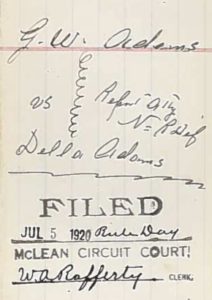
I’ve been working on transcribing the Civil War pension file of George Washington Adams, my 2nd great grandfather. In it was a divorce decree for his 1920 divorce from his second wife, Della. (I’m descended from his first wife, Henrietta.) That piqued my curiosity because it gave George custody of their “infant son” and the only son I knew about was 12 at the time of the divorce. I wondered if there was another son and also why the 75-year-old father was given custody over the 50-year-old mother. The decree referred to pleadings and depositions in the case and I wanted to get my hands on those. It was Christmas, so I couldn’t pick up the phone (and I don’t like picking up the phone), so I wrote a letter to the Circuit Court Clerk of McLean county, Kentucky.

To my delight, just a few days later, she got back to me telling me that the documents I sought were in the State Archives and giving me a little extra information to make easier for the archivist to find them. She also gave me a phone number for the Archives. So I called and talked to a lovely young man and gave him a credit card number. That very same day he emailed me photos of the entire file. I think it cost me $8. If I’d wanted, he would have mailed a certified copy but I didn’t want to wait that long. (And get this: He added another divorce petition that I didn’t even know about! Six years into their 14-year marriage, Della filed for divorce from George, but she must have dropped it.)

The 30-page divorce file he sent had numerous depositions and probably sparked as many questions as it answered, but it’s another treasure trove. Turns out there was only one son from this marriage, Horace, who was indeed 12 at the time of the divorce. I don’t know why he was called an infant in the decree. But George went into the Old Soldier’s Home just two years later, so now I need to find out what happened to teenage Horace!

Neither the pension file nor this divorce file are available online, though I did order the pension file online. Both are outstanding sources of information about this ancestor. I’m processing the divorce file like I’m processing the pension file, by transcribing the documents and properly sourcing every fact I glean from them.

I encourage you to look beyond those documents available online, even if you’re not in a position to travel. There’s a whole world of documents that haven’t yet been digitized!

Filed Under: Challenges, Excitement, Genealogy tips, My family Tagged With: Adams, courthouse, research, vital records

The new Genealogy Research Loggers Facebook group

January 6, 2017 By Janine Adams 2 Comments

Genealogy Research Loggers closed Facebook groupBased on the conversation in the comments of last week’s blog post about accountability for creating a research log habit, I started a closed Facebook group called Genealogy Research Loggers. If you’d like to join us and talk about types of research and ask for accountability, please do. Just click on the link and request membership and I’ll approve you. I tried to send email invitations to everyone who commented on that blog post.

Special thanks to Maria Tello, who is a professional genealogist with a solid research log habit, who was the first person to join the group. She’s already been really helpful in sharing a photo of her research log format and explaining her philosophy.

I look forward to some good discussions!

Filed Under: Challenges, Excitement, Genealogy tips Tagged With: learning opportunities, research log, resources

How They Do It: Thomas MacEntee

January 3, 2017 By Janine Adams 10 Comments

This year I’m adding a new monthly feature, “How They Do It,” in which I interview genealogy luminaries about how they organize their own genealogy research. There are so many people I admire in the genealogy world. I sent out a few inquiries to some of my favorites and was so happy to receive a positive response!

I’m kicking it off with none other than Thomas MacEntee, founder of GeneaBloggers , as as well as The Genealogy Do Over, among other notable contributions to the genealogy world. Thomas is a prominent speaker in the genealogy field and I know from having heard him speak on several occasions that he is very, very organized with his genealogy research.

Enjoy his pearls of wisdom. Check back on the first Tuesday of each month for a new How They Do It interview!

How They Do It: Thomas MacEntee

How They Do It: Thomas MacEntee

How long have you been doing genealogy?

I have been doing genealogy research since 1977, so close to 40 years

What’s your favorite part of doing genealogy?

My favorite part of genealogy is the problem solving/CSI aspect. Trying to figure out how everything fits together on records and family stories.

Do you consider your genealogy research well organized?

I consider my genealogy research very well organized, especially when it comes to the digital assets.

What type of software do you use for organizing your genealogy research?

I have various software programs that I use to organize my genealogy research. First I use my operating system Windows Explorer to rename and organize files and folders. Second I use Excel and a research log to track all of my information that I find online and in person at archives and repositories. Third I also take advantage of the metadata feature on specific files via Windows Explorer. And I have one overriding rule with my genealogy research: nothing goes into my genealogy database software until it is proven.

Do you keep a research log? If so, what format?

For research log, I have created my own template in Excel which includes helper tabs for citing sources in evaluating evidence. It is available for free at www.genealogyresearchlog.com.

Do you have a tree on Ancestry? If so, is it public or private? Why?

I have two Ancestry trees, both of which are public. One is my original tree, created when I was a name collector and has over 8000 entries. I have placed the word “unsourced” in front of the name of this tree. I also have a more current tree that has fewer than 100 people but all of the information is sourced and proven.

What’s your biggest challenge when it comes to organizing your genealogy?

My biggest challenge in organizing my genealogy research right now are the physical items. Many of them are just thrown into a holding box and I keep telling myself I will organize them when I have time. I really need to carve out some time during the winter to get these items organized properly

What’s your biggest piece of advice to beginning genealogists in terms of keeping track of their research?

My first piece of advice for new genealogists is to track everything. This even means negative results. Second treat every document and every record and every bit of information as if you’ll only be able to touch it one time in your life. This means extract as much information as possible from the document or record and cite your sources right away.

What do you think is the most important thing for people to do to stay organized when it comes to family history research?

Organizing genealogy research requires a plan; just like a to do list in genealogy is needed before you start your research. So I have a separate to do list for the organizational aspect of genealogy as opposed to the research aspect. These to-do items go on my project list and are tracked like any other task during my normal workday.

If you were starting out new as a genealogist what would you do differently?

If I were starting out as a new genealogist I think the first thing is I would try to find a mentor–someone who could show me the ropes. I think in today’s Internet age, however, it is so easy to find credible resources such as those at the Board for Certification for Genealogists and the National Genealogical Society that can substitute as a mentor for newcomers. Also, I wish someone had told me there was no easy button in genealogy!

Do you keep paper or electronic files (or both)?

I keep both paper and electronic/digital files but my files are predominantly digital. If I have a photocopy I will often scan it and add it to my digital library and dispose of the photocopy. The only paper copies I keep our original items such as letters, diaries, and photographs, as well as vital records that I ordered from various agencies.

Are you folder or binder person for your paper files?

I am a folder person, although I am migrating more towards being a binder person, using archivally sound materials such as binders and sheet protectors.

Do you use Evernote, One Note or any other electronic organizing system for your genealogy? If so, how do you use it?

I use Evernote, having been a One Note user in the early 2000’s. I use Evernote mostly to clip items from the web and to save them for research. I find managing a research log on Evernote to be very difficult.

Do you have a dedicated space in your home for doing genealogy research? What’s it like?

I have an office in the back of my condominium in Chicago where I’ve worked for the past 10 years running my genealogy business as well as doing genealogy research. It is a small space, roughly 10′ x 10′ with small bookshelves and various bankers boxes strewn about

Do you have anything to add?

I’m a firm believer that anyone can build good organizational skills and that organizing is a discipline that can be learned. My philosophy on organizing things right away is this: the more you put it off or delay it the more difficult it will be. That time spent reorganizing could be better spent researching for ancestors. Lack of organization basically squanders your precious time.

I agree wholeheartedly with Thomas’s contention that anyone can become organized. I think he’s spot on about the value of organizing things right away to avoid a backlog and maximize the time we have to spend with our ancestors. Thank you, Tom!

Filed Under: Challenges, Excitement, Genealogy tips, Organizing Tagged With: How They Do It, organizing aids, Thomas MacEntee

  • « Go to Previous Page
  • Page 1
  • Interim pages omitted …
  • Page 136
  • Page 137
  • Page 138
  • Page 139
  • Page 140
  • Interim pages omitted …
  • Page 219
  • Go to Next Page »

about me

I'm Janine Adams, a professional organizer and a genealogy enthusiast. I love doing family history research, but I find it's very easy for me to get overwhelmed and not know where to turn next. So I'm working hard to stay organized and feel in control as I grow my family tree.

In this blog, I share my discoveries and explorations, along with my organizing challenges (and solutions). I hope by sharing what I learn along the way I'll be able to help you stay focused and have fun while you do your research, too.

tags

30 x 30 Adams amy johnson crow anniversary Brown cemetery census Civil War conferences connections dna electronic files Evernote excitement Family Curator family photos genealogy tools getting started goals How They Do It Igleheart Jeffries keepsakes learning opportunities maps newspapers NGS organizing aids overwhelm paper files planning quick tips rasco record keeping research research log research trip resources RootsTech social history source documentation Stacy Julian technology time management vital records

join the facebook community!

join the facebook community!

My organizing business

Learn more about my organizing business, Peace of Mind Organizing®.

Subscribe by RSS

  • RSS - Posts
  • RSS - Comments

© 2026 Janine Adams


Loading Comments...
