I interviewed the author of this guest post, Donna Cox Baker, in my How They Do It series last year. In it, she mentioned she used Zotero, which I had not been familiar with, to organize her genealogy research. I asked her to write a guest post about Zotero and here it is! I haven’t checked out Zotero yet, but I very much appreciate reading Donna’s perspective as a Zotero power user. For more information, check out Donna’s book, Zotero for Genealogy.
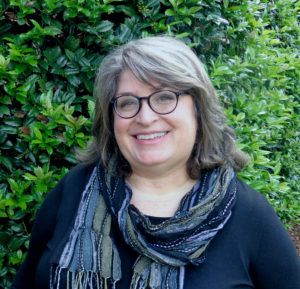 I want to thank Janine for offering me the chance to expand on the wonders of Zotero. It is the core of my genealogical research, as it once was in my doctoral research.
With thousands of resources to cite in my doctoral research, Zotero sold me the minute I experienced the “Zotero Connector” add-on. The connector is an extension for web browsers that allows you to click a single button and extract citation data from any number of places it appears, even Amazon. The citation for virtually anything that appears in a library catalog online can be stored in your Zotero database in less than a second.
Through another extension, Zotero can be linked to Microsoft Word. You can create your footnotes and bibliography straight from Zotero, letting it format the citation.
Discovering Zotero for genealogy
Well, that was graduate school. Within minutes of finishing the dissertation, I had pulled out my long-neglected genealogy box, and got back to the thing that first made me care about history.
Our family tree solutions—like Family Tree Maker, Ancestry.com, Legacy, RootMagic, MyHeritage, and so forth—give us adequate ways to document individual facts. We add a birthdate to an ancestor’s profile and cite the source. But research—what I call Big-R Research—starts way before the individual facts and goes much bigger than an isolated birthdate.
Genealogists have file cabinets full of Big-R Research, if we’re doing true family history, and not just filling in the blanks on a chart. We want to know about where our people lived and how they lived. We want road maps of their communities and the minutes kept at their church’s business meetings. We want photographs and letters and court transcripts that fill in the story. Our research can fill a room.
It doesn’t have to fill a room, though. It can take up gigabytes, instead. But we need a tool to store and retrieve it. My search for a proper Big-R Research tool began.
I tried OneNote, then Evernote, but I continued to feel a nervous sense of distrust. Would the structure hold together? Was it portable to other tools?
Then it hit me. I already had the tool I needed. It was tried and sure. It was both structured and flexible, controlled but expansive. Zotero would be great for genealogy!
Before I get into the reasons it is great, let me be transparent in this: it was not made for genealogy or by genealogists. I’ve developed tweaks here and there to deal with the differences between history and genealogy. You will not dump perfectly formatted Evidence Explained citations from Zotero (or most other tools I’ve tried). But you can come pretty close. And I’m working on some technical tweaks that will get us even closer.
Why Zotero matters
Zotero is great for genealogy for all of these reasons and more:
- It is free, with the stability and support of a university backing it up. Even if you are syncing to the Zotero cloud, you can do that for years on free storage, before you have to buy some. And when you do buy storage, it’s inexpensive and unlimited.
- It provides the structure missing from tools like OneNote and EverNote, but brings substantial flexibility, along with the structure.
- It can add most catalogued online source citations to your Zotero library with one click.
- It can organize and provide one-click access to the thousands of documents, spreadsheets, photographs, and other files you have saved to your hard drive. In essence, it can draw all those files together into a uniform, organized system. Zotero becomes your door to all you have collected.
- It allows you to create a record once but to file it in as many folders as you want without taking up significant extra space. You make a change once, and it changes in every folder.
- You can find things rapidly, even if you only have vague memories of having long ago found a document that might be of use in solving a new genealogical problem.
- It will sync to the cloud, allowing you to access your work at Zotero.org, wherever you have Wifi access.
- It can replace your to-do list and your research log with something more efficient and always accessible.
- It allows you to set up group arrangements, so multiple people can collaborate together on a research collection.
- It can import from and export to a number of other bibliographic managers or databases, making it portable and survivable in a changing world.
- And while you are in Zotero every day anyway, why not store personal things there? How about storing recipes, your journal, articles about financial management in retirement. It can be your photo album. It can even store every article coming out of an RSS feed you have subscribed to.
Giving it a try
Since Zotero is free, you can try it with no risk. In fact, I encourage you to take up the challenge I offered to the readers of The Golden Egg Genealogist blog not long ago. I asked them to test out the one feature that sold me utterly and forever on Zotero: its ability to grab citations from online sources like Amazon and your local library catalog. Here’s the article: Instant citations: Zotero’s magic bullet.
I’ve also set up an online discussion forum at the Zotero for Genealogy website. It is growing fast, and we are teaching each other how to handle citations and research organization with maximum efficiency. Join us there for free.
If you want guidance in the use of Zotero, I have written the book I wish someone had given me ten years ago, as I struggled to organize my history research for school. It’s called Zotero for Genealogy: Harnessing the Power of Your Research and debuted in January 2019 as Amazon’s “#1 New Release in Genealogy.” You can find it on Amazon or at my online store. In fact, there is a free excerpt of the book there, if you want to check it out.
I hope to see the field of genealogy moving to Zotero in large numbers. Give it a try!
 At the end of last month, I confessed how I’d found
  I’m a guest on the most recent episode of
 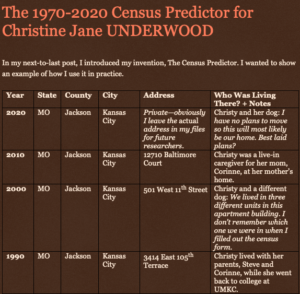 Just three more years until the 1950 census is released to the public! I bet you’re as excited about it as I am. But do you know where your family members lived in 1950? In the mid-twentieth century, people started moving around more, rather than living around extended family for decades on end. I suspect that will make census research a little more difficult for genealogists. (Here’s an article from the Oxford Encyclpedia of American Social History on