• BLOG
  • ABOUT
    • Privacy Policy

Organize Your Family History

Stay focused and happy while exploring your roots

How They Do It: Julie Goucher

February 4, 2020 By Janine Adams 5 Comments

I’m so glad to bring you another post in my How They Do It series! This month’s interview is with Julie Goucher, a UK genealogist and one-name study expert who was recommended by a reader. Julie is a well-respected writer and speaker on genealogy and is the Pharos Tutor for three One-Name Studies/Surname studies courses. She is a Trustee for the Guild of One-Name Studies and has two One-Name Studies for the surnames Orlando and Butcher, which represent her parents. Julie writes for several genealogy magazines, including Family Tree Magazine (UK) and Who Do You Think You Are? Magazine. Most recently she wrote a Surname Research Guide for the Guild of One-Name Studies, a new course for Pharos on the practicalities for One-Name Studies and is currently writing a book called Last One Standing which should publish later this year. You can keep up to date with Julie at https://anglersrest.net.
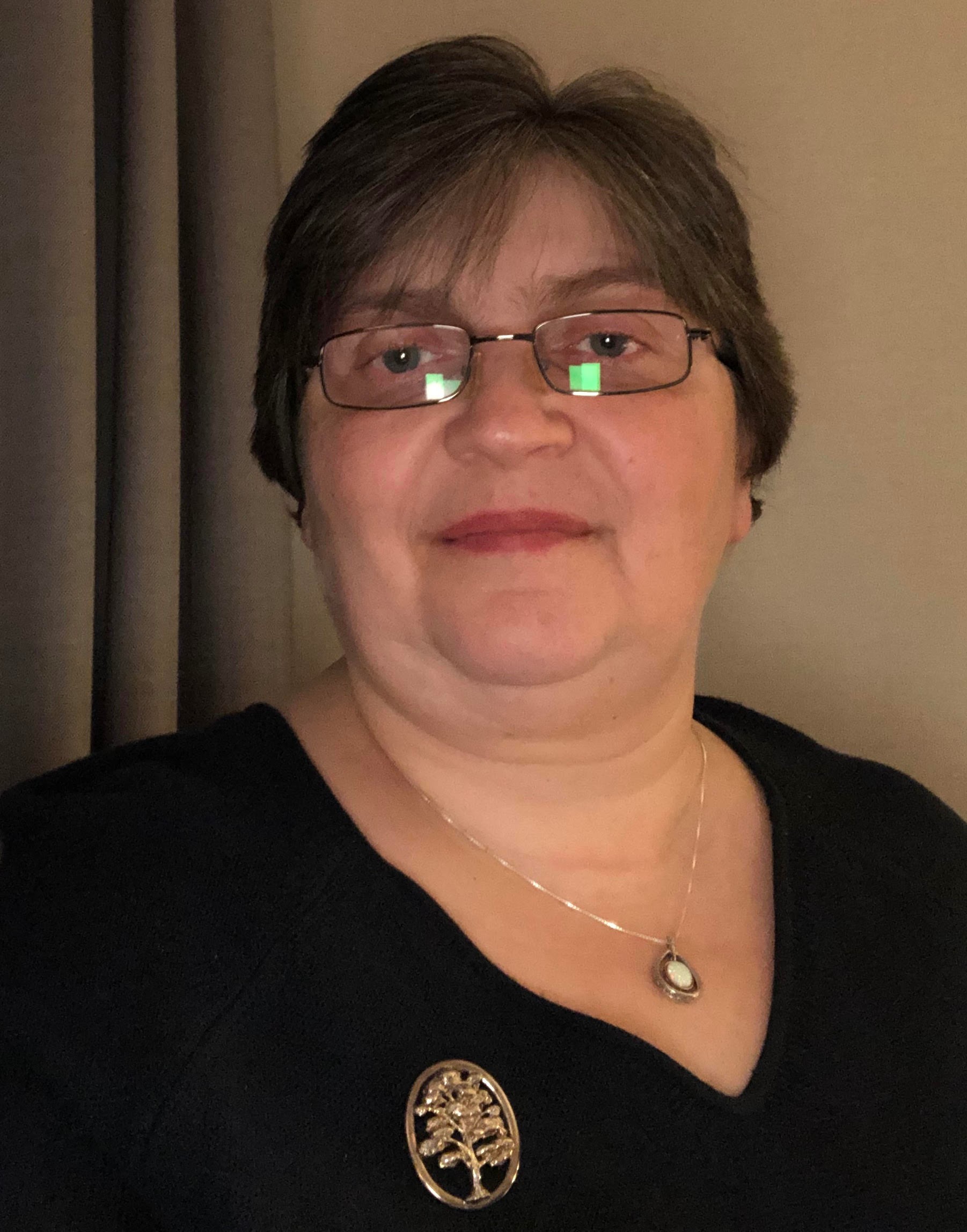
How They Do It: Julie Goucher

How long have you been doing genealogy?

Since 1988, so about 32 years. Where did that time go?

What’s your favorite thing about being a genealogist?

The thrill of the chase of information plus the journey our research takes us on. Not to mention the friendships we make along the way as we research and connect with others.

What’s your biggest challenge when it comes to organizing your genealogy?

Keeping on track with the research and filing documents and items away when I am researching. I do though consistently keep notes.

What is your favorite technology tool for genealogy?

I think this has to be the availability of the internet, which shrinks the world to the size of a matchbox and a smart phone.

If you were starting out new as a genealogist what would you do differently?

Spend more time with family members, asking questions. Even though I did that, there is still many I wish I had asked. The other thing I would do differently is to research and “deal” with that research immediately so there was no paper backlog.

Do you keep a research log? If so, what format?

Yes, I do. I am a prolific note taker, so have research logs since I began researching, though those early ones are sketchy in places. I have used a written log and an electronic log, which I kept as a spreadsheet. My favourite way is via pen and paper. I use a notebook and use it confirm what I have researched and what I have found (or not found). I build a to do list at the same time.

How do you keep track of clues or ideas for further research?

Trusty notebook and pen. On occasion I use my notes area of my iPhone, but these are migrated to my notebook as soon as I can. I use the same for blog posts, articles and presentation ideas too. I also date everything. Notebooks of choice are Leuchttrum1917 for notetaking and journaling. I use a Traveller’s notebook system for a catch all when I am on the move. I recently have moved into a A5 Filofax for organising and planning blog posts, especially useful if I am working on a series.

How do you go about sharing your personal research with cousins or other interested parties?

Blog and newsletter and website. I do have online trees, but they are not my preferred method.

What’s the most important thing you do to prepare for a research trip?

Consider the aims of the trip. What specifics I want to locate, and I always do background reading. The most important thing I can share is to note down or photograph, if you can, all the records you see. Just in case surnames that originate in one area have moved to another. Our people were more migratory that we really think. If I am not sure if it is the same family, I note it down, and assess later as opposed to discounting it during the trip. Also, date everything.

What’s your biggest piece of advice to genealogists in terms of organizing their research?

Keep it simple! Use the right tools for the job and take the time to learn how to use a piece of software. Make use of genealogical programmes for studies that do not involve just your family lines, such as a surname study or place research. Spreadsheets are good, but they are not meant for storing or creating family trees.

Do you have a dedicated space in your home for doing genealogy research? What’s it like?

Yes, I have an office at home. It has too many books, or perhaps too few bookcases! Two filing cabinets, an armchair, desk and shredder. I also have a stand with my printer (and several piles of filing) and a seat which houses a lot of genealogical data CDs. The tops of my filing cabinet house boxes of photos.

Do you have anything to add?

Genealogy gives me a great deal of pleasure, as do the friendships I have made along the way. The documentation that archives hold is so very important as that adds evidences to our family tree. Not everything is online, and the other important factor is citing the source. Even if you only cite where the material was found and not much else, it is better than nothing. The point of a citation is that you and others can follow the research pathway using the citations you provide.

I’m so grateful to Julie for taking the time to answer these questions. I found myself nodding as I read her responses, particularly the bits about processing documents as you find them and making decisions about whether something is relevant after you get home from a research trip, not during. And, of course, the advice about citing sources–even if it’s an imperfect citation–is so on point. Thank you, Julie!
Filed Under: Challenges, Excitement, Genealogy tips, Organizing Tagged With: How They Do It, Julie Goucher, organizing aids

My 2020 genealogy goals

January 7, 2020 By Janine Adams 13 Comments

I have a confession to make. I’m good at setting genealogy goals at the beginning of the year but I’m very bad at paying attention to them. One of the problems is that in the past I’ve set up complicated (though measurable) goals that I’m not able to keep top of mind. I set a complicated goal chart as part of my 2015 goals and I’m pretty sure I didn’t look at it all year. Another problem I’ve encountered is that my genealogy goals were sometimes unrealistic. In the post linked above, I wrote, “I’ve learned that when I create unrealistic goals I tend to ignore them.” That is so true.
So this year, I’m keeping it simple. I’ve decided to focus on my paternal great grandmother’s line, the Iglehearts, after having spent a couple of years researching her husband’s line. It’s full of opportunity because I have a Civil War Union veteran in that line (Benjamin Franklin Igleheart, 1845-1913) whose Civil War pension file I haven’t yet transcribed or analyzed. I can also trace myself back to the Mayflower on that line, but I haven’t verified everyone in that path. I’m excited to shift gears a little and focus on some different people.

Here are the goals I set out for myself for 2020, which I wrote in Evernote on an airplane ride on January 3. They feel gentle and realistic.

  1. Cultivate a daily research habit
  2. Transcribe Benjamin Franklin Igleheart’s Civil War pension
  3. Trace myself back to the Mayflower by Thanksgiving
  4. Eliminate the downloaded documents backlog
  5. Create habit of processing documents as I download them
  6. Keep logging each research session (including next actions)
  7. Keep systematically checking my source documentation
  8. Consume purchased learning resources
  9. Watch at least one webinar a week

If I can build a daily-research habit and a habit of watching a webinar every week, this will be a huge win. I think the practices outlined above will help stay in touch with my research and give me focus if I flounder. My goal of cultivating a daily research habit probably will mean lots of 30 x 30 challenges in 2020!

I tend to select a word of the year at the beginning of each year and this year’s word is INTENTION. These genealogy goals feel full of intention and I really think my word will bring me back to them every day.

How about you? Did you create genealogy goals for 2020? If so, feel free to share them!


Photo by Hobbies on a Budget via Flickr. Used under Creative Commons License.

Filed Under: Challenges, Excitement, My family Tagged With: goals, organizing aids, planning, research, time management

The scanner that comes with your iPhone

September 24, 2019 By Janine Adams Leave a Comment

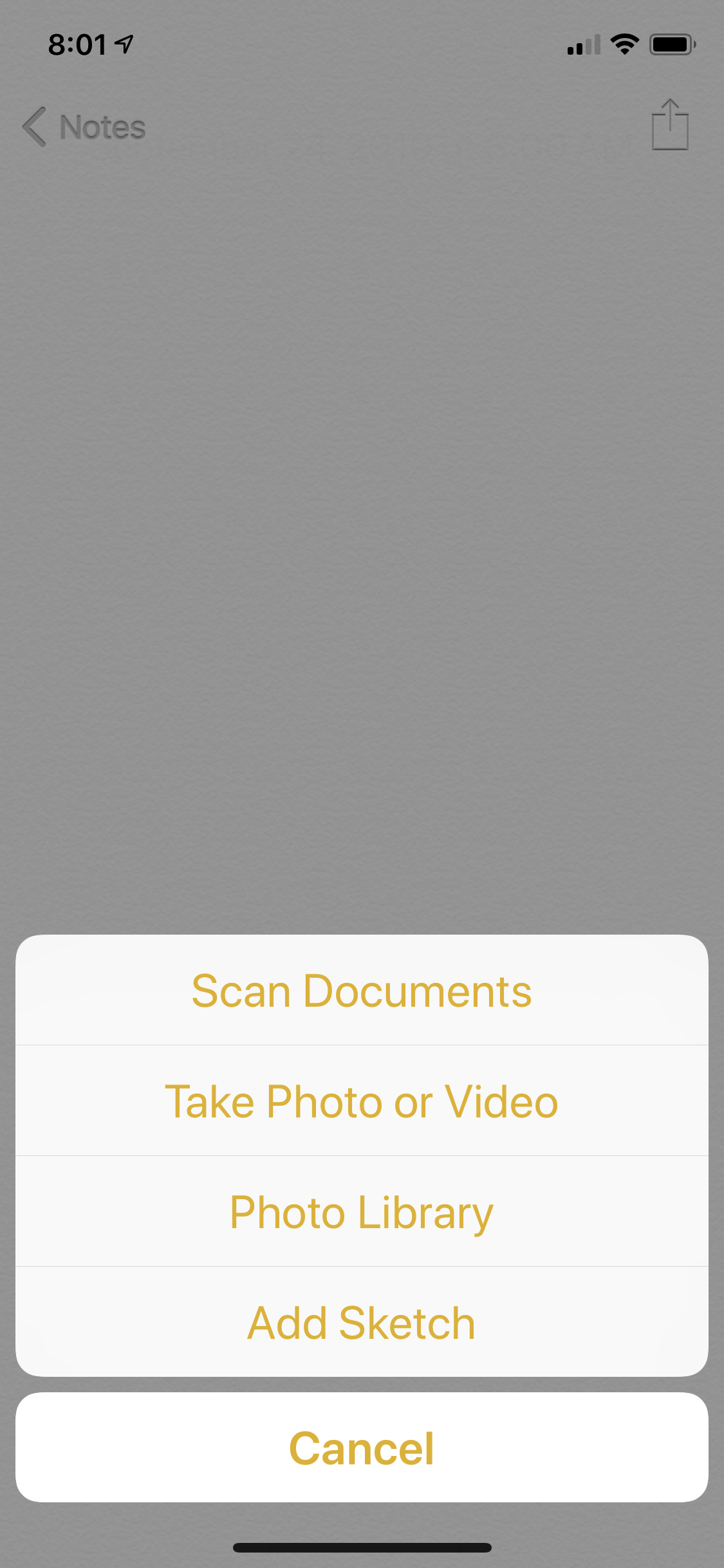
I recently learned on one of the many terrific Facebook genealogy groups I belong to (I apologize that I don’t remember which one), about a little gem hiding in the iPhone and iPad. I’ve been using an iPhone since I bought a 4S back in 2012 (the same year I started this blog!), but I had never heard about this feature. It’s the scanner feature on the native Notes app.

I don’t use the Notes app much, since I tend to use Evernote to actually keep notes, but I’ve used it off and on over the year. Since I learned about the scanner feature, I’ve using it every time I have a piece of paper I want to capture. I’ve found it easier than using a dedicated scanning app. And it’s handy sometimes that creates a pdf, rather than a jpg.

Here’s how it works:

Let’s say you’re in a library or repository and find a document you want to save.

  1. Open the Notes app on your iPhone or iPad.
  2. Press the icon to create a new note.
  3. Touch the icon that looks like a + sign inside a circle.
  4. Touch Scan Documents
  5. Position your phone above the document.

The app will try to locate the edges of the document and take the picture automatically. (It’s like my bank’s app when I’m doing a mobile deposit of a check.) If it can’t find the corners quickly, you can press the round shutter-release icon (like on the camera app) and take the picture and then adjust the corners as necessary. For books that aren’t lying flat, that’s more likely to happen.

For pieces of paper, the photo tends to get taken automatically. It’s really fast and easy–it feels like magic.

Once you have the scan, you can press Save, or you can press the little icon of the picture and then retake it. Once you press Save, you can keep it in your Notes app for processing later or use the Share icon to either email it to yourself or save it in Evernote, Dropbox, Google Drive or other apps that might work for you.

On my next research trip, I will give it a try. I think it will save time over just using my phone’s camera, as I did on my Kentucky trip.

One caveat: I understand that in the latest iOS iteration from Apple, the iPad has its own operating system, rather than sharing the iPhone’s. I have not downloaded iOS 13 yet (I like to wait until the kinks are worked out before downloading) and I don’t use an iPad. I’m assuming this feature will exist in the new iOS for the iPhone and the iPad, but I haven’t tried it.


Filed Under: Genealogy tips, Technology Tagged With: electronic files, genealogy tools, organizing aids, technology

How They Do It: Nathan Dylan Goodwin

August 27, 2019 By Janine Adams 8 Comments

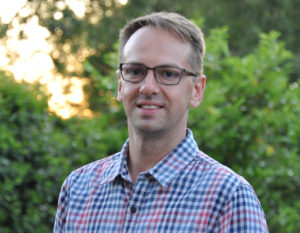
I am delighted to publish this How They Do It interview with novelist and genealogist Nathan Dylan Goodwin. I love Nathan’s genealogical crime mysteries books starring his protagonist Morton Farrier, a forensic genealogist. (If you haven’t read them and you enjoy reading fiction, you’re in for a treat.) Nathan has been doing genealogy research since he was quite young and I was very interested to hear how he organizes his research. Nathan lives in Kent, England (which you’ll notice in some of his responses).

Author Nathan Dylan GoodwinHow They Do It: Nathan Dylan Goodwin

How long have you been doing genealogy?

I started doing genealogy when I was twelve years old…I say started, but what I actually mean is spent an inordinate amount of time creating family trees and not really knowing what I was doing! I did have the presence of mind, though, to interview (on a basic level) several elderly relatives, including my great grandfather’s sister, who was born in 1895. At the wake after her funeral, I gathered up all of her unwanted photographs, which had been destined for the dustbin. It was around 1998 when my research became more serious and I began going to record offices, buying certificates, etc.

What’s your favorite thing about being a genealogist?

First of all, I love the puzzle-solving element of finding out about my relatives and discovering things about their lives, which nobody else knows. My second favourite thing is making contact with living relatives, something which has been really important to me since I started in genealogy. I’ve met so many wonderful distant cousins from all around the world and very often they are in possession of photos and documents, which I would never have come across from record offices or genealogy websites. One of my prized possessions is a family bible belonging to my great-, great-, great-grandparents, which was given to me by a 3rd cousin, about whom I knew nothing prior to tracing the siblings of my great-, great-grandparents down to living relatives. Seeing my interest, she very generously gave me the bible.

What’s your biggest challenge when it comes to organizing your genealogy?

Organising it! I’ve been the family genealogist for a long time now and so frequently get passed various family documents, which invariably need preserving as they are and also in some digital form, which can be shared with other interested family members. This process, as genealogists are aware, can be very time-consuming. So, I’m ashamed to admit that I have a lot of semi-sorted box files pertaining to each family name that I am researching.

What is your favorite technology tool for genealogy?

I’m a huge fan of anything DNA-related and am delighted with the development and release of analysis tools on Ancestry, GEDmatch and MyHeritage. My current favourite, though, is probably the tools available on the DNA Painter website. I’m very often using the ‘What are the Odds?’ tool, as well as Blaine Bettinger’s Shared cM tool. Love it!

If you were starting out new as a genealogist what would you do differently?

Had it been available at the time, I would have DNA-tested everyone in the family! I’m lucky to have my mum and maternal grandmother tested, but don’t have much on my paternal side. Other than that, I would ask far better questions of my elderly relatives. When I started out, I would ask questions about family members – names, birth dates, children, etc. – information I can now find within a few seconds online. I should have asked what life was like for them growing up, the personalities of their families, what pastimes they enjoyed, and any other questions, which cannot be found in other sources.

Do you keep a research log? If so, what format?

I do keep a written journal when I begin a complex genealogy problem, such as helping an adoptee find their biological family; something I have done several times, now. Owing to the complexities of such a challenge, it is easy to overlook something or forget areas of research which have been already explored. I usually note the date, what research I undertook and any next steps I need to take.

How do you go about sharing your personal research with cousins or other interested parties?

The main way in which I share my research is via my (private) Ancestry tree. I find this isn’t too overwhelming and is easily navigated. The line of my family, which I started working on at the age of twelve, was my grandmother’s maiden name, Dengate, and since 2002 I have maintained a website, www.dengates.com dedicated to the family name. It is also my one-name study. The website is currently undergoing a major overhaul, but once up and running it’s a great way to share information, stories, videos and photographs. Having the website also encourages others to share their information with me and other interested parties.

What’s the most important thing you do to prepare for a research trip?

Before any research trip, I always make sure the records that I want to see are actually going to be available to me and pre-order them, if I can, to save time. I have an on-going Notes file on my mobile phone and so add document references to it until I’ve built up a big enough list for a particular repository to justify a visit.

What’s your biggest piece of advice to genealogists in terms of organizing their research?

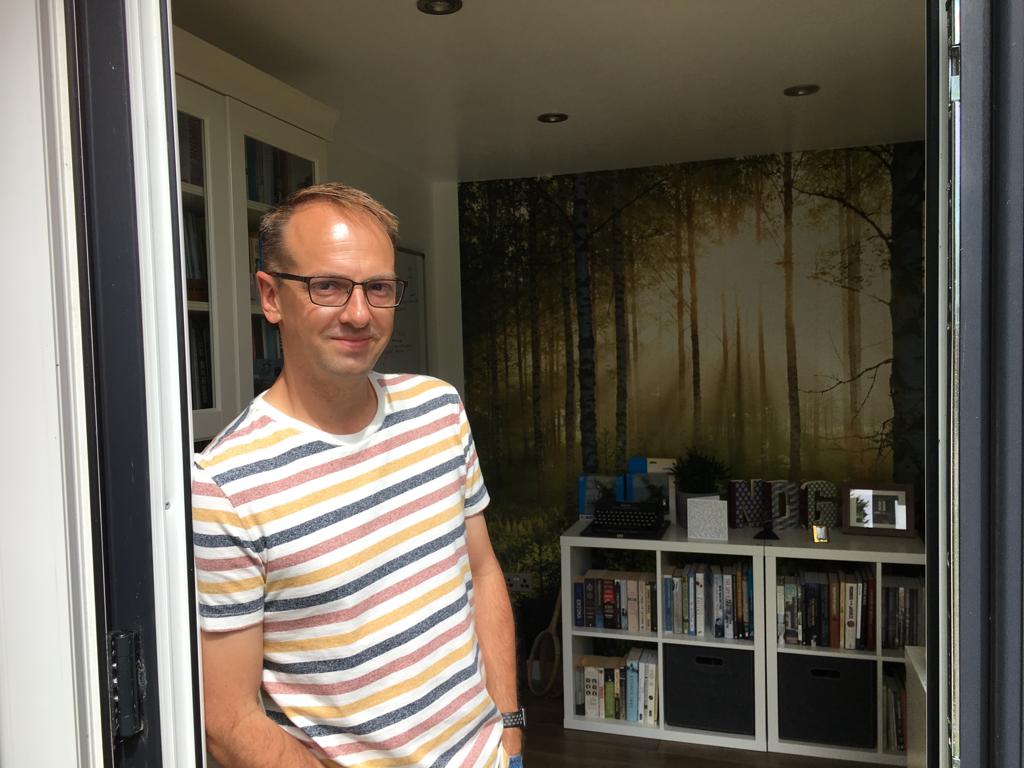
Nathan Dylan Goodwin in front of his writing spaceI think everyone organises their research differently, so my advice would be to choose a way, which means that you can access something at a later date when you’ve built up a lot of material. Personally, I have (per family surname) a file for birth, marriage and death certificates (in chronological order), a file for wills, several for photographs, one for correspondence and one for artefacts. I must admit that my photographs files are slightly haphazard and need organising in a better way!

Do you have a dedicated space in your home for doing genealogy research? What’s it like?

I have a cabin at the bottom of my garden, which I use predominantly for writing my genealogical crime mystery stories, but I do also undertake some genealogy down there, too. Otherwise, I’m sat at the dining-room table on my laptop!

A cabin at the bottom of a garden sounds like a delightful place to write and do research! You can read a short prequel to Nathan’s genealogical crime series at his website, www.nathandylangoodwin.com and the whole series can be purchased at Amazon and other retailers. Thank you, Nathan, for this peek at how you organize your research!

Filed Under: Excitement, Genealogy tips, Organizing Tagged With: How They Do It, Nathan Dylan Goodwin, organizing aids

  • « Go to Previous Page
  • Page 1
  • Interim pages omitted …
  • Page 12
  • Page 13
  • Page 14
  • Page 15
  • Page 16
  • Interim pages omitted …
  • Page 43
  • Go to Next Page »

about me

I'm Janine Adams, a professional organizer and a genealogy enthusiast. I love doing family history research, but I find it's very easy for me to get overwhelmed and not know where to turn next. So I'm working hard to stay organized and feel in control as I grow my family tree.

In this blog, I share my discoveries and explorations, along with my organizing challenges (and solutions). I hope by sharing what I learn along the way I'll be able to help you stay focused and have fun while you do your research, too.

tags

30 x 30 Adams amy johnson crow anniversary Brown cemetery census Civil War conferences connections dna electronic files Evernote excitement Family Curator family photos genealogy tools getting started goals How They Do It Igleheart Jeffries keepsakes learning opportunities maps newspapers NGS organizing aids overwhelm paper files planning quick tips rasco record keeping research research log research trip resources RootsTech social history source documentation Stacy Julian technology time management vital records

join the facebook community!

join the facebook community!

My organizing business

Learn more about my organizing business, Peace of Mind Organizing®.

Subscribe by RSS

  • RSS - Posts
  • RSS - Comments

© 2026 Janine Adams


Loading Comments...