• BLOG
  • ABOUT
    • Privacy Policy

Organize Your Family History

Stay focused and happy while exploring your roots

Start 2022 with a clean research desk!

December 28, 2021 By Janine Adams 13 Comments

I don’t know about you, but for me the week between Christmas and New Year’s Day is all about setting goals, decluttering and organizing. There’s something about starting the new year with a cleaned up space that is so appealing. Today, I’m re-running a post I wrote in 2015 with step-by-step instructions on tidying up your genealogy research space. I thought maybe you’d find it handy this week!

If you can’t remember the last time you saw your desktop in your genealogy research space, perhaps it’s time to experience the joy of a clean desk. I know that time to do genealogy research is limited for most people and the last way  you want to spend your precious genealogy time is on cleaning up your desk. But it’s worth it. When you sit down at a clear desk, your mind is more clear and you can be more focused on your research.

But there’s good news: It doesn’t have to be hard or time consuming. Here’s a step-by-step suggestion for creating some order on your desk, swiftly.

  1. Set your timer for 25 minutes.*
  2. Clear everything off your desk (and I mean everything except, perhaps, your computer). Put like things together into rough categories as you go. (For example, put papers together in a pile on the floor near your desk; put office supplies together, etc.) It might helpful to have some bankers’ boxes or plastic totes handy to hold the categories, but the floor will do too.
  3. Put away the items that already have homes. For example, put binders and books where they belong. If something belongs in another room, put it in a box or bin that you’ve marked “Relocate to another room” so you don’t wander away from the room you’re working on. At the end of the session, you can put all that stuff away.
  4. Go through the non-paper items and put back on the desk those things that deserve to take up such prime real estate. Only those things you use every research session should be placed within arms’ reach when you’re sitting at your desk (with the possible exception of items that give you great pleasure to look at). Relocate or discard the other non-paper items that were on the desk.
  5. Take all those papers and put them in a box of some sort. Mark that box “Backlog.” (I use a box similar to this one from IKEA for that purpose and I place that box on a shelf.)
  6. Every time you’re at your desk, set a timer for ten minutes and go through the papers in the backlog, discarding, scanning and/or filing as required. Do this ten minutes a day for as long as it takes to eliminate the backlog. (You might be surprised how few of these short sessions it takes.)
  7. Don’t add to the backlog box. Instead, at the end of each research session take the time (probably less than five minutes) to clear off your desk and put everything away. That way, you’ll start each session fresh.

* When your timer goes off, stop what you’re doing and take a five-minute break. Then set it for another 25 minutes and get back to work, unless you’re done.
Filed Under: Challenges, Organizing Tagged With: organizing aids

My 2022 genealogy goals

December 21, 2021 By Janine Adams 15 Comments

Are you a goal setter? I sure am. Every year I set aside a day to work on my personal and business goals. This year, I did it on December 16. But I ran out of time to consider my personal genealogy goals, so I did that this morning.

I sat down with a pad of paper and I did a little brainstorming session with myself. I achieved some clarity really fast. The release of the 1950 census on April 1 creates a natural break in the year. I decided to focus the first quarter of the year on preparing for that day and cleaning up my existing research. The latter three quarters will be about new research and avoiding a backlog.

So here’s what I decided:

First quarter 2022:

  • Eliminate backlog of downloaded files to process
  • Continue checking my source documentation to make sure everything’s accurate and complete
  • Prepare for the 1950 census

Rest of 2022:

  • Glean as much information from the 1950 census as possible
  • Shift my family focus to the Jeffries line (that’s my maternal grandmother’s line)
  • Do a deep dive on my Civil War ancestor Richard Anderson Jeffries

One overarching intention for the year is to try harder to do daily research. For the last few years, I’ve found that in the absence of a 30 x 30 challenge, I ignore my research. Sometimes, I’m able to sustain daily research for months at a time, but that’s fallen by the wayside. In 2022, I’m going to try to do at least a little something every single day to keep my mind in the game. I know that, for me, that means researching in the early morning. Perhaps I’ll try to go to bed a little earlier so I can get up earlier to accomplish this. I plan a 30 x 30 challenge starting January 1, 2022, so I’ll have that support as I kick off the year.

I realize that I didn’t so much set goals this year as clarify my focus. And that’s good enough for me. It feels great. The plan for the year feels simple and attainable.

If you’ve set goals that you feel like sharing, please share in the comments. I’d love to hear them!

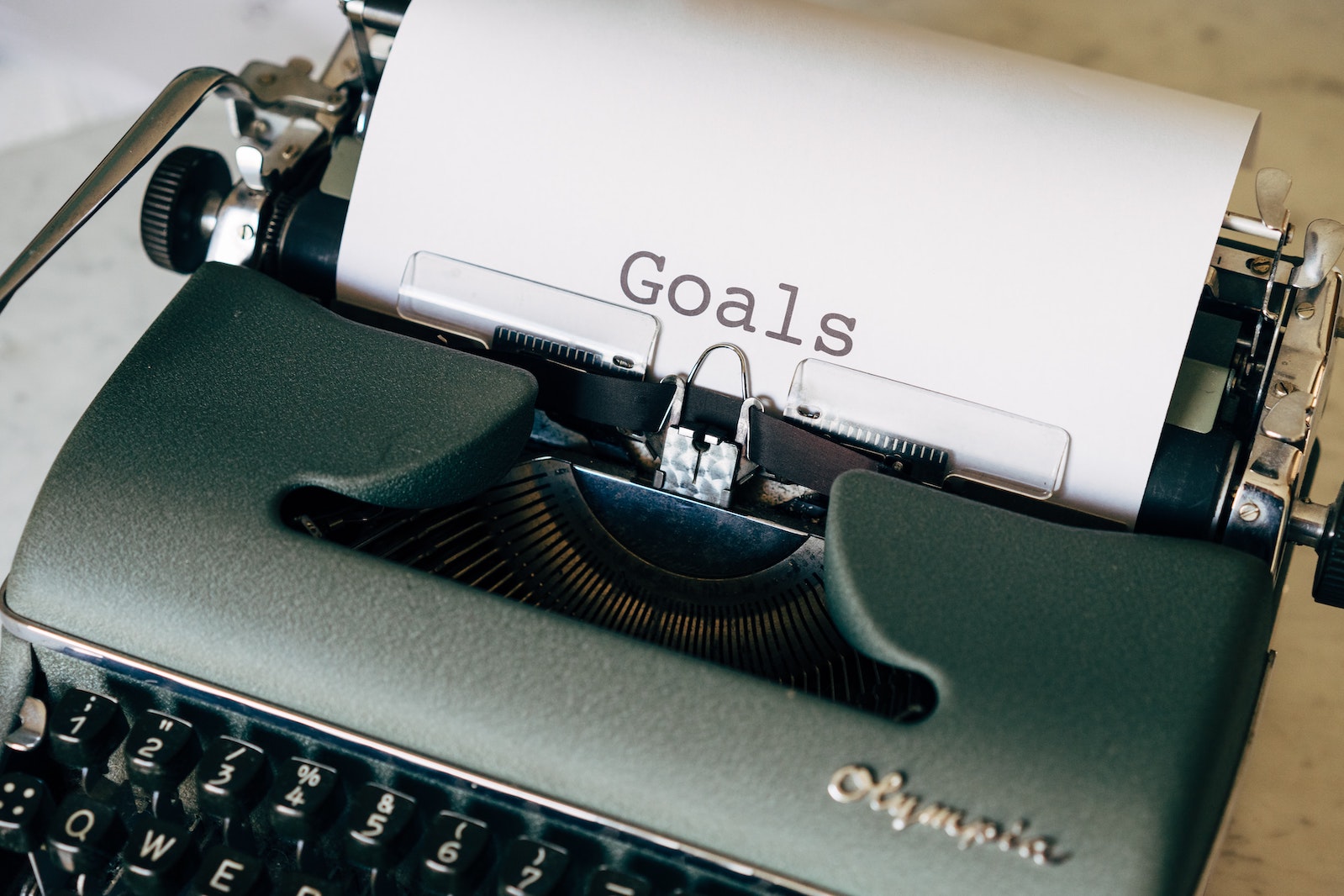
Photo by Markus Winkler on Unsplash

Filed Under: Challenges, Excitement, My family, Reflections Tagged With: goals, organizing aids, planning, research, time management

Quick Tip #29: Pick a line for focus

December 10, 2021 By Janine Adams 4 Comments

Here’s the next in my occasional series of bite-size Quick Tips. Click on the Quick Tips tag for my other Quick Tips. Because I tend to write longer posts, I wanted to provide a quick-to-read (and quick-to-write) post every couple of weeks on a small topic that pops into my head. This one  helped me gain focus in my research.

Pick a line to research

Choosing what to work on in a given research session can feel overwhelming. It used to be my number one genealogy challenge. Then, in 2014, I decided to focus on one of my family lines per quarter. I assigned each of my grandparent’s ancestors a calendar quarter and switched every three months. This kept me from jumping all over the place but still gave me some latitude so I didn’t feel too hemmed in. (I blogged about it at the time and discussed the pros and cons of the strategy.)

If you find yourself darting all over your tree, this technique might give you some much-needed focus.

Photo by Sam Dan Truong on Unsplash

Filed Under: Genealogy tips Tagged With: organizing aids, quick tips, time management

How They Do It: Gena Philibert-Ortega

December 7, 2021 By Janine Adams 4 Comments

Here’s my latest How They Do It interview, this one with author, researcher and instructor Gena Philibert-Ortega, whose focus is genealogy, social and women’s history. She holds a Master’s degree in Interdisciplinary Studies (Psychology and Women’s Studies) and a Master’s degree in Religion. Her published works include two books, numerous articles published in magazines and online, as well as five editions of the Tracing Your Ancestors series from Morsehead Publishing. Gena has presented to diverse groups worldwide including the Legacy Family Tree Webinar series. Her current research includes women’s repatriation and citizenship in the 20th century, foodways and community in fundraising cookbooks, and women’s material culture. I love her focus on women, as well as the confluence of genealogy and food in Gena’s work. Enjoy!

Photo of Gena Philibert-OrtegaHow They Do It: Gena Philibert-Ortega

How long have you been doing genealogy?

Professionally for a little over 20 years. But I’ve been in love with family history since I was a child. My maternal grandmother was family historian and she told me stories of our family and it intrigued me. I’ve always loved mysteries.

What’s your favorite thing about being a genealogist?

Research. I love research. My favorite place to be is a library, archive, or museums. I like asking questions and finding the answers in records.

What’s your biggest challenge when it comes to organizing your genealogy?

Since I have been doing genealogy since pre-Internet days I have a lot of paper and then I have all the computer files. Plus, I have the genealogy paper collections of several relatives that I have inherited. So organizing all that is a challenge.

What is your favorite technology tool for genealogy?

My iPhone. It’s the one must-have tool I use whenever I research. It’s always with me and it can do the work of several stand-along tools (camera, scanner, paper and pencil). I use it to take notes, email, search online catalogs, refer to my online family tree, and take photos of books and documents.

If you were starting out new as a genealogist what would you do differently?

I know most genealogists answer that they wish they would have kept better source citations. I can relate to that but I really wish I would have done a better job writing up narratives and research logs. I entered information into my genealogical program but I didn’t do a great job of noting what I knew, what I didn’t find, and what my next steps needed to be. I find that older research today and really wish I hadn’t assumed I would remember everything. Isn’t that the biggest lie we tell ourselves? I’ll remember!

Do you keep a research log? If so, what format?

YES! It’s vital. I usually keep it as a simple Microsoft Word Table that I customize according to the project. If it’s a larger project involving various people (related or not) I use a spreadsheet.

How do you keep track of clues or ideas for further research?

I try to use the Research Log or I’ll note it in my genealogy software program.

How do you go about sharing your personal research with cousins or other interested parties?

This is something I’ve been concerned about since I realize I won’t always be around. I’ve been working on making sure everything is online, via an online tree. I also email family with images and pedigree charts/Family Group Sheets. In the past I’ve burned CDs with images and information and have compiled small booklets with images, pedigree charts and short narratives and then gave one to everyone. I did this for a relative’s 50th wedding anniversary. I’m a firm believer that the more people who have a copy of something the better. We never know what can happen to us, our homes, or our “stuff.”

What’s the most important thing you do to prepare for a research trip?

Study the online catalog first. I always go through the catalog and make a list of what I want to look at. I prioritize that list so that the items that I can’t live without have a #1 next to it or the day of the week I want to look at it. I always assume that the unexpected will happen such as getting sick, the repository suddenly closing, or the item you want is lost. I try to build in a day that I haven’t planned anything so that I can use it to chase leads I found on the other days or change course and do something I wasn’t planning.

You waste a lot of time and money by not going through the repository’s online catalog first. You never want to go to a library or archive and find out that that must-have record was digitized and available online since last year.

What’s your biggest piece of advice to genealogists in terms of organizing their research?

Organize it so someone else can understand it. One day my oldest son said something to me that I am always thinking about. “How am I going to know what’s important?” No one wants to inherit a pile of “stuff.” People do want to inherit what’s meaningful. My son had a good point. I have other people’s genealogy, items I’ve purchased at antique stores, and copies of documents I’ve made for articles. It’s not all important and it’s not all about our family. I need to not only organize what I have but do it in a way that he can effortlessly see what is vital to keep and why.

Do you have a dedicated space in your home for doing genealogy research? What’s it like?

I do! (Thank goodness). I have my own office (basically a small bedroom in our home) with my desk, bookshelves, and a filing cabinet (remember I have a lot of paper from decades ago). I also have a more comfortable chair for reading.

Do you have anything to add?

Let’s face it. For most of us, organizing isn’t what gets us excited about genealogy. We like the research, the hunt, the discoveries. BUT without the organization we end up with a pile of papers that no one will look at after we are gone. Organizing is crucial and it’s a great idea to turn to those who are good at it (Janine 😊) to get ideas that work for us. Everyone’s different and you need to choose a system that works for you. Otherwise, you won’t stick with it.

So many wonderful nuggets in this interview! Thank you so much, Gena. I really loved the wise words on the value of organizing our research so that others can understand it and value it when we’re gone. To learn more about Gena, check out her blogs, Gena’s Genealogy and Food.Family.Ephemera, and the articles she writes for the GenealogyBank blog.

Filed Under: Excitement, Organizing Tagged With: Gena Philibert-Ortega, How They Do It, organizing aids

  • « Go to Previous Page
  • Page 1
  • Interim pages omitted …
  • Page 5
  • Page 6
  • Page 7
  • Page 8
  • Page 9
  • Interim pages omitted …
  • Page 43
  • Go to Next Page »

about me

I'm Janine Adams, a professional organizer and a genealogy enthusiast. I love doing family history research, but I find it's very easy for me to get overwhelmed and not know where to turn next. So I'm working hard to stay organized and feel in control as I grow my family tree.

In this blog, I share my discoveries and explorations, along with my organizing challenges (and solutions). I hope by sharing what I learn along the way I'll be able to help you stay focused and have fun while you do your research, too.

tags

30 x 30 Adams amy johnson crow anniversary Brown cemetery census Civil War conferences connections dna electronic files Evernote excitement Family Curator family photos genealogy tools getting started goals How They Do It Igleheart Jeffries keepsakes learning opportunities maps newspapers NGS organizing aids overwhelm paper files planning quick tips rasco record keeping research research log research trip resources RootsTech social history source documentation Stacy Julian technology time management vital records

join the facebook community!

join the facebook community!

My organizing business

Learn more about my organizing business, Peace of Mind Organizing®.

Subscribe by RSS

  • RSS - Posts
  • RSS - Comments

© 2026 Janine Adams


Loading Comments...