• BLOG
  • ABOUT
    • Privacy Policy

Organize Your Family History

Stay focused and happy while exploring your roots

My first article in Family Tree Magazine!

June 5, 2018 By Janine Adams 14 Comments

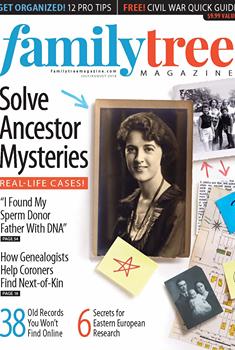
I’m excited to report that an article I wrote is published in the current (July/August 2018) edition of Family Tree Magazine! It’s called Genealogy Organization Secrets the Pros Know and it’s based on the interviews I did for the What the Pros Know: Genealogy Organizing Tips workshop I hosted for Family Tree University earlier this year.

The expert sources for the article are Thomas MacEntee, Joshua Taylor, Drew Smith, and Denise Levenick. I’m so grateful to them for talking with me.

For ten years before I started my organizing business in 2005, I was a freelance pet writer. I wrote primarily for newspapers and magazines, though in the latter years I wrote books. (You can check out my titles at Amazon.)

So magazine writing is not new for me, but I have to admit it was a thrill to have a genealogy article appear under my byline in a major national magazine. And note the optimism in this post’s title…I’m hoping there will be more!

I was able to read the article through this link, though it may be for premium members only. You can purchase and download the whole digital edition of the magazine here.

While it’s nice to see digital version on the website, I’m looking forward to holding the physical magazine in my hands. (Never mind that usually prefer digital documents to paper. This is different!)

Filed Under: Excitement, Genealogy tips, Organizing Tagged With: family tree magazine, learning opportunities, organizing aids, resources

Identifying your military ancestors

May 25, 2018 By Janine Adams 2 Comments

Before Memorial Day in 2016, I wrote this post on figuring out which ancestors might have fought in which war. I ran it again on Memorial Day weekend last year and I’ve decided to make it an annual post. Incidentally, Fold3.com is offering free access to their military records through tomorrow night (Saturday, May 26, 2018).

Whenever I read about a records collection for a certain conflict (which seems to happen around military-related holidays, like Memorial Day, Veteran’s Day or anniversaries of conflicts) I get excited about researching my ancestors in those collections, which can be such a treasure trove of information. But in the past sometimes I would have difficulty remembering which ancestor might have fought in which war and I’d become overwhelmed and abandon the effort.

So I created a document that shows me the prospective ancestors for each conflict, based on the dates they were born. At the time, I used a table from Family Tree Magazine but when I went looking for it to share in this post, I couldn’t find it. However, I did find an even-better table called Ages of Servicemen in Wars that lists 20 military conflicts, the years they were fought, the typical birth dates for soldiers and the  typical ages of soldiers. Thank you, FamilySearch!

Armed with that information, I created a simple spreadsheet (pictured, in part, above) with the following column headers:

  • Conflict
  • Likely Birth Year of Soldiers
  • Prospective Ancestor
  • Confirmed Ancestor

For each conflict, I entered the names of the ancestors who were born during the birth-year window listed in column 2. After I ascertained that one had indeed fought in that war, I entered an X in the Confirmed Ancestor column. What I should have done and will from here forward, is place a dash or an N in the Confirmed Ancestor column to indicate that I’d ruled that ancestor out.

This is a simple way to see at a glance who I might research when I’m looking at military collections at the National Archives, Fold3 or elsewhere. It’s easy to create and I think it’s well worth the time spent.

Filed Under: Genealogy tips, Organizing Tagged With: genealogy tools, military, organizing aids

How They Do It: Paula Stuart-Warren

May 22, 2018 By Janine Adams 2 Comments

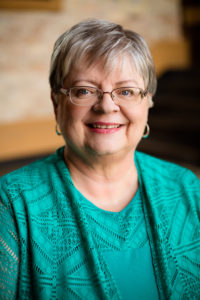
This month’s How They Do It entry is from Paula Stuart-Warren, certified genealogist and well-known genealogy lecturer, instructor and blogger. She is a long-time course coordinator and instructor for the Salt Lake Institute of Genealogy and the Genealogical Research Institute of Pittsburgh. She has presented courses for Ancestry Academy, Family Tree University, and continues to present seminars all across the U.S. and in Canada.

I had a lovely time interviewing Paula for the What the Pros Know workshop I’m hosting for Family Tree University. I was delighted when she agreed to answer my How They Do It questions!

How They Do It: Paula Stuart-Warren

How They Do It: Paula Stuart-Warren

How long have you been doing genealogy?

I began working on family history a bit in 1977 when my oldest son had one of those magic school assignments that you are supposed to complete in a weekend. I was intrigued when my late father-in-law insisted his mother’s maiden name was Warren and I said that was her married name. Guess what! He was correct. His parents were first cousins, once removed. The biggest impetus was taking community college courses on Minnesota and local history. The professor provided much help for tracing a business owned by my maternal great grandaunts. A few years later I took a beginning genealogy course for adults at a nearby university. It gave me a great foundation. I was hooked.

What’s your favorite thing about being a genealogist?

The investigation and the answers. I can’t stop. I need the answers. Then there
are the people I have met in the state genealogical society and at seminars, institutes, and conferences across the country when I do presentations.

What’s your biggest challenge when it comes to organizing your genealogy?

Making myself do it continually. I have small families so that part is not difficult. My best decision was to label one box “Dad’s Family” and another “Mom’s Family.” Then I can add new finds to that box and file properly later when I have time. I have less trouble downloading items directly into the appropriate file on my computer! For my research clients, I really do a better job. Why??

What is your favorite technology tool for genealogy?

It’s actually my laptop computer because I can take it everywhere and work from anywhere. It’s truly an extension of my brain.

If you were starting out new as a genealogist what would you do differently?

I would do a better job of citing where I found information. I didn’t do a horrible job because I learned well at the beginning, but I am far from perfect.

Do you keep a research log? If so, what format?

I did that at one time and made my own with more space for citations and remarks. Today I do personal reports, the same way I do for clients.

How do you keep track of clues or ideas for further research?

I have lists in “to do” folders in my computer that are labeled by research repository and then divided by family or type of record. The repository or website set up determines how I structure my lists. I have begun to use Evernote for some.

How do you go about sharing your personal research with cousins or other interested parties?

I am now adding to my bare bones trees on some websites, provide material when they ask, do some personal stuff on my own blog, and I have shared special things at Christmas. I have had them open up a big envelope all at the same time.

What’s the most important thing you do to prepare for a research trip?

Thoroughly scour the websites of convention and visitor bureaus but most importantly do the same for the courthouse, library or archive I will be visiting.

What’s your biggest piece of advice to genealogists in terms of organizing their research?

Set up an appointment to do sorting and filing and KEEP that appointment. Once a week? Once a month?

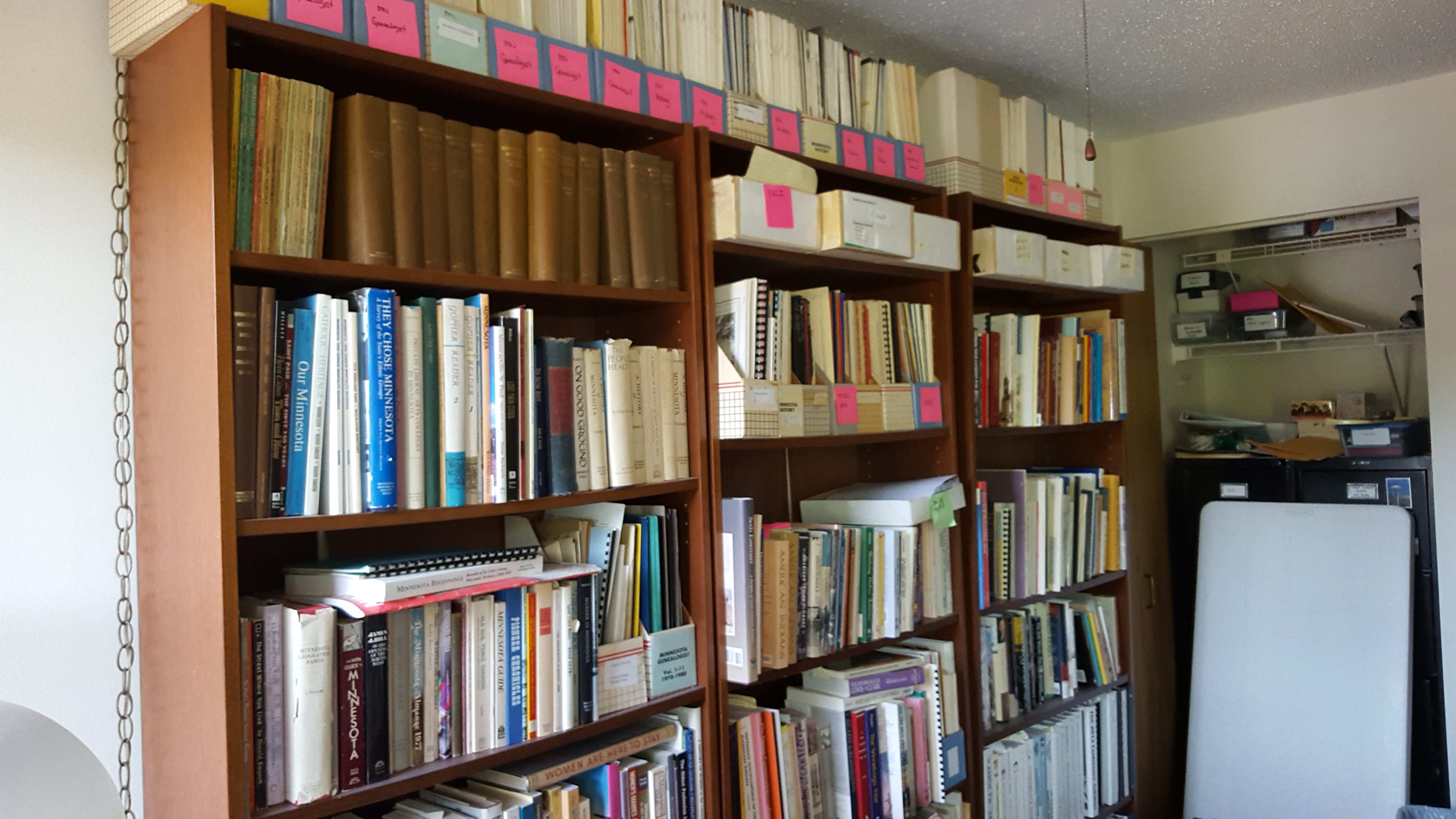
Paula Stuart-Warren's genealogy space

Paula’s genealogy den

Do you have a dedicated space in your home for doing genealogy research? What’s it like?

I have a small den, but my computer and I are more likely to be found in the living room where there are nice big windows that add great light.

Do you have anything to add?

Bring in a friend, neighbor, aunt, or fellow genealogist and have them give you an outsider’s opinion on your work area. My daughter is great at this.

I love the idea of setting up (and keeping) an appointment with yourself to work on organizing your genealogy research. And, like Paula, my favorite tech tool for genealogy is my laptop. I take it with me wherever I research.

You can read more of Paula’s genealogy wisdom on her blog, Genealogy by Paula. Thank you so much for partcipating, Paula! 

Filed Under: Challenges, Excitement, Genealogy tips, Organizing Tagged With: How They Do It, organizing aids, Paula Stuart-Warren

A time-saving addition to my digital workflow

May 11, 2018 By Janine Adams 12 Comments

I’ve posted before about how I process documents that I download from online sources. In an ideal world, I follow my workflow from start to finish as soon as I download a document. But in the real world, it’s not unusual for me to run out of time to process the document immediately. (By “process” I mean, create a source, extract facts, add those facts to my genealogy software and properly file the document on my hard drive). That’s an inevitable outcome in researching in short, frequent sessions, as I do.

When I download a document, without fail I rename the file using my file-naming protocol (Year Document Type-Ancestor Name-Location) and file it in my Surnames folder. But all too often I don’t have time to properly process it and the document languishes in the Surnames holding pen until I do have time.

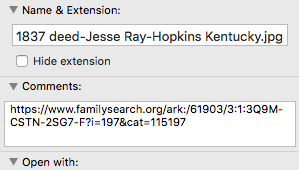
Today, I added a small item to my digital workflow. As soon as I download a document and rename it, I right-click on the file in my Mac’s Finder, select Get Info, then in the Comments section, I paste the URL of where I found the document. That way, if I need more information to create a source, it’s simple for me to get back to the online source. Per my workflow, once the source citation is created, I replace the URL in the Comments area with the citation itself (which includes the URL).

It’s a small thing, but I know this is going to save me time in finding the document online again. And it will reduce aggravation. Sometimes little things can make a big difference!

For more in-depth information on going digital with your genealogy research, check out The Paperless Genealogy Guide, a 44-page downloadable guide written by paperless expert Brooks Duncan and me and available for $9.

Filed Under: Challenges, Organizing, Technology Tagged With: electronic files, organizing aids, record keeping, source documentation

  • « Go to Previous Page
  • Page 1
  • Interim pages omitted …
  • Page 16
  • Page 17
  • Page 18
  • Page 19
  • Page 20
  • Interim pages omitted …
  • Page 43
  • Go to Next Page »

about me

I'm Janine Adams, a professional organizer and a genealogy enthusiast. I love doing family history research, but I find it's very easy for me to get overwhelmed and not know where to turn next. So I'm working hard to stay organized and feel in control as I grow my family tree.

In this blog, I share my discoveries and explorations, along with my organizing challenges (and solutions). I hope by sharing what I learn along the way I'll be able to help you stay focused and have fun while you do your research, too.

tags

30 x 30 Adams amy johnson crow anniversary Brown cemetery census Civil War conferences connections dna electronic files Evernote excitement Family Curator family photos genealogy tools getting started goals How They Do It Igleheart Jeffries keepsakes learning opportunities maps newspapers NGS organizing aids overwhelm paper files planning quick tips rasco record keeping research research log research trip resources RootsTech social history source documentation Stacy Julian technology time management vital records

join the facebook community!

join the facebook community!

My organizing business

Learn more about my organizing business, Peace of Mind Organizing®.

Subscribe by RSS

  • RSS - Posts
  • RSS - Comments

© 2026 Janine Adams


Loading Comments...